##Maecenas sed diam eget risus varius blandit sit amet non magna. Vivamus sagittis lacus vel augue laoreet rutrum faucibus dolor auctor. Donec id elit non mi porta gravida at eget metus. Etiam porta sem malesuada magna mollis euismod. Vivamus sagittis lacus vel augue laoreet rutrum faucibus dolor auctor. Cras mattis consectetur purus sit amet fermentum. Duis mollis, est non commodo luctus, nisi erat porttitor ligula, eget lacinia odio sem nec elit. Curabitur blandit tempus porttitor. Donec ullamcorper nulla non metus auctor fringilla. Nullam quis risus eget urna mollis ornare vel eu leo. Maecenas faucibus mollis interdum. Cras justo odio, dapibus ac facilisis in, egestas eget quam. Maecenas sed diam eget risus varius blandit sit amet non magna. Curabitur blandit tempus porttitor. Donec ullamcorper nulla non metus auctor fringilla. Nullam quis risus eget urna mollis ornare vel eu leo. Maecenas faucibus mollis interdum. Cras justo odio, dapibus ac facilisis in, egestas eget quam. Maecenas sed diam eget risus varius blandit sit amet non magna.
Serotonin (also known as 5-hydroxytryptamine, or 5-HT) is one of the most talked-about neurotransmitters– molecules that help your nervous system communicate. You may know it as “the happy molecule” because of its role in regulating happiness, anxiety, and mood.
The best-known indicators of low serotonin include depression and anxiety, but it plays a larger role in the body as well. This hormone (yes, it’s a hormone!) also affects your digestion, sleep, bones, inflammation, libido, and memory.
If you found this article because you are thinking about harming yourself, call the National Suicide Prevention Lifeline at 1-800-273-8255. You can visit the organization’s website for their chat option, if you prefer to speak with someone that way.
What Is Serotonin Deficiency?
Serotonin deficiency is the state of low serotonin levels, or low serotonin action. This can occur when your body produces too little serotonin or if the serotonin you do have isn’t used properly. Serotonin works by circulating in your brain, activating and releasing from serotonin receptors. If your brain has too few of these receptors, or if your serotonin is breaking down too quickly, you can also experience serotonin deficiency.
Low serotonin levels can contribute to depression, anxiety, mood disorders, insomnia, and a higher risk of certain diseases.
What Causes Serotonin Deficiency?
Did you know that only 5% of your total serotonin is in your brain? Serotonin can’t cross your brain’s protective barrier, so all the serotonin in your brain is actually made right there. The other 95% of your serotonin is produced in your gut and carries out different roles in the body.
It’s a common misconception that the serotonin made in your gut is used in the brain. Because of the blood brain barrier, a protective barrier which keeps molecules from entering, serotonin made in the gut is unable to be used in the brain.
In both the gut and the brain, your body makes serotonin from an essential amino acid called tryptophan. Things that slow this conversion, deplete serotonin, or reduce receptors can lead to serotonin deficiency symptoms. Some significant factors include:
Sunlight
It’s no secret that sunshine works wonders for happiness. Exposure to sunlight helps increase serotonin production. With so much of our lives spent cooped up indoors, sunlight is often the missing ingredient. The sunlight-to-serotonin connection also helps explain why so many of us suffer the seasonal blues in darker months, also referred to as seasonal affective disorder.
Vitamin D
Vitamin D, which our bodies produce in response to sunlight, is also specifically needed in the brain’s pathway to build serotonin. Vitamin D is needed to activate the enzyme that helps in the production of serotonin. You can learn more about the benefits of vitamin D here.
Vitamin D deficiency is common, even in areas of the world with sufficient sunlight exposure. The best way to evaluate your vitamin D is through lab testing. This will help you understand if supplementation is necessary.
Omega-3 Fatty Acids
Research has specifically shown marine (fish) derived omega-3 fatty acids to play a role in the production and function of serotonin. Both EPA and DHA from fish oil have been shown to play a positive role in the brain’s utilization of serotonin. EPA appears to regulate the release of serotonin, while DHA regulates serotonin receptor function. Low levels of essential omega-3 fatty acids may contribute to dysfunction of the serotonin receptor and lower levels of serotonin being released.
On top of depressant effects of its own, excessive alcohol consumption can deplete the serotonin levels in your brain. Interestingly, serotonin appears to play a role in an individual’s predisposition to excessive alcohol consumption.
Long-term Use of SSRIs
Selective Serotonin Reuptake Inhibitors (SSRIs) are a family of commonly-prescribed antidepressant medications. They work by blocking the protein that “cleans up” serotonin, meaning each serotonin molecule can stay active for a longer period of time.
While SSRIs may be a good option for some, their long-term use can make serotonin deficiencies even worse.
If you are on SSRIs and you want to stop taking them, you must absolutely bring this up with your prescribing doctor and adhere to their guidance on dosage. The side effects of stopping SSRIs abruptly can be brutal and dangerous, and this isn’t something you can always power through. You can avoid a lot of suffering and adverse effects if your doctor is keeping a close eye on your dosage adjustments and symptoms.
Hormonal imbalances
Other hormones in the body also help regulate serotonin production, especially estradiol. Estradiol levels can plummet during menopause, after giving birth, and after quitting hormonal birth control, and serotonin levels take a nosedive along with it. This is an important factor in depression during menopause, postpartum depression, and post-birth-control syndrome.
Excess Stress
Finding ways to manage and reduce stress can only make room for more happiness, and science agrees: Excess stress increases your body’s cortisol levels, and cortisol actually depletes your serotonin.
Inflammation and Diet
Tryptophan, an essential amino acid (essential meaning your body doesn’t make it – you have to get it from food), plays a role in serotonin production. But just getting adequate tryptophan isn’t enough. High levels of inflammation (such as with irritable bowel syndrome) can cause your body to break down tryptophan before it has a chance to enter the brain and be used to make serotonin. This is one of the ways inflammation may contribute to depression.
Food sources of tryptophan include poultry, eggs, pumpkin, salmon, nuts and seeds.
If you’re looking for some anti-inflammatory recipes, check out my free hormone balancing starter kit that contains free recipes and a meal plan to help you get started.
Serotonin Deficiency Symptoms
Serotonin plays many roles in the body, some of which scientists are still working to understand. For a look at serotonin deficiencies, let’s focus on three major categories: mood, sleep, and metabolism.
Mood
Experts associate many mood disorders and mental health effects to serotonin deficiency. Research also shows that adequate serotonin in the brain is important in controlling our anxiety and fear responses.
Common mental health disorders associated with or exacerbated by serotonin deficiency include:
ADHD and attention disorders
Anxiety and panic disorders
OCD (obsessive-compulsive disorder)
SAD (seasonal affective disorder)
Social anxiety or phobia
Eating disorders
PTSD (post-traumatic stress disorder)
But a full-fledged diagnosis isn’t always the case. Sometimes serotonin deficiencies can have more subtle effects, or feel harder to name. General sadness (especially with a lack of sunshine), anxiety, low self-esteem, brain fog, and anger can all point to low serotonin. Over time, serotonin deficiencies can increase the risk of more serious cognitive diseases such as dementia, Alzheimer’s, and schizophrenia.
Sleep
More than just fueling happy thoughts and sweet dreams, serotonin is actually necessary for sleep itself. Your body needs serotonin to convert into melatonin, the hormone responsible for running your body’s inner clock, and helping you catch your zzz’s.
Hyperactivity, or difficulty falling asleep, staying asleep, or reaching deep sleep, can all be symptoms of a lack of melatonin and serotonin.
Metabolism
Serotonin has several vital roles in your digestive system, including regulating your sugar and digestive homeostasis, regulating inflammation in the gut, and helping food move through your digestive tract. Serotonin levels may also have a role in some metabolic diseases.
The effects of serotonin on digestion and metabolism are much harder to pinpoint since so many factors can be involved in digestive issues. While these factors might not be enough to diagnose a serotonin deficiency, you can certainly watch for improvement here as you begin healing and increasing your serotonin levels.
Serotonin Deficiency Treatment
In conventional medicine, the first line of defense for depression is often prescription antidepressants. While these may be a solution for some, they can have serious side effects, and may not work for some people.
In mild to moderate cases of serotonin deficiency, you can experiment with natural ways to boost your serotonin levels.Targeted supplements, tryptophan-rich foods, and simple lifestyle changes like stress reduction, meditation, exercise, and natural sunlight may be enough to do the trick. We’ll dive more into boosting your serotonin in our upcoming article.
More severe cases may warrant prescription medication. Whether using at-home remedies, or prescribed medication, it’s helpful to seek medical advice, and discuss treatment plans with your doctor or psychiatrist.
What Is A Serotonin Deficiency Test?
While there is a test for serotonin in the blood, it’s actually only useful in diagnosing certain serotonin-producing tumors that would cause abnormally high levels. There’s no direct test for serotonin deficiency, since the serotonin in your bloodstream or urine doesn’t necessarily correlate to the levels in your brain. (Remember, serotonin can’t cross the brain’s protective barrier).
Instead, your doctor can assess whether or not you have a serotonin deficiency after evaluating your medical history and symptoms.
How Long Does It Take To Recover From Serotonin Deficiency?
The time needed to restore healthy levels of serotonin varies between individuals. Factors include the severity of deficiency, the treatments used, and other impacting factors such as diet, daily stress, and management of depression, anxiety, or related disorders.
If you are beginning treatment to increase your serotonin, try tracking your symptoms with journal entries or weekly reflections, and be patient with your body as it heals.
Summary
In our upcoming article on serotonin, we’ll round up the top ways to support your serotonin levels.
The Morning-After Pill or Plan B is a medication that comes with a lot of confusion, including how the morning-after pill works. So, let me clear it up straight out the gate—the morning-after pill works by preventing ovulation. Perhaps the worst part of not knowing how the morning-after pill works is that typically, you have to make a decision about it when you are the most stressed and pressed for time.
Confused about your options if you’ve had unprotected sex or the condom failed? You’re not alone.
Surveys show that up to 40% of women in the US and Europe feel completely in the dark about what the morning-after pill is, how it works, and where to get it.
What’s worse is according to the Guttamacher Institute, only 17 states in the United States requires medically accurate sex education and 19 states require that contraception information is included. Houston—we have a problem!
This is why I am hosting the Take Back Your Hormones Conference. I want women to get the information we all deserve to know about our bodies and the real talks on baby making and birth control. It’s free to attend November 4th-8th, 2019.
We are so fortunate to live in a time where access to birth control and emergency contraception is widespread. But despite the improvements we’ve made, so many women still encounter judgment, shame, and harassment when seeking ways to prevent pregnancy.
Especially when it comes to oral emergency contraception, there is so much confusion and misinformation out there.
And there’s never been a placebo-controlled trial of it due to valid ethical concerns for the women in the placebo group — which doesn’t help the lack of quality scientific data available.
Look, mistakes happen. And heaven knows we’ve all made bad choices a time or two! If you’re reading this because you’ve had unprotected sex, don’t beat yourself up — know your options and make choices based on evidence, not rumors and fear-mongering.
In this article, I’m going to break down the myths surrounding emergency contraception and give you all the details I possibly can, so you can make informed choices.
The Morning After Pill – What You Should Know:
Plan B or The Morning-After Pill is not an abortifacient
This medication works to prevent ovulation
Most versions are available over-the-counter
You need to use it within 72 hours in most cases (sooner the better)
It should not be used as your primary means of pregnancy prevention
There are no studies to show averse outcomes if you are unknowingly pregnant and use it
Because it prevents ovulation, symptom of hormone imbalance may arise
There are short term side effects that you should review with your pharmacist or doctor
When should I use the morning-after pill?
The morning-after pill was designed to be used as a stop-gap measure to prevent pregnancy after unprotected sexual intercourse.
I’m going to list a number of reasons you may require to use the morning-after pill and not one is meant to shame you or open up a “case of the judgies” from anyone reading this. If you feel the need to judge or hate on another woman then I ask you redirect your energy into providing supporting women through better education. If you’re here, I trust you are wanting to create positive change that ensures the healthy existence of our species.
It is best used in the following circumstances:
The condom broke
You forgot to take your birth control pill or get your shot
You haven’t actually been using a regular method of birth control
You’ve been tracking your fertile window and thought you were in the clear — and then realized maybe you weren’t
You didn’t use a condom
You accidentally used the wrong type of lube with a condom — water and silicone-based lubes work best with condoms; oil-based lubes can compromise them
Your partner was supposed to pull out but didn’t — or at least not in time
You realized your IUD had become expelled after you had sex
You’ve been raped
You were under the influence and not sure if a barrier was used
How does the morning-after pill work?
Plan B or the morning-after pill is not an abortifacient. Or in other words, it doesn’t cause a fertilized egg to be expelled from your body. Its job is to prevent ovulation and therefore prevent fertilization.
The morning-after pill is known by several different names:
Both of these medications work to prevent pregnancy by delaying ovulation — so if your egg doesn’t get released, it can’t be fertilized. While sperm can hang around inside you, alive, for several days, they eventually die before ovulation occurs.
UPA is considered the more effective of the two options, but it does require a prescription from a medical professional in order to obtain it. But, that also means you may be able to get it approved for insurance coverage. LNG is available at pretty much any drugstore over the counter and with no age restrictions.
How effective is the morning-after pill?
If taken properly, within 72 hours of unprotected sex (but the sooner the better) — LNG boasts an efficacy rate of 85-97%.
UPA is indicated for use up to 120 hours after the unprotected sexual encounter. This medication is as effective on day 5 as it on day 1 — so it’s a little more flexible than LNG. In studies where they’ve been evaluated together, UPA had a slightly higher success rate of 86-98%.
Of note — if you happen to vomit within 3 hours of taking the pill, it may be rendered useless and you should consider trying another dose.
It is not as effective as using regular birth control, so it makes the most sense to use other methods on a regular basis and only consider reaching for the morning-after pill in cases of emergency.
Because this medication works by inhibiting ovulation — if you’ve already ovulated — pregnancy is more likely to occur. To a certain extent, LNG and UPA may cause the uterine lining to thicken and thereby inhibit sperm from joining an egg…but it’s just not as foolproof a tactic as preventing ovulation in the first place.
How do you take the morning-after pill?
Emergency contraception can be taken at any time during the menstrual cycle.
Ideally, it should be taken as soon as possible after the unprotected sexual encounter happens.
Generally, pills containing LNG are most reliable when taken within 24 hours. UPA is most effective when taken within 5 days.
What happens if I take the morning-after pill, then have sex?
In theory, nothing would interfere with the morning-after pill from working if you take it first, then have unprotected sex.
However, these drugs are meant to work within a very specific time frame…so by taking it before the sexual encounter, you are cutting into its window of efficacy. It’s just not recommended to take that chance if your ultimate goal is to prevent pregnancy.
If you’ve got the ability to plan ahead, it makes more sense to use a more reliable form of contraception. And if you’re confused about what kind is the best for you, I’ve compiled the definitive guide to birth control options that’s sure to help you decide.
What are the side effects of the morning-after pill?
As with most medications, there are sure to be side effects when using the morning-after pill. I mean, you are using to prevent ovulation and without ovulation there will be no substantial progesterone production. So, yeah, hormones will be off, but that’s not the only thing you should be prepared for.
Short-term side effects
The most commonly reported adverse side effects include:
Nausea
Vomiting
Abdominal pain
Dizziness
Breast tenderness
Headache
Fatigue
Changes to the menstrual cycle
Back pain
Most women report that their side effects subside within a few days, and according to studies, regain their period within a week of the normally expected start date.
Compared to an unwanted pregnancy, these side effects are considered mild, but it is important that you evaluate what is best for you. And when in doubt, have a chat with your doctor or pharmacist who dispenses emergency contraceptives.
Possible long-term side effects
There have been multiple anecdotal reports of ectopic pregnancy occurring after emergency contraception use. Unfortunately, there’s just not enough data available to support a firm correlation.
Likewise — some studies suggest a correlation between LNG use and breast cancer. While we certainly don’t have enough data to draw conclusions, and the drug is only in your body for a short time when used for emergencies — it’s just something to be aware of.
And if you’re relying on Plan B contraception for more than the occasional “whoops” then please check out our contraception guide so you don’t have to stress.
If you experience severe abdominal pain or bleeding or spotting that lasts more than a few days in the 3-5 weeks after taking the morning-after pill, contact your healthcare provider to get everything checked out.
Can the morning-after pill cause hormone imbalance?
Because the morning after pill works by suppressing ovulation, it can temporarily result in symptoms of hormone imbalance. You see, for women to make sufficient progesterone we need to ovulate.
Following ovulation there is a structure called the corpus luteum that then secretes progesterone to carry us through the luteal phase. Without ovulation the corpus luteum doesn’t form and progesterone production isn’t sufficient.
Symptoms of Low Progesterone:
Fibrocystic breasts
Mid-cycle spotting
Anxiety
Insomnia
Irritability
Menstrual cramps
Heavy or irregular menses
Short cycles
Remember, blocking ovulation is how this medication can prevent pregnant, so it is a trade off. The symptoms of low progesterone should resolve within a cycle or two. If it doesn’t, contact your doctor.
According to the World Health Organization, there are no medical contraindications for the use of emergency contraception pills.
Certain drugs, though, can and will interfere with the effectiveness of the morning-after pill. Be aware that if you are taking any of the following you should consult with your doc or pharmacist before relying on Plan B to prevent pregnancy — you may need to adjust dosage:
Antacids
Seizure medications
Barbiturates
St. John’s Wort
Enzyme inducers — such as Dilantin, rifampicin or griseofulvin
HIV/AIDS medications
Women who have BMI over 25 may also find they need to adjust their dosage. Studies suggest that doubling the dose for these women is an effective strategy. Yes, I know how flawed the BMI can be, but this provides us general screening to make general recommendations. Talk with your doctor or pharmacist about individual recommendations to meet your needs.
Which type of oral emergency contraception should I choose?
If you’re currently using another form of hormonal birth control, but you’re in need of emergency contraception because you forgot to use your regular method, be mindful of which pill you choose. LNG can be more effective in these cases than UPA because the other synthetic hormones in your regular birth control can affect how well UPA works.
Also — if you take UPA, try not to start up a new hormonal birth control regimen immediately for the same reason. The pill, patch, shot, etc. can interfere with the efficacy of Ella®, so most experts recommend waiting for 5 days after taking it before starting a new form of birth control.
Likewise, don’t take more than one of the recommended dose…this doesn’t give you and extra protection, and may actually make the medication less effective.
What if I’m breastfeeding?
The scientific evidence available suggests that there’s no adverse effect on the baby’s growth or development if the mother uses LNG in an intrauterine device or implant while breastfeeding. The same conclusions are drawn for oral ingestion. And the CDC reports no adverse outcomes associated with UPA use and breastfeeding.
However, it’s worth noting that the Ella® package insert discourages breastfeeding and the CDC recommends in the same report where it finds no adverse outcomes to wait 24 hours before resuming breastfeeding.
The reality is, we don’t totally know if there are any long term issues so it is best to use caution and talk with your doctor.
What if I’m pregnant?
Some women might worry that if they take the plan B pill and they are already pregnant (but don’t realize it) they could affect the health of the pregnancy. But no birth defects or developmental issues have been reported by women who didn’t realize they were already pregnant and took the morning-after pill.
And since the morning-after pill works by preventing pregnancy, there’s no risk of a miscarriage, either.
Again, many women have been incorrectly told Plan B is used to cause abortions. This isn’t correct. Its job is to prevent pregnancy from occuring.
How often can you take Plan B?
There’s no “limit” to the number of times you can take the morning-after pill…but that doesn’t mean you should rely on it as your primary form of contraception.
If you’re sexually active — it makes much more sense to use a more reliable form of regular birth control like condoms, IUD, the pill, or the patch. See the contraception guide to get informed about your options.
In this study, repeated use of UPA was deemed safe, but ovulation still eventually occurred. So this means you can’t rely on it as a form of regular birth control.
Can you get pregnant after taking the morning-after pill?
The great news about emergency contraception is that it appears to have no effect on your future fertility. If you change your mind and decide to get try to get pregnant during your next ovulation, you shouldn’t have any issues from having taken plan B.
Your cycle may be a little out of whack the month following the use of the morning-after pill, so it’s best to track signs and symptoms of fertility (basal body temperature, the texture of cervical mucus, etc.) as your fertile window may change a bit.
Will I be terminating a pregnancy if I take emergency contraception pills?
NO. There’s a lot of misinformation out there regarding this subject. And it contributes to shame and stigma surrounding access to emergency contraception — so spread the word!
Say it with me:
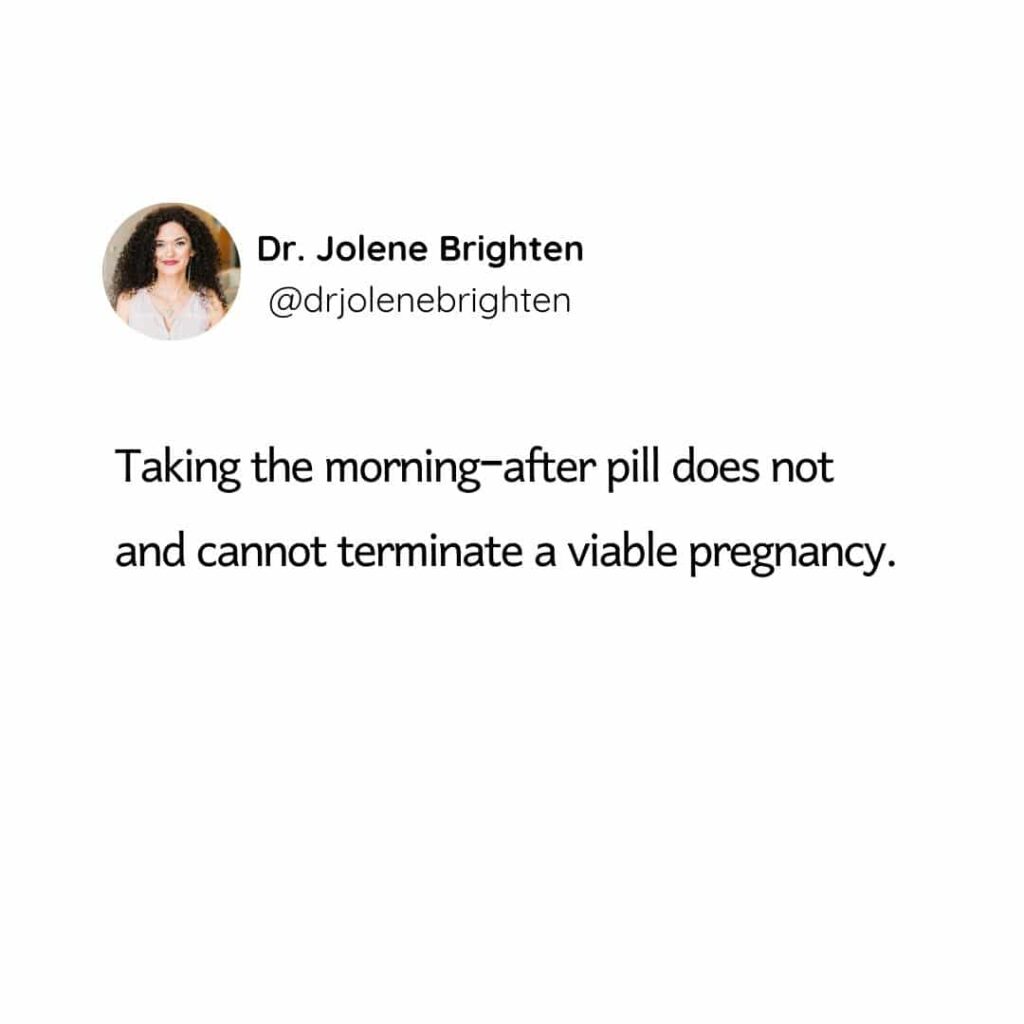
Taking the morning-after pill does not and cannot terminate a viable pregnancy.
The most effective form of emergency contraception isn’t actually a pill at all — it’s having an intrauterine device (IUD) placed in the cervix.
The problem with this method is that there are several barriers to access…women have to:
Find a doctor
Make an appointment
Likely take off work to go to the appointment
Do all of this in an extremely short time frame after having had unprotected sex
It’s just not as easy as getting the pill at your local pharmacy or ordering it online, and IUD’s can be cost-prohibitive to purchase if they’re not covered under your insurance plan.
It’s important to note that when considering your options, IUDs provide long term birth control as well, so if you decide to have one placed, you won’t have to worry about birth control for some time — in some cases up to 10 years. You can read more about hormonal IUDs and non-hormonal IUDs in the articles I’ve written.
All of the options containing LNG are available over the counter, without age restriction, or a prescription from most drug stores or pharmacies in the US.
You can even order generics on Amazon. Be careful though, even if you’re opting for overnight shipping, it may not get to you in time to actually be effective. If you’re not on a regular form of birth control, it may be a good idea to order one to have on hand in case of an emergency. And like all things Amazon, check the seller to ensure you’re getting it from a reputable source as counterfeit medications and supplements are sometimes sold here.
NURX offers both Plan B® and Ella® with online consultations and fast shipping.
Ella® can be obtained with a prescription from your doctor, or can be ordered online through their website which offers a digital consultation and overnight shipping.
If there’s a Planned Parenthood clinic near you, they can also help you find emergency contraception options.
How do I get emergency contraception pills for free?
If you have medical insurance, be sure to use it! In some cases, insurance covers the morning-after pill and, depending on your deductibles and copays can be obtained for free or at least at a reduced cost.
Some health clinics and Planned Parenthood may also offer budget-friendly options as well, so if the price is a concern, be sure to investigate locally.
The Morning After Pill is a Tool
No one wins if women feel scared, worried, or ashamed to seek options that help them prevent pregnancy.
Let’s help break through myths, stereotypes, and completely bad information and support each other in our journeys to find the right method of contraception. Emergency contraception is a tool we have available for when mistakes happen. We don’t need to vilify it or fear it.
If you do find that you have longterm side effects, talk with your doctor. And if you find that you’re using it frequently then it is a good idea to find a reliable method to prevent pregnancy ongoing.
If this article has helped you sift through the true and the false, be sure to share it!
Also, you can grab my free meal plan + recipes to help optimize hormones, plus receive tons of valuable, educational material that’s sure to help you make informed choices regarding women’s health, sexuality and birth control!
It is surprising that for as long as we’ve had birth control available to women there is still so much we don’t know about it impacts our body, our relationships, and our overall life. In this guest post by Dr. Sarah Hill, she explains how birth control can affect who you’re attracted to, along with other ways birth control may be affecting society as a whole.
As Dr. Hill explains, research has shown that hormonal birth control can affect who women are attracted to and who they seek out as partners. Because hormonal birth control stops ovulation (the primary mechanism for pregnancy prevention) and alters the natural hormone state, a woman’s behavior may be altered and she may be attracted to a different type of partner.
While birth control has been revolutionary in so many ways to women’s lives, it has also become a medical intervention that is considered too taboo to question. In fact, some have even gone so far as to say it is “anti-woman” to question birth control. And yet, from my perspective as a naturopathic physician and Dr. Hill’s as a leading authority on evolutionary approaches to psychology, health, and relationships, we disagree.
Women should be provided with the information they need to make an informed decision about a medical intervention. While we can be grateful for the benefits birth control has brought, we can also be curious and question its larger and lesser known impacts.
How Birth Control May Affect Who You Are Attracted To
Hormonal birth control alters the intricate hormonal chemistry of the body with the intention of suppressing ovulation in order to prevent pregnancy. This alteration may result in changes in behavior and who we are attracted to. It is not to say that we should all avoid birth control, but rather, we should be informed about the many ways it can impact our life.
It’s also important to note that while studies have demonstrated that birth control may influence mate selection, if you require birth control for pregnancy prevention or management of a medical condition then the benefits for you may very well outweigh this potential side effect.
This research is still very much in its early stages, but prompts us to ask more questions about how birth control may influence us overall.
Decreased preference for male facial masculinity – In a study in the journal of Psychoneuroendocrinology women on birth control were found to choose male partners with more feminine features
Birth control pills suppresses women’s mid-cycle estrogen surge – Research has found that women’s levels of the sex hormone estrogen predicts their preference for masculine-looking male faces.
Preference for mates more genetically similar to use when based on scent – There have been multiple studies demonstrated altered preference for a mate based on scent. Our genetics (MHC complex specifically) influence our scent. For more studies on this, see the additional resource section below.
Choosing your partner on the pill may result in less longterm attraction and sexual satisfaction – In a study of over 2,000 women with at least one child, with half being on the pill when they met their partner, it was concluded that “use of hormonal contraception may contribute to relationship outcome, with implications for human reproductive behaviour, family cohesion and quality of life.”
Women using hormonal birth control may preferentially select a mate based more on financial stability then based on attraction – As Dr. Hill explains in her book, “when compared with naturally cycling women, pill-taking women exhibit less activity in the reward centers of the brain when looking at masculine faces, but more activity in these centers when looking at money.”
Women on the pill may be more likely to initiate divorce – Some studies have found that when women taking the pill do get divorced, they are more likely to initiate it. But when women choose their partners when on the pill, they are less likely to get divorced. So will birth control cause you to get a divorce? I would say this is unlikely and a big maybe at this point. Why people decide to divorce is very complex and I do not think it can be reduced simply to whether or not birth control was in the mix.
If you’re fascinated by this information, then you’ll definitely want to get a copy of This is Your Brain on Birth Control by Dr. Sarah Hill who explores this topic in depth.
And keep reading, because there’s a whole lot more interesting facts Dr. Hill shares here.
I hope this guest post from Dr. Sarah Hill is informative and serves you in understanding the role of birth control in our relationships and our lives. – Dr. Jolene Brighten
Dr. Sarah Hill is a leading researcher in the dynamic and rapidly expanding field of evolutionary psychology. She is a professor at Texas Christian University (TCU) and has more than sixty scientific publications and multiple prestigious research grants to her credit.
The birth control pill and the law of unintended consequences.
Most women go on the birth control pill as a means of achieving some sort of targeted objective, like pregnancy prevention, “period regulation*”, or to clear up their skin. Unfortunately, sex hormones can’t work that way.
*Which we all know is made-up bulls**t. You don’t actually have a period on the pill. You have a pseudo-period that is caused by the sudden hormonal crash that occurs when you transition from your active pills to the sugar pills.
Why Birth Control Affects More Than Your Ovaries
When sex hormones are released into the body (or when artificial sex hormones are taken in the form of the birth control pill), they get released into the bloodstream and travel throughout the entire body like a broadcast message over a loudspeaker. They are then able to get picked up by each of the cells in the body that have receptors for those hormones, making the effects of the hormones in the birth control just about as non-targeted as a person could possibly get.
So, taking the pill as a means of avoiding pregnancy or clearing your skin will get you the effects that you are looking for… but it’s also going to get you a whole bunch of other effects, too. It’s going to change the activities of all of the cells in the body with sex hormone receptors, echoing throughout your body from head to toe.
Especially in the brain.
Birth Control Works by Changing Brain Function
Although there are sex hormone receptors on cells throughout the human body, there are few organs in the body that have more receptors for sex hormones than the brain.
Your brain – that super-important CEO of everything that makes you, you – is flush with receptors for sex hormones. There, they play a role in influencing attraction, sexual motivation, stress, hunger, eating patterns, emotion regulation, friendships, aggression, mood, learning, and more. This means that being on the birth control pill makes women a different version of themselves than when they are off of it.
Birth Control and Your Relationship
For instance, as I write about in This is Your Brain on Birth Control, research finds that the birth control pill might influence the types of men that women are attracted to and who they choose as marriage partners.
For instance, in one study, researchers found that starting the birth control pill significantly decreased women’s preferences for male facial masculinity. A follow-up study that looked at the facial masculinity of men who were actually chosen as partners by women who were either on or off of the birth control pill, found that the men who were chosen by women who were on the pill had significantly more feminine faces than than those men who were chosen by women who were not on the pill.
And there is good reason that this might be happening.
Why Might Birth Control Affect Who You’re Attracted To?
Much research (for example, this) finds that women’s levels of the sex hormone estrogen predicts their preference for masculine-looking male faces. Since the birth control pill suppresses women’s mid-cycle estrogen surge, it doesn’t take a huge leap of the imagination to predict that not-pill-takers – whose estrogen surge is fully intact – would prefer and choose partners with more masculine faces than those preferred by the women on the birth control pill.
Crazy right? I am guessing that you have never seen “may impact your choice of sex and dating partners” listed as a possible side-effect on the informational insert that came along with your pack of birth control pills.
But this is just the tip of the iceberg.
Birth Control May Influence Relationship Satisfaction & The Likelihood You’ll Get Divorced
But what happens, then, to women’s mate preferences when they’re on the pill? Since (a) pill-taking women don’t ovulate and (b) the artificial hormones in the pill fake out the brain by making it think that it’s in the progesterone-dominant luteal phase of the cycle (or some approximation of this, anyway), this raises the possibility that birth control pills might have the ability to influence the types of men that women choose as their partners.
Holy sh**!
Now researchers have started to explore this possibility. And although this research is still in its infancy, the results are fascinating. They suggest that the birth control pill might influence everything ranging from who you pick as your partner to the likelihood that you’ll get divorced.
The Pill & Your Stress Levels
The pill – by changing the activities of women’s sex hormones – has the ability to impact women’s stress response, their their moods, their desire for sex, their sexual response, their ability to learn and remember things, their feelings of sexiness and vibrancy, their attunement to art, music, and dance, and pretty much everything else you can imagine. For example, research finds that women on the pill have a messed up cortisol response to stress… and it’s not just a little messed up. It’s way messed. Up.
When comparing pill-taking women to naturally cycling women, sometimes the researchers find that pill-taking women have a blunted cortisol response to stress, sometimes pill-takers have no cortisol response to stress, and sometimes—as was found in one recent study—levels of cortisol actually decreased in response to stress, which doesn’t make any sense at all.
And the research shows that this isn’t just a matter of pill-takers being more poised under pressure in the context of the TSST. Pill-takers also don’t exhibit much of an HPA-axis response to the stress-inducing drug naltrexone or strenuous exercise, both of which regularly elicit a strong HPA-axis response in most healthy adults.
The Pill Has Changed the World
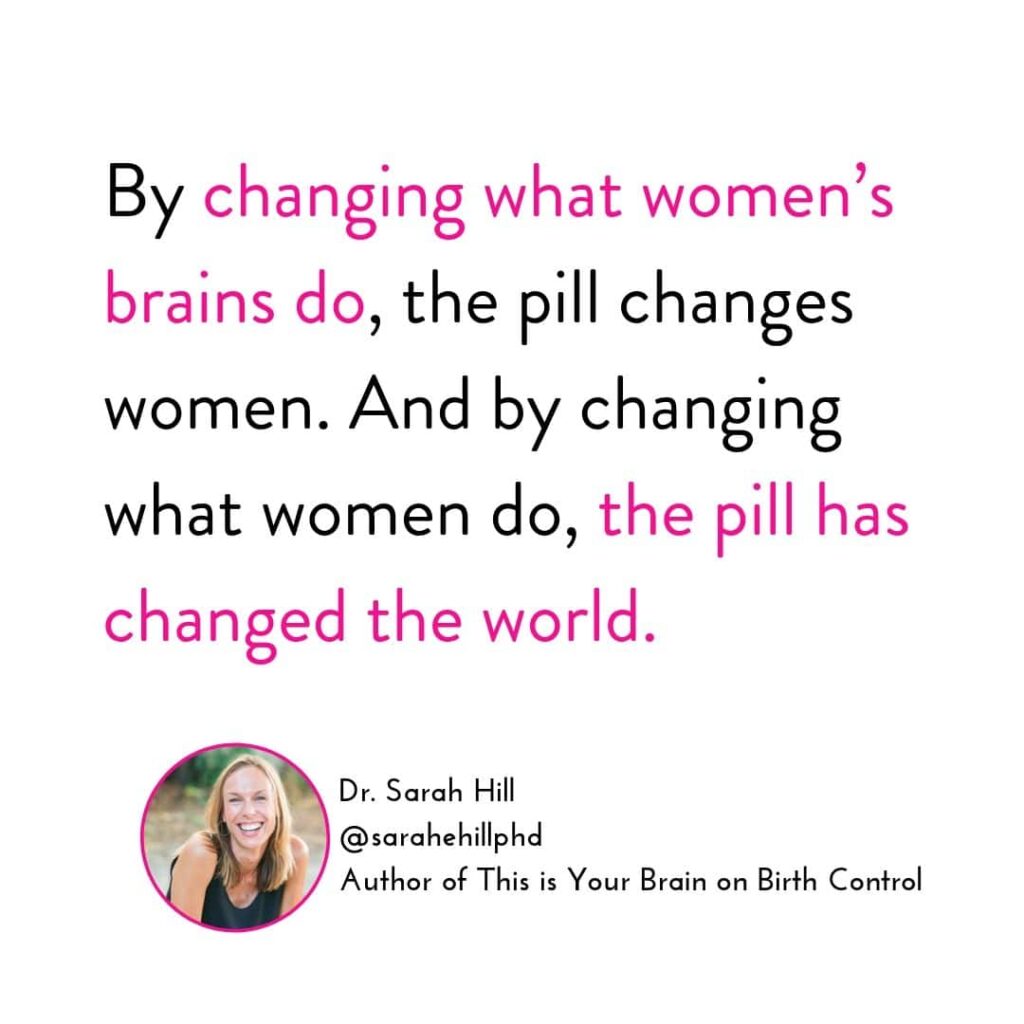
By changing what women’s brains do, the pill changes women. And by changing what women do, the pill has changed the world.
And it has.
The world is a different place because of the birth control pill. Think for a minute how different the world would be if the pill never came on the scene. The pill has changed the way that women think about the consequences of sex. And as a result, we have all been able to dream a little bigger.
Granting women the ability to have sex without having to worry about rushing into marriage or parenthood, has allowed them to focus on educating themselves and building careers before starting families. And this has been hugely important in terms of allowing women the opportunity to achieve their goals.
But perhaps even more importantly than that, the pill has allowed women – for the very first time in history –to plan.
The Pill Has Allowed Women to Plan
Knowing that the odds of an unplanned pregnancy are effectively zero has removed from women’s dreams about their future a powerful storm cloud that was perpetually present for our college-bound grandmothers and great-grandmothers. For them, there was always the very real possibility that any plans they made would be laid to dust by an unplanned pregnancy.
Removing this storm cloud has been particularly important in terms of getting women’s faces and voices represented in fields requiring an advanced degree. Most people won’t take on a huge, costly project without feeling fairly confident that they’re going to cross the finish line. And there are few projects that are as costly – both in terms of having to take out loans and defer almost all forms of gratification – as getting an advanced degree.
Many advanced degrees require people to stay in school until they’re close to 30. I went to graduate school immediately after completing my undergraduate degree, and I still didn’t complete my Ph.D. until I was just shy of 29. And I was one the lucky ones who finished “quickly”.
For women going into fields like medicine and the physical sciences, this timeline can be stretched out well into a woman’s thirties. Without reliable birth control, women choosing to go into these fields would have to be okay with the very real possibility that their investment of time and financial resources would go to waste because an unexpected pregnancy would interrupt their training. The pill changed the game for women by allowing them to feel confident that their training wouldn’t be cut short by an unexpected pregnancy. And their response to this change was overwhelming.
Before 1970, almost no women were going into careers requiring a post-graduate education. All of that changed, however, precisely at the time in our nation’s history when the pill became legally available to single women (the late 60s and early 70s). As soon as women felt in control of their fertility – and knew that they wouldn’t get benched mid-education due to pregnancy –their applications to post-graduate degree programs skyrocketed. Although the surge of women in these fields was also helped by decreasing sexism in the admissions process, the biggest driver of these effects was actually the huge surge in the number of female applicants.
When it is possible for women, they do.
The Pill Has Resulted in More Educated Women
Women responded to the freedom granted to them by the pill not by becoming more irresponsible and reckless in their lives (which is what a lot of the abstinence-only types might want you to believe), but by becoming more educated and being more inclined to contribute to fields like law, medicine, science, government, and business. And even though you and I take this sort of thing for granted, it hasn’t always been easy for women to dream this big.
Some of the most brilliant scientists I know – scientists who are doing things like discovering new ways to treat cancer and help prevent diseases of aging – are women. And just 50 years ago, many of these brilliant women probably would have been sidelined because the demands of childbearing would have made their extensive education and training nearly impossible. The pill has opened up a huge new pool of talent to help solve some of the world’s most vexing problems.
And if vexing problems aren’t your thing, think for a moment about all of the amazing women who have touched your own life. Maybe it was a teacher or a professor who was meaningful in shaping your career goals. Or maybe it was a doctor or nurse who made you feel comforted when you’re sick or afraid.
Think about all of the amazing, brilliant, funny, empathetic women whose voices would have been quieted and whose contributions we would be without if they didn’t have a reliable means of pregnancy prevention.
We should all be thankful to be at a place in time where we all get to benefit from these women’s ambitions. The world would be a much different, less brilliant place if these women weren’t able to restrict their fertility in a reliable way.
So, the pill has changed the world by making women more present in the educational sphere and workplace. And there are probably a countless number of specific achievements – technologies developed, cures discovered, people helped – that we owe to the birth control pill. And the world has changed as a result.
And this is just the tip of the iceberg. There are probably countless ways that the pill has changed the world that we haven’t even yet begun to fathom.
For example, when you have a growing number of later- and never-married men and women (which is another change that has occurred in response to the birth control pill), this might increase the demand for housing (two single people usually take up two houses; whereas two people in a couple usually take up one), as well as the demand for all of the things that go into houses (refrigerators, ovens, and the like). This could have an impact on the types of jobs that are available (are there more refrigerator manufacturers and house builders than there used to be??) and the types of services that are valued. For example, maybe increasing numbers of later- and never-marrieds means a greater demand for things like cool museum exhibits and meal delivery services, but decrease demand for divorce lawyers.
This all might sound trivial and obvious, but it’s remarkable, really. When you think about the possibility that a medication can have as a side effect “cool museum exhibits in a city near you”, it really highlights that is that there’s no such thing as a small or targeted change when it comes to women’s hormones or the changing consequences of women’s sexual behavior.
Everything in your body is interconnected in ways that you’d probably never dreame possible, and so are all of the people the world. So, although it may sound absurd, the pill could be that which has already initiated a sequence of events that will eventually culminate in our ability to send a woman to the moon, initiate world peace, and price all but the wealthiest of the world’s citizens out of zucchinis. And you know what? The effects are probably going to be larger, vaster, and more surprising than this. Some of these effects will be positive. But some of them will also be negative. The good news is that – because the pill has made it possible for a record number of women to go into the sciences – we are now in a better position than ever before to understand its reach. And although we have only barely nicked the surface in terms of understanding the ways that the pill has changed the world, one thing is clear: it will never be the same.
For better and for worse.
In her knew book, This is Your Brain on Birth Control, leading researcher in the dynamic and rapidly expanding field of evolutionary psychology, Dr. Sarah Hill provides a detailed exploration of what is known and what has yet to be explored about the far reaching impact of birth control.
This paradigm-shattering book provides an even-handed, science-based understanding of who women are, both on and off the pill. It will change the way that women think about their hormones and how they view themselves. It also serves as a rallying cry for women to demand more information from science about how their bodies and brains work and to advocate for better research. This book will help women make more informed decisions about their health, whether they’re on the pill or off of it.
“I’ve been considering starting hormonal birth control, but I’m concerned about the side effects,” Natasha shared in her first visit. Like many women considering hormonal birth control, she wasn’t ready to start a family and she felt apprehensive that other methods would work for her.
“It’s true that just like your natural hormones, synthetic hormones can affect every system in your body,” I explained. As I share with all of my patients, there is no one-size-fits-all when it comes to birth control and you need to choose the method you feel will work best for you.
Wait, if there are side effects then why would any woman want to start birth control?
Women start birth control for a variety of reasons. Some simply feel it is the best option for pregnancy prevention. Others use it temporarily for conditions like acne because they are getting married and want to show up with clear skin in their photos. There are women with conditions like endometriosis who find symptom relief and are able to leave their house because birth control is suppressing their symptoms. Some women simply don’t want to deal with their period, their hormones or their symptoms and find it helps.
I could go on, but really, at the end of the day it is her choice to use any medical intervention available to feel her best and support her life goals.
As a naturopathic physician who focuses on women’s health, it’s my job to educate and support women in their decisions. Yeah, that means give the info and respect her choice.
Natasha was experience fear around sex, having anxiety post-intercourse, and really felt unsure about her current method of birth control—condoms. She was in a monogamous relationship and she and her partner felt that condoms made the experience less enjoyable. “We also aren’t so great about always using them, which I know is bad,” she shared.
“Let’s slow the roll on feeling guilty because you opt to go with the heat of the moment and your logical self gets overrun by your biology,” I told her. As I share with my patients, we shouldn’t judge ourselves harshly or feel ashamed because we know there is a better choice, but fail to make it. Don’t misunderstand me. I’m not advocating for unprotected sex here. I’m just saying we don’t need to beat ourselves up for human error.
When I asked Natasha what she wanted she stated, “I’d like to try the pill.”
When a patient tells me they’d like to start hormonal birth control I provide an informed consent, which includes looking at their individual factors that might put them at risk for side effects.
And I ask that they track their cycle so we can establish their baseline.
Track Your Symptoms & Your Cycle
Before my patients begin any form of hormonal birth control I ask them to track their symptoms and their cycle for at least a month (3 being more ideal) prior to beginning. This allows them to get a baseline for their normal and can help them identify how this medical intervention may be affecting them.
Symptoms & Data Points to Track Include:
How long is your cycle?
Is your cycle regular?
How many days is your period?
How heavy is the flow?
Do you have cyclical symptoms like cramps, mood swings, headaches, digestive changes, etc?
What’s your mood like throughout the month?
Do you have any skin symptoms?
This is an example of some of the data points I ask patients to track. Your doctor may advise you to track more depending on your health needs.
After beginning birth control I recommend women continue to track their symptoms and evaluate how this medication may be affecting them.
If you have any new symptoms arise that you’re concerned about, meet with your doctor or prescribing provider.
I also recommend getting a baseline blood pressure with your doctor because hormonal birth control can lead to elevated blood pressure in some women.
Get Baseline Lab Testing
There are very real life threatening risks to starting birth control, like stroke, pulmonary embolism (clot in your lungs), and heart attacks.
In my patients wishing to start birth control we screen for risk factors that would be a contraindication to starting birth control.
In Beyond the Pill I give you lots of lab testing to discuss with your doc depending on what you’re experiencing. Some of the screening tests for the risk of cardiovascular events that I share in my book include (see page 164):
Factor II genes
Factor V Leiden genes
hs-CRP
Homocysteine
MTHFR
Cholesterol panel
Anticardiolipin antibodies
Antiphospholipid antibodies
Depending on your personal history, family history, and your current state of health, your doctor may recommend only a few or all of these tests. Having a discussion with your doctor is the best way to understand which test is best for you.
According to the CDC, “5 to 8% of the U.S. population has one of several genetic risk factors” that can increase the risk of developing a clot.
I’ve certainly had pushback from US based doctors stating that high homocysteine, anticardiolipin antibodies and other abnormal labs that are listed above aren’t a contraindication to using oral contraceptive pills (the pill) in women. To that I say, anything that increases the risk of a stroke or heart attack should be screened for before starting birth control.
There is also a difference in what is considered a contraindication in the US versus other countries. Here’s an excerpt from UpToDate on one from of the pill ethinyl estradiol and desogestrel:
“Canadian labeling: Additional contraindications: Ocular lesions due to ophthalmic vascular disease including partial or complete loss of vision or defect in visual fields; pancreatitis associated with severe hypertriglyceridemia (current or history of); thrombophilias (inherited or acquired); severe dyslipoproteinemia; migraine with focal neurological symptoms (eg, aura); hereditary or acquired predisposition for venous or arterial thrombosis, such as Factor V Leiden mutation and activated protein C (APC) resistance, antithrombin-III deficiency, protein C deficiency, protein S deficiency, hyperhomocysteinemia (eg, due to MTHFR C677T, A1298 mutations), prothrombin mutation G20210A, and antiphospholipid-antibodies (anticardiolipin antibodies, lupus anticoagulant).”
Additional screening labs that can be helpful include:
A complete thyroid panel
CBC
CMP
Vitamin D
For Natasha, we ran baseline lab testing and didn’t find any contraindications to starting the pill. We also reviewed her personal and family history. Here’s what’s important to share with your doctor.
Personal and Family History Before Beginning Birth Control
Part of what makes birth control such an individualized treatment is that we all have a unique history, environment and a way that we respond to medical interventions. Important personal and family history information to share with your doctor includes:
History of stroke, heart attack or clots
History of depression, anxiety, suicidal ideation, or other psychiatric disorders
History of breast cancer or other cancers
History of autoimmune disease, most notably inflammatory bowel disease, lupus, and multiple sclerosis
Natasha’s family history was unremarkable and she didn’t have any personal contraindications to using hormonal birth control.
Starting Birth Control
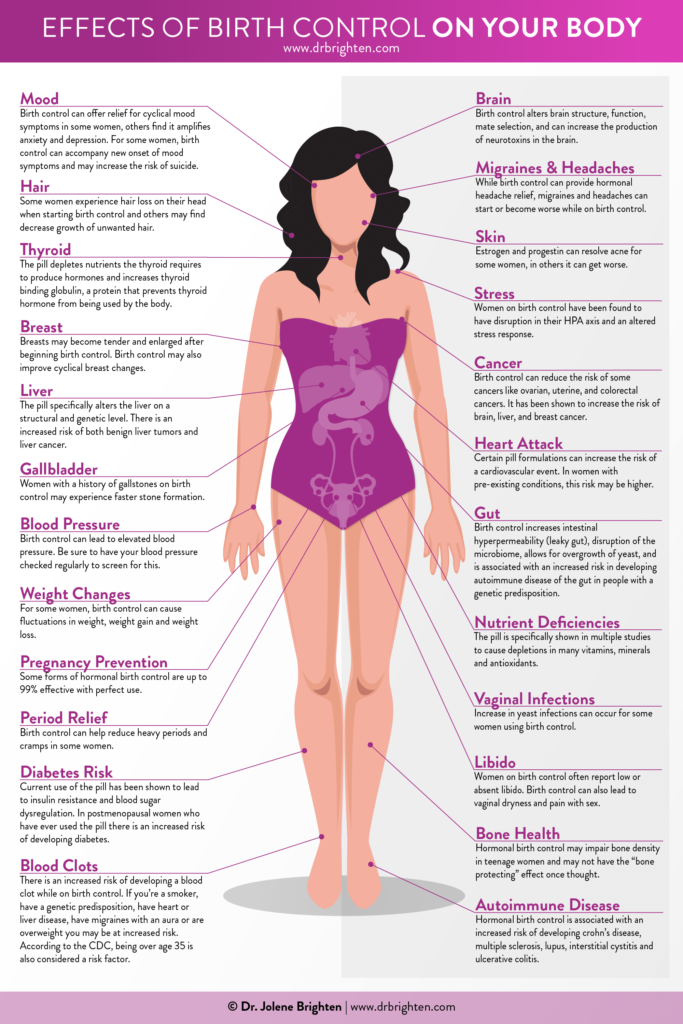
There are many well documented side effects associated with using hormonal birth control. Here I’ve detailed the side effects of birth control. When you know the side effects to look out for then you can quickly identify when it is time to call your doctor.
You’re probably aware of at least some of these side effects. In addition to the concerns about stroke, clots, and heart attacks, the pill depletes nutrients, raises inflammation, can lead to adrenal and thyroid dysfunction, causes insulin dysregulation, and disrupts gut health.
In addition, you can take steps to reduce your risk of experiencing side effects and improve your health while using this medication.
Do You Have to Wait for Your Period to Start Birth Control?
This was a question at the top of Natasha’s list. By the way, I do recommend taking a written list of questions to your doctor to ensure you get all your questions answered.
Do I have to Take Birth Control at the Same Time Everyday?
The consensus is no, however, this is a daily habit and forming a routine can help ensure you do take it every day.
7 Ways to Stay Healthy On Birth Control
After presenting Natasha with her options and educating her on the potential benefits and risks based on her individual factors she was ready to start the pill. She knew her job was to continue to track symptoms and report back if she had issues. We also reviewed the emergency signs and symptoms like swelling of limbs, palpitations, shortness of breath, and extreme headaches that would warrant a trip to the ER.
My job was to see her back in 6 months for a thorough physical exam and blood work to monitor her body on birth control. We can make a lot of generalizations about birth control from the research, but with my patients, my concern is what is true for them.
To support Natasha and ensure she was as successful as possible with her new prescription we implemented the following:
1. Eat a Nutrient Dense Diet
The pill specifically can lead to nutrient depletions like vitamin E, C, B2, B6, B9 (folate), B12, selenium, zinc, and magnesium. Ensuring you’re getting adequate nutrients in your diet is key.
Food Source of Common Nutrient Deficiencies Caused by the Pill
Vitamin E: nuts, seeds, leafy greens
Vitamin C: bell peppers, leafy greens, citrus fruit, berries
B Vitamins: Eggs, meat, seafood, leafy greens
Selenium: Fish, beef, leafy greens, Brazil nuts
Zinc: Seafood, oysters, beef, beans, nuts
Magnesium: Leafy greens, beans, dark chocolate, nuts, seeds
In addition, Natasha started a multivitamin to support her body. In my experience, dietary practices aren’t enough to compete with the nutrient depletions caused by birth control. But I want to be super clear, you can’t just take a multi and skip the veggies and think you’ll be good. Nutrition and lifestyle are foundational to health and no supplement can take the place of it.
2. Support Liver Health
While on birth control, your liver takes a hit. Not only because the nutrients it needs to do its job are diminished, but also because it is the role of the liver to detox the extra hormones. The impact on the liver is why some women experience elevated cholesterol, elevated sex hormone binding globulin (SHBG), liver tumors, liver cancer, and blood sugar dysregulation.
Your liver depends on amino acids, B vitamins, minerals and more to do its job. This is why diet is so important, and in addition, monitoring of liver health.
This is perhaps one of the most misunderstood aspects about my work. When I titled the chapter in Beyond the Pill, “Birth Control Hormone Detox 101” the intention was to educate women on how your body detoxifies birth control hormones and your natural hormones. The chapter was originally called “Liver Health” but apparently that’s not too appealing.
In this chapter I educate you about how your body naturally detoxifies both endogenous (what you make) and exogenous (what comes in) waste. Your body does this naturally, but requires certain nutrients and habits for the system to work.
In my practice we use a food based support system to help optimize this for women on birth control and coming off. Sadly, however, there have been companies who have taken what I’ve written and painted this picture that “you have to force your body to detox birth control.”
Let’s be clear, your body has detox systems. You need to support these detox systems. But it is not true that your body will not detox these synthetic hormones without a certain medication or supplement.
3. Mind Your Microbiome
The pill is known to cause intestinal hyperpermeability (leaky gut), disrupt normal gut bugs, and produce an environment that allows for the overgrowth of less desirable critters.
The pill can also inflame the digestive tract, creating immune dysregulation that increases the risk for autoimmune disease.
Eating prebiotic rich foods, taking probiotics, and getting ample fiber can help support a healthy gut. In addition, nutrients like L-glutamine, slippery elm, and zinc can provide additional support.
4. Support Healthy Inflammation
Yes, inflammation isn’t bad, but too much of it can cause big trouble. We know from studies that the pill can result in elevated C-reactive protein (CRP), which can contribute to heart disease, compared with those not on the pill.
Lowering inflammation can improve your mood, help with cramps, and reduce back pain and fatigue. Eating omega-3 rich foods such as wild-caught, cold water fish, wanuts, flaxseeds and grass-fed beef can help modulate inflammation. Including turmeric and ginger in your diet can help too.
5. Get Your Stress in Check
Research has shown that women on the pill experience inappropriate responses to stress via their HPA-Axis (hypothalamic-pituitary-adrenal axis), which leads to inappropriate cortisol secretions.
Try incorporating stress reducing practices like meditation (even 5 minutes can do wonders), prayer, mindfulness, finding your happy place, indulging in a massage, acupuncture, time with friends, and exercise are all great ways to reduce stress.
6. Sleep is a Must
Sleep is essential for hormone health, repair of tissues damaged throughout the day, improved mood, and optimal brain health.
Aim to sleep 7-9 hours nightly in a completely dark room. If you’re struggling with sleep, check out these tips for better sleep.
7. Trust Your Body, Your Symptoms & Never Stop Advocating for Yourself
Not all women will have side effects with birth control, but if you do, see your doctor. Some doctors don’t “believe” the studies, let alone women’s stories. This doesn’t mean you should give up. There are many excellent doctors who can help you on your journey.
If your birth control isn’t working for you, advocate for yourself!
If we’re going to move women’s medicine forward then we have to stop arguing whether the side effects are real or if a woman is telling the truth. Instead, we need to begin asking questions about why some women struggle on birth control while others thrive.
For the record, I’m not anti-hormonal birth control.
It honestly feels ridiculous to have to say that, but there are definitely people who don’t want you questioning birth control and use the idea that “Dr. Brighten is just anti-birth control” to try to end the conversation.
I am pro–informed consent. That means doctors giving you all the information you need to consent to taking birth control. I spent more than a decade on the pill and know all too well the symptoms of hormonal chaos that follow when you stop the pill for good.
And there is a whole lot I wish my doctor would have shared with me before starting birth control. The reality is that most doctors aren’t educated on the systemic impacts and haven’t taken the time to go into the research to understand why some women experience the side effects they do.
If this article has been helpful for you, please share it, comment below and get this information out. We can simultaneously be grateful for our access to birth control while we also advocate for women to have access to the information they need.
Serotonin (also known as 5-hydroxytryptamine, or 5-HT) is one of the most talked-about neurotransmitters– molecules that help your nervous system communicate. You may know it
“I’ve been considering starting hormonal birth control, but I’m concerned about the side effects,” Natasha shared in her first visit. Like many women considering hormonal
Does birth control cause weight gain? It’s a common side effect women report, yet it is often dismissed because the research is largely inconclusive. Concerns
We have to honor my patients in the evolution of the post-birth control syndrome Brighten Protocol™. The term Post-Birth Control Syndrome and protocols surrounding it were born
We’re all hopeful that once our raging-hormone teen years are behind us, acne will become nothing more than a distant memory. Unfortunately, for many women,