
Herbs & Supplements

##Maecenas sed diam eget risus varius blandit sit amet non magna. Vivamus sagittis lacus vel augue laoreet rutrum faucibus dolor auctor. Donec id elit non mi porta gravida at eget metus. Etiam porta sem malesuada magna mollis euismod. Vivamus sagittis lacus vel augue laoreet rutrum faucibus dolor auctor. Cras mattis consectetur purus sit amet fermentum. Duis mollis, est non commodo luctus, nisi erat porttitor ligula, eget lacinia odio sem nec elit. Curabitur blandit tempus porttitor. Donec ullamcorper nulla non metus auctor fringilla. Nullam quis risus eget urna mollis ornare vel eu leo. Maecenas faucibus mollis interdum. Cras justo odio, dapibus ac facilisis in, egestas eget quam. Maecenas sed diam eget risus varius blandit sit amet non magna. Curabitur blandit tempus porttitor. Donec ullamcorper nulla non metus auctor fringilla. Nullam quis risus eget urna mollis ornare vel eu leo. Maecenas faucibus mollis interdum. Cras justo odio, dapibus ac facilisis in, egestas eget quam. Maecenas sed diam eget risus varius blandit sit amet non magna.

Most Popular

Magnesium is near the top of the list of crucial nutrients. It is the fourth...

If you’ve got ovaries that ovulate, it is highly likely that you develop an ovarian cyst at sometime in your fertile years. You may not even notice the ovarian cyst symptoms or it may be very painful depending on the type and size of the cyst.

Each ovulatory cycle, an egg matures inside of a follicle. Then the follicle bursts open and the egg gets released. Next, either you become pregnant, or your period arrives. After that, the follicle forms the corpus luteum, which is a cluster of cells in the ovary that starts producing progesterone – although not everybody produces enough progesterone

Sometimes, parts of this process become problematic. For example, if the follicle doesn’t release the egg…The follicle grows and turns into a follicular cyst.

Or, a corpus luteum cyst forms because the follicle bursts open as it would every month, but then it fills with fluid and sticks around a little longer. 

When we’re talking about these two types of cysts, they can also be called simple or functional cysts. Two different names for the same condition.

Often, these cysts simply shrink and then disappear. They come and go and you don’t realize that they’ve even been hanging around in your ovaries.

Other times, these cysts become enlarged. This can cause pain and other complications. Sometimes, cysts rupture and can even damage the ovary.

What Are Ovarian Cysts?

Ovarian cysts are fluid-filled pouches that form in or on the ovary. They can range in size from less than 1cm to 10cm. In some cases, there are no ovarian cyst symptoms and in others there may be pelvic pressure or pain. 

What Are The Types Of Ovarian Cysts? 

Simple cysts aren’t the only kinds of ovarian cysts. There are also complex cysts. 

Complex cysts include endometriomas, cystadenomas, and dermoids.

Endometriomas

These are cysts that sometimes occur in women with endometriosis. This happens when tissue that is similar, although distinct, to the uterine lining  invades the ovaries. These are sometimes referred to as chocolate cysts.

Cystadenomas

These cysts are pockets of mucus, fluid, and ovarian tissue on the outside surface of the ovary. They are usually benign growths but they can get rather large.

Dermoid

Dermoid cysts, also known as teratomas, commonly occur in the ovaries. In fact, they are one of the most common kinds for women between 20 and 40 years old. These may contain ovarian germ cells and tissues like teeth, hair, or fat. While they may not sound benign, they are for the most part and are rarely cancerous.

While these complex cysts can and do cause problems for many women, in this article, I’ll be focusing on functional cysts.

Ovarian Cysts Symptoms and Signs

If you have a cyst that simply shrinks and fades away, you may never even know that it was there.

However, if your cyst is problematic, there are several symptoms you may experience: 

  • Pelvic pain (especially around ovulation)
  • Irregular cycles
  • Spotting mid-cycle
  • Lower back pain
  • Nausea
  • Vomiting
  • Fever
  • Abdominal bloating 
  • Feeling full or heavy
  • Painful bowel movements or urination (the cyst can put pressure on the bowel or bladder)
  • Lack of ovulation
  • Fertility struggles
  • Painful sex

If you’re experiencing any of these symptoms, and especially if they’re accompanied by sudden pain or fever, it’s important to contact your doctor right away.

Do Ovarian Cysts Hurt?

Most cysts won’t cause a bit of pain — you won’t even know they are there. But if they become enlarged, they most certainly can become painful. 

Many women complain of lower back pain, abdominal pain, and pelvic pain associated with ovarian cysts. Still, cysts aren’t always painful – even large cysts can go unnoticed. 

Can Ovarian Cysts Cause Bleeding?

Mid-cycle bleeding is a common symptom of ovarian cysts. But it can also be a normal indicator of ovulation, or a symptom of many other conditions. If you ever experience vaginal bleeding and you know it’s not time for your period, it’s important to contact your doctor to get checked out. 

Can Ovarian Cysts Cause Back Pain?

In my practice, I’ve seen many women experience a dull, aching lower back pain if they’re experiencing complications due to ovarian cysts. Some women describe hip and pelvic pain as well. Definitely consult with your physician if you’re experiencing pain and you’re not sure why. 

Can Ovarian Cysts Cause Bloating?

It might be difficult to distinguish garden variety bloating from bloating caused by an ovarian cyst, but if your bloating is accompanied by pain, discomfort, or bleeding it could be that a cyst is causing your problems. 

Can Ovarian Cysts Cause Weight Gain?

Sometimes, as ovarian cysts grow large, women feel like they are ‘gaining weight.’ This isn’t weight gain in the traditional sense. If you have a large cyst, you aren’t putting on body fat. You may experience bloating from the cyst and that can cause water weight to accumulate.

How Do You Know If An Ovarian Cyst Has Ruptured?

Ovarian cysts can rupture without your knowledge. Usually, though, most women will feel pain or discomfort if their cyst ruptures. Sometimes fever or chills accompany a rupture. Complications may arise if the cyst is infected or the weight of the cyst causes the ovary to twist, known as ovarian torsion. Definitely contact your medical professional if you suspect that your ovarian cyst has ruptured, or if you’re experiencing lower back or pelvic discomfort, with or without fever and chills.

How Are Ovarian Cysts Diagnosed?

Ovarian cysts can be tricky to diagnose, especially since many times they don’t cause overt symptoms.

Sometimes, your doctor might discover one during your annual pelvic exam. This can usually be confirmed with an ultrasound. If you have a corpus luteum cyst, you might actually produce a false positive pregnancy test, so doctors often use this method to arrive at a diagnosis. That said, a home pregnancy test alone isn’t enough to diagnose a cyst. Ovarian cysts are also common during pregnancy, so your provider will likely test you.

In postmenopausal women, CA 125 is often ordered to assess an ovarian cyst. CA 125 testing is sometimes ordered in cases of ovarian cysts that are large in premenopausal women. It is not enough on its own to diagnose ovarian cancer and may also be elevated in cases of endometriosis, fibroids, liver or kidney disease, and cases of heart failure.

Ovarian Cysts Vs PCOS

It may seem like polycystic ovarian syndrome (PCOS) is the same thing as ovarian cysts. But they are actually two different conditions with similar names. 

In women with PCOS, multiple follicles keep growing, which do not release eggs, and multiple cysts can form in the ovary. PCOS is considered a metabolic condition that is characterized by hormonal imbalances. 

Ovarian Cysts Vs Fibroids

Functional cysts are normally filled with fluid, while fibroids are typically denser. Fibroids occur on or in the uterus and cysts occur on or in the ovaries.  

Ovarian Cysts Vs Endometriosis

Endometriosis is a condition where tissue similar to the lining of the uterus abnormally grows outside of the uterus. Sometimes, if endometriosis affects an ovary, that ovary can fill with blood. This is called an endometrioma, or a complex ovarian cyst that’s filled with blood. They are also referred to as “chocolate cysts.” 

What Causes Ovarian Cysts?

There’s no one singular cause for problematic ovarian cysts.

Technically, they can start with ovulation, but we can’t really define that as a “cause” of the cysts becoming irregular. 

Some of the common reasons cysts develop include:

  • Pelvic infection: sometimes infections can travel to the ovaries, resulting in cysts
  • Endometriosis: complex cysts may develop as a result of endometriosis
  • Pregnancy: in early pregnancy, a cyst forms to help nurture the pregnancy while the placenta develops. It can stick around on the ovary for longer than it’s supposed to.
  • Estrogen dominance: the hormonal imbalances that result when estrogen levels are high or high in relation to levels of progesterone can cause cysts to develop.

Does the Mirena® IUD Cause Ovarian Cysts?

According to the package insert, 12% of women using Mirena® develop ovarian cysts. If you have a history of ovarian cysts and you’re considering an IUD, ask your doctor if there are concerns about exacerbating the problem.  

How Ovarian Cysts Are Treated

For the most part, ovarian cysts seem to resolve themselves. Especially if they are asymptomatic, they may just disappear and you’ll never even know they were there.

For this reason, many doctors take a “wait and watch” approach before resorting to any sort of invasive treatment for ovarian cysts. 

Often, your doctor will suggest pain medications like ibuprofen or non-steroidal anti-inflammatories (NSAID) as a treatment for the pain caused by ovarian cysts. If you have a cyst or suspect you might, get a thorough evaluation and your doctor can advise you on the best course of action.

How Are Ovarian Cysts Removed?

If an ovarian cyst is causing significant pain, is larger than 5 cm in diameter, or appears related to endometriosis, your doctor may recommend surgery to have the cyst removed. Your doctor may also suggest surgery if she suspects that it may be cancerous.

The typical surgeries performed to remove ovarian cysts include:

  • Laparoscopic cystectomy. This is where a small incision is made to remove the cyst with the assistance of a small camera.
  • Oophorectomy. This procedure is the removal of the ovary.
  • Hysterectomy. This is the removal of the uterus, ovaries, and possibly fallopian tubes. 

Hormonal Birth Control For Ovarian Cysts

It’s quite possible your doctor will recommend hormonal contraception to treat an ovarian cyst. The idea is that if ovulation is suppressed, cysts won’t form, right? 

Early formulations of the pill were associated with a lower rate of functional cysts, which many physicians took to mean it could treat ovarian cysts causing them to adopt this treatment practice in the 1970’s. While this approach has shown to be ineffective, it hasn’t really stopped physicians from using it as a treatment. Plus, it can’t shrink or affect an existing cyst in any way. And, keep in mind that birth control options (especially progestin-only options) do not necessarily stop ovulation from happening.

According to a 2014 Cochrane Review, there is no evidence that oral contraceptives cause the resolution of ovarian cysts any faster than what would happen naturally. “Therefore, birth control pills should not be used for this purpose. A better approach is to wait two to three months for the cysts to disappear on their own.” 

Plus, we know that the pill can possibly cause a whole host of other unpleasant hormonal side effects. Even if hormonal contraception seemed to work, once you quit taking the pill, your cysts are likely to return if you haven’t addressed the root cause,.

If you’re struggling with any pill-induced discomforts, I’d invite you to check out my best-selling book, Beyond the Pill. 

Understand that cysts that do not self resolve often require surgical intervention.

Natural Remedies For Ovarian Cysts

If you’re experiencing pain from an ovarian cyst, there are plenty of natural things you can do to help ease the pain. 

Some of my patients swear by taking Epsom salt baths or using a heating pad to help deal with the pain.

But what about getting to the root of the problem, the whole reason cysts are developing in the first place?

Since cysts can often be caused by an overabundance of estrogen, focusing on ways to support estrogen breakdown in the liver and excretion through the digestive system can help treat ovarian cysts.

Some of the things I recommend for women in my clinical practice:

Increase Your Plants

Vegetables and fruits are rich in antioxidants that support ovarian health. They also contain important vitamins and minerals for supporting hormone health. Aim to eat leafy green daily and cruciferous vegetables at least three times a week. Cruciferous vegetables contain nutrients that your body can convert into DIM, a molecule that supports estrogen metabolism.

You can grab my free meal plan and recipe guide to help you begin incorporating these into your diet today.

Targeted Supplements

  • Vitex (Chaste tree berry) supports progesterone production, which can help counter estrogen.
  • Green tea extract is a potent antioxidant, which may help protect ovarian health. In one PCOS rodent study green tea was shown to reduce the rate of cysts.
  • Diindolylmethane (DIM) supports estrogen metabolism and promotes 2-hydroxyestrone, a more favorable estrogen metabolite.

Balance Women’s Hormone Support is a formula that contains ingredients which may help harmonize hormones, and could help your liver process excess estrogen

Eat Your Fiber

I regularly encourage my patients to load up on vegetables for fiber. You need a healthy gut to get estrogen out and fiber can really help encourage frequent elimination, plus support a healthy microbiome.

High-quality Probiotics

Replenishing the gut with friendly microbes can lead to happy hormones. That’s because your gut is a crucial organ in helping you eliminate excess hormones. As it turns out, those gut bugs interact with your estrogen as what is known as the estrobolome. I recommend MegaSporeBiotic to my patients. 

Seed Cycling

This time-tested practice may encourage hormone balance by balancing beneficial estrogens with flax and pumpkin seeds in the first half of your cycle. Then in the second half of your cycle (after ovulation) you encourage progesterone with sesame and sunflower seeds. Check out my seed cycling article with all the details here.

Ovarian Cysts And Pregnancy

Ovarian cysts are common in early pregnancy. Because you’re getting so many ultrasounds during this time, you may be more likely to find cysts that you wouldn’t otherwise notice.

For the most part, they are nothing to worry about and will resolve on their own. But do bring up any concerns or symptoms to your OB/GYN. 

Can Ovarian Cysts Cause Infertility?

Most (about 4 in 5) ovarian cysts are asymptomatic and will simply disappear within a few months’ time. For the most part, functional cysts are considered unlikely to interfere with fertility.

On the other hand, endometriomas (cysts that are associated with endometriosis) can spawn fertility struggles. But, it’s not clear whether this is a direct result of the cyst itself, or if the underlying issues that caused the cyst are responsible for fertility problems.

Also, if surgery is required to remove a cyst, there is concern that it could interfere with future fertility. But research suggests that in women who undergo in-vitro fertilization (IVF) treatment, surgery to remove ovarian cysts doesn’t impact the chances of achieving pregnancy. 

There are minimally invasive options to remove non-cancerous cysts that shouldn’t affect the ovaries. Mention your family planning goals to your doctor when discussing treatment options.

Ovarian Cysts After Menopause

Up until this point, we’ve been primarily discussing ovarian cysts that develop in women of childbearing age, who are still ovulating.

But if ovarian cysts develop after menopause, it’s a slightly different circumstance. Since women who are post-menopausal don’t ovulate, the appearance of functional cysts will likely make your doctor want to investigate further. 

Post-menopausal cysts may be benign, but your doctor will likely want to run a few tests to determine what’s going on. Research indicates most simple post-menopausal ovarian cysts either resolve on their own or stay the same. 

In most cases, your doctor will want to perform both an ultrasound and CA 125 to screen for cancer before proceeding to a “watch and wait” stance.

Can Ovarian Cysts Be Cancerous?

Typically, ovarian cysts are not cancerous, but it can still be scary to hear the news that you have one. If your doctor is concerned that you possibly have a cancerous ovarian cyst, it’s likely that she will order bloodwork to determine your cancer antigen 125 (CA 125) levels. This blood test can help your physician understand the likelihood of ovarian cancer.

Certain factors put you at higher risk for developing ovarian cancer:

  • Family history of ovarian cancer 
  • Previous history of breast cancer
  • Previous history of gastrointestinal cancer

Support Your Hormones (And Ovaries) Naturally

Believe it or not, painless, easy menstruation is completely possible. PMS, bloating, acne, and even ovarian cysts can be a thing of the past…you just need a blueprint for success.

Which is what I’ve created for you in my Hormone Starter Kit to help you get started on the right path.

This completely free resource is absolutely packed with hormone education and even includes a complete 7-day meal plan. It’s literally everything you need to start down the path to hormonal harmony. Download your free copy here.

Urinary tract infections (UTIs) are incredibly common. If you’re currently experiencing a burning sensation when you pee, or you feel like you have to urinate, but not much comes out, you could be dealing with a UTI.

But what if it’s 6 p.m. on a Friday and you can’t get to the doctor until Monday? Or you don’t want to take antibiotics unless you absolutely have to? (Smart move for keeping your microbiome top form btw, but keep reading because there are some good reasons you might choose the antibiotic route.)

In this article, we’re discussing some of the top natural remedies for clearing up a UTI — or steering clear of one in the first place — that you can use in the privacy of your own home. But first, let’s dig into exactly what a UTI is and how to tell if you have one.

What Is A Urinary Tract Infection?

A urinary tract infection occurs when a bacterial infection affects your urinary system, causing problems like discomfort during urination, frequent urination, urgency, and other symptoms. The most common culprits causing the problem are the microbes Escherichia coli (E. coli) and Staphylococcus saprophyticus

Why do Urinary Tract Infections Occur?

These bacteria are commonly found in the digestive tract, which means that if they are causing mayhem for your urinary tract, it’s possible they made the way there from your anus. Infrequent urination and dehydration have also been shown to be factors in developing UTIs. 

Studies suggest that when women are encouraged to drink more water, they are less likely to develop a UTI. 

Practicing good sex hygiene and always wiping from front to back when using the bathroom can help prevent this contamination. Sometimes, even if you’re diligent, bacteria can still find its way to where it shouldn’t be. 

If you’re just starting to suspect that you have a UTI, chances are good that it’s only affecting your lower urinary tract — that is to say, your bladder and urethra. This is why UTIs are commonly referred to as “bladder infections.” Technically, a bladder infection is a type of UTI, but most women use the term interchangeably. 

In the later stages of a more severe UTI infection, the whole urinary system can be compromised, including your kidneys. 

If a UTI gets to this point, it’s considered a more complex and potentially dangerous situation. If you think you have a UTI and you’ve got a fever above 99.9, or acute pains in your lower back, side, or groin, it’s best to get to a doctor ASAP to see if you need antibiotics. The natural remedies I’m discussing here won’t be enough to kick a full-blown case of pyelonephritis (kidney infection) to the curb. 

How Do You Know If You Have A Urinary Tract Infection?

Often, UTIs start almost asymptomatic (without symptoms). You may have an urge to urinate, but then when you go to the bathroom, you can’t seem to go. Or you can only relieve yourself a tiny bit, and then you’re making a beeline for the restroom again just minutes after you’ve walked out. Maybe you feel a bit of burning or tingling when you pee. A lot of women don’t seem to think much of their symptoms at this point. 

When these mild symptoms start to happen a few times in a row, women often begin to notice. But sometimes, things progress a little further, and a mild fever or pelvic pain starts to develop before we acknowledge something is wrong.

This could be because you’ve had symptoms before and had them dismissed by a doctor. A recent study showed that the test commonly used to diagnose UTI isn’t always accurate. Researchers discovered that the standard culture missed the presence of pathogenic bacteria almost 20% of the time. 

So — if you’re experiencing any of these symptoms, don’t get a positive result on your bacteria culture test, and your doctor isn’t giving you answers — be sure to seek a second opinion, and you may want to try out the more natural remedies in this article.

Sometimes what feels like a UTI or a painful bladder is because of a condition known as Interstitial Cystitis. Either way, your provider should be working with you to find out the cause of your symptoms.

Bladder Infection Symptoms

The most common symptoms of a mild lower urinary tract infection that’s infecting the bladder or urethra include:

  • Burning sensation or pain while urinating
  • Feeling of pressure in your pelvis or lower abdomen
  • Having the urge to urinate frequently
  • Being unable to void much urine 
  • Presence of blood in the urine
  • Pelvic pain
  • Low-grade fever
  • Change in the color of your urine (darker, cloudy, milky)
  • Stronger than usual odor to your urine

If the UTI has progressed to the kidneys, the symptoms may include:

  • Backache
  • Pain in the side
  • High fever
  • Nausea
  • Vomiting
  • Chills

Urinary Tract Infection Treatment

The typical treatment for a UTI is antibiotics prescribed by your doctor. To diagnose a UTI, your doctor may identify your symptoms and prescribe you the appropriate medication.

In other instances, if your symptoms aren’t straightforward, or if you’ve been struggling with recurrent UTIs, your doc may suggest further testing.

More in-depth testing may involve:

  • Additional bacteria cultures of a urine sample
  • Ultrasound, computerized tomography (CT) scan, or magnetic resonance imaging (MRI)
  • Cystoscopy — using a camera to look inside your urethra and bladder

Urinary tract infection antibiotics

Some of the common antibiotics your doctor may prescribe to treat a UTI include:

  • Cephalexin (Keflex®)
  • Ceftriaxone (Rocephin®)
  • Trimethoprim/sulfamethoxazole (Septra®, Bactrim®)
  • Nitrofurantoin (Macrobid®, Macrodantin®)
  • Fosfomycin (Monurol®)

In certain instances, your doctor may prescribe a less common antibiotic. If you have allergies to certain antibiotics, for example, or your UTI is more severe, you may receive a prescription for a class of antibiotics called fluoroquinolones. These include Cipro (ciprofloxacin) and Levaquin (levofloxacin). 

A typical course of antibiotics for a mild UTI lasts several days. If you’re otherwise feeling fine besides your UTI, your physician may suggest a shortened course of drugs, maybe 1-3 days. Follow your doctor’s direction, though. Stopping an antibiotic too soon could enable your infection to return. 

If you are getting frequent, recurring infections, your doctor might suggest a low dose antibiotic regimen over the course of several months. 

It’s important to note that an estimated 22% of women receiving antibiotic treatment for a UTI develop candida overgrowth soon after. If you have to take antibiotics, be sure to accompany them with a course of probiotics to help to keep candida at bay.

While you may want to avoid antibiotics at any cost to spare your microbiome, it’s important to keep in mind that a UTI can quickly turn into a kidney infection. Because your kidneys are immune privileged, meaning your immune system doesn’t effectively get inside this organ, an infection here can lead to long term kidney damage. If you’re going to take the natural route, it’s strongly recommended that you communicate with your provider and perhaps have them call in an antibiotic prescription in the event that you do need it. 

Symptoms like fever, chills, nausea, vomiting, pain in your low back or side is a sign that it’s time to talk to your provider and start that antibiotic. Your microbiome can heal, but your kidneys can’t if an infection is left untreated.

Pain Medication for UTIs

Another treatment your doctor may recommend is an analgesic to numb your urethra and bladder. This can help with painful urination.

Hormone Replacement Therapy as a UTI Treatment

Sometimes, postmenopausal women find vaginal estrogen therapy helpful in preventing  bladder infections since the lowered estrogen levels after menopause cause changes to and an overall thinning of the tissues in the urinary tract, making you more susceptible to infection. It appears that estrogen therapy may help strengthen urinary tract tissue and trigger the release of natural antimicrobial proteins found in the bladder.  

13 of The Best Natural Remedies for a UTI

The best natural remedy for a UTI is, first and foremost, prevention. As I mentioned earlier, practicing good sex hygiene is essential, and so is wiping from the front to back when using the restroom. Anything you can do to help prevent the spread of bacteria from the anus to the urethra is key.

However, another thing to focus on is keeping your immune system strong at all times. 

Here are some of the ways to support your immune system and specifically fight off bladder infections that you can try before resorting to antibiotics or if you’ve tried medications and they didn’t work.

UTI Home Remedies

1. Don’t Hold It

When you feel the urge to urinate, go! Holding your pee creates a recipe for disaster when you’re trying to avoid or heal from a UTI. When you’re not flushing the urine out of your bladder, you’re not flushing out the bacteria that are clinging to the urinary tract, which encourages them to multiply. The best way to get rid of those infection-causing microbes is to make sure you use the bathroom, and often. It’s also a good idea to pee after you’ve had sex. This helps get rid of any bacteria that may enter the urethra as a result of intercourse.  

2. Hydrate, Hydrate, Hydrate

Drinking plenty of filtered water (I love my Berkey water filter so, so much) is vital for many aspects of health. Urinary health is no exception. If you’re currently fighting or trying to prevent a bladder infection, proper hydration has been shown to decrease UTI incidence. Aim to drink twice your bodyweight in ounces every day, whether you have an infection or not. 

3. Cranberry Power

Your grandmother’s old recommendation for a bladder infection has some truth to it after all. Drinking unsweetened cranberry juice seems to prevent bacteria from clinging to the urinary tract, especially when used long term for prevention. And cranberry extract, which is readily available and not super expensive, is even more effective than the juice. In one study, it was proven about as effective as antibiotics in treating UTI.  

4. Take Probiotics

Probiotics are an excellent tool for supporting your immune system at all times. Probiotics are live and active “friendly” bacteria that help destroy any of the not-so-good ones. You can get them in supplement form (here’s the one I recommend to my patients), but you can also get them by eating fermented foods like sauerkraut and kimchi. 

5. D-mannose

D-mannose is a monosaccharide that can be rapidly absorbed and excreted by the urinary tract and can prevent the adhesion of bacteria to the urinary tract walls. In one study, women with recurrent UTI were given a D-mannose powder, and their risk of recurrent UTI was significantly reduced

6. Vitamin C

Vitamin C is well known for its support of the immune system. Whenever you’re fighting an infection of any sort, it’s a good idea to ratchet up the vitamin C intake. Some experts say that vitamin C may help treat a bladder infection by making urine more acidic, which could inhibit bacterial growth. In a study of pregnant women, researchers found 100mg per day of vitamin C to effectively treat a UTI. This is excellent news for pregnant women, as vitamin C is considered safe for use during pregnancy. You’ll find a healthy dose of vitamin C in our Prenatal Plus.

7. Barberry

Barberry has been used in traditional medicine for hundreds of years to help cure a variety of ailments. It’s also known as uva-ursi. In one study, researchers found that a formula containing the active ingredients in barberry and dandelion was an effective treatment for recurrent cystitis, which is useful information for anyone looking to find a natural cure for their UTI. 

8. Garlic

Garlic is a powerful natural antimicrobial and immune supportive food. With antibacterial and antiviral properties, it’s a great idea to include it in your diet regularly. If you don’t like the flavor, you can find garlic available in capsule form. 

9. Urinate After Sex

This is good advice in general, whether you’re fighting a UTI or not. Going pee after sex helps wash away any bacteria that may have made its way to your urethra opening during coitus. 

@drjolenebrighten

##stitch with @richiegattztv Great way to prevent a UTI. ##uti ##medicine ##drjolenebrighten ##womenshealth

♬ original sound – Dr. Jolene Brighten

10. Keep Dry Down There

One way to make sure you’re creating the least hospitable environment for pathogenic bacteria is to keep things dry. Bacteria love moisture. When you get out of the bath or shower, be sure to dry off your lady parts gently with a clean towel. Also — wear clothes that allow your urethra to breathe — cotton underwear and loose-fitting jeans are good ideas. Trapping bacteria with sweat creates conditions that enable them to thrive. After a challenging workout, be sure to ditch the sweaty yoga pants for something drier.

11. Professional Grade Oregano Oil

Some essential oils have powerful antibacterial properties, including oregano oil, which has been shown to kill E. coli, one of the main bacteria that cause UTI. The great thing about oregano oil is that it doesn’t cause side effects the way that antibiotics can — and you don’t have to worry about antibiotic resistance when taking it either. Oregano oil is taken internally in a capsule form. Be sure to use professional grade only and look for the GMP stamp on the label. This isn’t the same as an essential oil you’d use in a diffuser. And please, do not apply directly to your skin, especially the urethra as it can cause a significant burn.

12. Corn Silk (Zea mays)

Corn silk is originally an indigenous treatment for bladder conditions, including UTIs that has been adopted by western herbalists. It is often combined with other herbs because of its ability to soothe the urinary tract and anti-inflammatory effects. More recently, research has shown that constituents of this plant may in fact prevent E. coli from being able to adhere to the walls of the urinary tract.

13. Avoid Spermicides

As helpful as they may be in preventing pregnancy, spermicides aren’t great for vaginas or UTIs. One of the most significant risk factors researchers discovered in young women with UTI is diaphragm with spermicide use. It’s best to use another form of birth control if you’re trying to clear up or prevent a UTI. Check out my ultimate contraception guide for plenty of other options.

What About Coconut Oil for UTIs?

While coconut oil itself hasn’t exactly been studied as a UTI treatment, it has been shown to have bacteria-fighting benefits, especially as a topical treatment for skin infections. There are undoubtedly a ton of ladies who swear by topical coconut oil as a means for preventing or treating mild yeast infections. There’s enough anecdotal evidence to suggest that the administration of coconut oil to the urethra opening may help soothe some external itching and burning caused by a bladder infection. But as for a potent enough treatment for a UTI, this one isn’t likely to eliminate an infection.

Will A UTI Go Away On Its Own?

As with any infection, an otherwise healthy woman’s body is technically equipped to fight and resolve a UTI on its own. An estimated 25-42% of UTIs resolve without conventional treatment. 

The problem arises when the infection becomes too rampant for the immune system to handle. If immunity is compromised in any way, or if the infection has been building for a while, then it’s time to bring in some extra help to fight those bad bacteria. 

The trouble is, antibiotic-resistant UTIs are increasing. As the New York Times reported, one in three simple UTIs is now considered resistant to one of the most common antibiotics used to treat them, Bactrim. One in five is considered resistant to other commonly prescribed antibiotics. 

Why Do I Keep Getting Urinary Tract Infections?

UTIs can be extremely frustrating when they keep coming back. Most of the time, the recurrent infection is caused by the same pathogen as the initial infection. And about 80% of UTIs are reoccurring.

This could be due to the antibiotic resistance of the bacteria. Since we take so many antibiotics, they are becoming less and less effective against many strains of E. coli. It can also be simply physiology — certain women are just more prone to urinary tract infections. 

One of the keys is to make sure that you start treating a UTI as soon as you feel even very mild symptoms pop up. The longer the bacteria have a chance to multiply, the harder the infection is to get rid of. 

Practicing the natural and preventive measures I’ve laid out here is a great idea — take a daily probiotic, vitamin C, and drink plenty of water…even if you don’t have symptoms right now. These good habits can go a long way towards keeping a UTI from cropping back up.  

Looking For More Natural Remedies? 

As you may know, I’m extremely passionate about providing women with all the details they need to make informed decisions about their reproductive health. 

I’m not in any way against pharmaceuticals when they are necessary and indicated for a particular treatment. Antibiotics have a time and a place in our health. But when other options are safe and effective, I like to offer women choices that include natural options they can administer themselves.

If you’re into that sort of balance too, I’d love to send you an email when I post new articles. Hop on my mailing list HERE so I can share my research with you!

Citations

Hooton T, Gupta K, Acute simple cystitis in women. UpToDate. 13 Mar 2019.

https://www.uptodate.com/contents/acute-simple-cystitis-in-women?search=acute%20simple%20cystitis%20in%20women&source=search_result&selectedTitle=1~150&usage_type=default&display_rank=1

Minardi D, d’Anzeo G, Cantoro D, Conti A, Muzzonigro G. Urinary tract infections in women: etiology and treatment options. Int J Gen Med. 2011;4:333–343. doi:10.2147/IJGM.S11767

https://www.ncbi.nlm.nih.gov/pmc/articles/PMC3108201/

Foxman B. Epidemiology of urinary tract infections: incidence, morbidity, and economic costs. Dis Mon. 2003 Feb;49(2):53-70. doi: 10.1067/mda.2003.7. Review. PubMed PMID: 12601337.

https://www.ncbi.nlm.nih.gov/pubmed/12601337

Hickling DR, Nitti VW. Management of recurrent urinary tract infections in healthy adult women. Rev Urol. 2013;15(2):41–48.

https://www.ncbi.nlm.nih.gov/pmc/articles/PMC3784967/

Mazzola BL, von Vigier RO, Marchand S, Tönz M, Bianchetti MG. Behavioral and functional abnormalities linked with recurrent urinary tract infections in girls. J Nephrol. 2003 Jan-Feb;16(1):133-8. PubMed PMID: 12649544.

https://www.ncbi.nlm.nih.gov/pubmed/12649544

select

Eckford SD, Keane DP, Lamond E, Jackson SR, Abrams P. Hydration monitoring in the prevention of recurrent idiopathic urinary tract infections in pre-menopausal women. Br J Urol. 1995 Jul;76(1):90-3. doi: 10.1111/j.1464-410x.1995.tb07839.x. PubMed PMID: 7648069.

https://www.ncbi.nlm.nih.gov/pubmed/7648069

Wilde MH, Carrigan MJ. A chart audit of factors related to urine flow and urinary tract infection. J Adv Nurs. 2003 Aug;43(3):254-62. doi: 10.1046/j.1365-2648.2003.02708.x. PubMed PMID: 12859784.

https://www.ncbi.nlm.nih.gov/pubmed/12859784

Beetz R. Mild dehydration: a risk factor of urinary tract infection?. Eur J Clin Nutr. 2003 Dec;57 Suppl 2:S52-8. doi: 10.1038/sj.ejcn.1601902. Review. PubMed PMID: 14681714.

https://www.ncbi.nlm.nih.gov/pubmed/14681714

Heytens, S. et al. Women with symptoms of a urinary tract infection but a negative urine culture: PCR-based quantification of Escherichia coli suggests infection in most cases. Clinical Microbiology and Infection, Volume 23, Issue 9, 647 – 652

https://www.clinicalmicrobiologyandinfection.com/article/S1198-743X(17)30209-4/fulltext

Rozenberg S, Pastijn A, Gevers R, Murillo D. Estrogen therapy in older patients with recurrent urinary tract infections: a review. Int J Fertil Womens Med. 2004 Mar-Apr;49(2):71-4. Review. PubMed PMID: 15188831.

https://www.ncbi.nlm.nih.gov/pubmed/15188831

Robinson D, Cardozo LD. The role of estrogens in female lower urinary tract dysfunction. Urology. 2003 Oct;62(4 Suppl 1):45-51. doi: 10.1016/s0090-4295(03)00676-9. Review. PubMed PMID: 14550837.

https://www.ncbi.nlm.nih.gov/pubmed/14550837

Foxman B, Buxton M. Alternative approaches to conventional treatment of acute uncomplicated urinary tract infection in women. Curr Infect Dis Rep. 2013;15(2):124–129. doi:10.1007/s11908-013-0317-5

https://www.ncbi.nlm.nih.gov/pmc/articles/PMC3622145/

Bergamin PA, Kiosoglous AJ. Non-surgical management of recurrent urinary tract infections in women. Transl Androl Urol. 2017;6(Suppl 2):S142–S152. doi:10.21037/tau.2017.06.09

https://www.ncbi.nlm.nih.gov/pmc/articles/PMC5522788/

Al-Badr A, Al-Shaikh G. Recurrent Urinary Tract Infections Management in Women: A review. Sultan Qaboos Univ Med J. 2013;13(3):359–367. doi:10.12816/0003256

https://www.ncbi.nlm.nih.gov/pmc/articles/PMC3749018/

Lean K, Nawaz RF, Jawad S, Vincent C. Reducing urinary tract infections in care homes by improving hydration. BMJ Open Qual. 2019;8(3):e000563. Published 2019 Jul 10. doi:10.1136/bmjoq-2018-000563

https://www.ncbi.nlm.nih.gov/pmc/articles/PMC6629391/

Hooton TM, Vecchio M, Iroz A, et al. Effect of Increased Daily Water Intake in Premenopausal Women With Recurrent Urinary Tract Infections: A Randomized Clinical Trial. JAMA Intern Med. 2018;178(11):1509–1515. doi:10.1001/jamainternmed.2018.4204

https://jamanetwork.com/journals/jamainternalmedicine/fullarticle/2705079

Lotan Y, Daudon M, Bruyère F, Talaska G, Strippoli G, Johnson RJ, Tack I. Impact of fluid intake in the prevention of urinary system diseases: a brief review. Curr Opin Nephrol Hypertens. 2013 May;22 Suppl 1:S1-10. doi: 10.1097/MNH.0b013e328360a268. Review. PubMed PMID: 23673384.

https://www.ncbi.nlm.nih.gov/pubmed/23673384

Jepson RG, Craig JC. Cranberries for preventing urinary tract infections. Cochrane Database Syst Rev. 2008 Jan 23;(1):CD001321. doi: 10.1002/14651858.CD001321.pub4. Review. PubMed PMID: 18253990.

https://www.ncbi.nlm.nih.gov/pubmed/18253990

Stothers L. A randomized trial to evaluate effectiveness and cost effectiveness of naturopathic cranberry products as prophylaxis against urinary tract infection in women. Can J Urol. 2002 Jun;9(3):1558-62. PubMed PMID: 12121581.

https://www.ncbi.nlm.nih.gov/pubmed/12121581

McMurdo ME, Argo I, Phillips G, Daly F, Davey P. Cranberry or trimethoprim for the prevention of recurrent urinary tract infections? A randomized controlled trial in older women. J Antimicrob Chemother. 2009 Feb;63(2):389-95. doi: 10.1093/jac/dkn489. Epub 2008 Nov 28. PubMed PMID: 19042940; PubMed Central PMCID: PMC2639265.

https://www.ncbi.nlm.nih.gov/pubmed/19042940

Beerepoot M, Geerlings S. Non-Antibiotic Prophylaxis for Urinary Tract Infections. Pathogens. 2016 Apr 16;5(2). doi: 10.3390/pathogens5020036. Review. PubMed PMID: 27092529; PubMed Central PMCID: PMC4931387.

https://www.ncbi.nlm.nih.gov/pubmed/27092529

Ghouri F, Hollywood A, Ryan K. A systematic review of non-antibiotic measures for the prevention of urinary tract infections in pregnancy. BMC Pregnancy Childbirth. 2018;18(1):99. Published 2018 Apr 13. doi:10.1186/s12884-018-1732-2

https://www.ncbi.nlm.nih.gov/pmc/articles/PMC5899369/

Larrson B, Jonnason A, Fianu S. Prophylactic effect of UVA-E in women with recurrent cystitis: A preliminary report. Current Therapeutic Research Volume 53, Issue 4, April 1993, Pages 441-443 https://www.sciencedirect.com/science/article/pii/S0011393X05802048

Elmore L, Nance G, Singleton S, Lorenz L. Treatment of Dermal Infections With Topical Coconut Oil:

A review of efficacy and safety of Cocos nucifera L. in treating skin infections. Natural Medicine Journal 2014 May Vol. 6 Issue 5

https://www.naturalmedicinejournal.com/journal/2014-05/treatment-dermal-infections-topical-coconut-oil#Table1

Ochoa-Brust GJ, Fernández AR, Villanueva-Ruiz GJ, Velasco R, Trujillo-Hernández B, Vásquez C. Daily intake of 100 mg ascorbic acid as urinary tract infection prophylactic agent during pregnancy. Acta Obstet Gynecol Scand. 2007;86(7):783-7. doi: 10.1080/00016340701273189. PubMed PMID: 17611821.

https://www.ncbi.nlm.nih.gov/pubmed/17611821

Kranjčec B, Papeš D, Altarac S. D-mannose powder for prophylaxis of recurrent urinary tract infections in women: a randomized clinical trial. World J Urol. 2014 Feb;32(1):79-84. doi: 10.1007/s00345-013-1091-6. Epub 2013 Apr 30. PubMed PMID: 23633128.

https://www.ncbi.nlm.nih.gov/pubmed/23633128

Wawrysiuk S, Naber K, Rechberger T, Miotla P. Prevention and treatment of uncomplicated lower urinary tract infections in the era of increasing antimicrobial resistance-non-antibiotic approaches: a systemic review. Arch Gynecol Obstet. 2019;300(4):821–828. doi:10.1007/s00404-019-05256-z

https://www.ncbi.nlm.nih.gov/pmc/articles/PMC6759629/#CR36

Sienkiewicz M, Wasiela M, Głowacka A. [The antibacterial activity of oregano essential oil (Origanum heracleoticum L.) against clinical strains of Escherichia coli and Pseudomonas aeruginosa]. Med Dosw Mikrobiol. 2012;64(4):297-307. PubMed PMID: 23484421.

https://www.ncbi.nlm.nih.gov/pubmed/23484421

Hooton TM, Scholes D, Hughes JP, Winter C, Roberts PL, Stapleton AE, Stergachis A, Stamm WE. A prospective study of risk factors for symptomatic urinary tract infection in young women. N Engl J Med. 1996 Aug 15;335(7):468-74. doi: 10.1056/NEJM199608153350703. PubMed PMID: 8672152.

https://www.ncbi.nlm.nih.gov/pubmed/8672152/

Al-Badr A, Al-Shaikh G. Recurrent Urinary Tract Infections Management in Women: A review. Sultan Qaboos Univ Med J. 2013;13(3):359–367. doi:10.12816/0003256

https://www.ncbi.nlm.nih.gov/pmc/articles/PMC3749018/

Magnesium is near the top of the list of crucial nutrients. It is the fourth most plentiful mineral in the human body, and it helps with things like your heartbeat, sleep cycles, muscle contraction, energy production, immune function, hormone balance and so much more. When you dig into the research, the magnesium benefits seem endless. Safe to say that getting enough magnesium is non-negotiable. 

The thing is, over 50% of the population in the U.S. isn’t getting enough magnesium in their diets, not even enough to meet the questionably low recommended daily allowance (RDA). Modern farming practices have depleted our soil of nutrients, and many of our foods don’t have as much magnesium in them as they did a few generations ago. 

On top of that, the standard American diet is woefully lacking in whole foods. To compound the issue, the rising prevalence of digestive disorders like celiac disease or Crohn’s means many people cannot absorb magnesium efficiently, either. 

Since your body stores most of your magnesium in your bones and soft tissues, blood tests aren’t the best way to diagnose deficiencies. Many women have subclinical (undetectable) magnesium deficiencies that won’t necessarily show up on a blood test. 

In a recent review of magnesium studies, researchers found that increasing magnesium by 100 mg a day reduced the risk of stroke by 7 percent, type 2 diabetes 19 percent, and heart failure an impressive 22 percent. 

In other words, if you’re trying to stay as healthy as possible, it’s a good idea to make sure you’re prioritizing that magnesium. 

Let’s dig into the details of all the ways this crucial mineral can help us every day.

What Are The Benefits Of Magnesium?

People reach for magnesium to address several concerns, including:

  1. Stress relief and HPA (hypothalamus-pituitary-adrenal) axis (a vital hormone and nervous system communication network) function 
  2. Improves PMS Symptoms
  3. Lessen Menstrual cramps
  4. Support Thyroid function
  5. Improve sleep
  6. Menstrual migraine and headaches
  7. As part of an eclampsia and preeclampsia regimen in pregnancy
  8. Relieve Constipation
  9. Improve Indigestion
  10. Perimenopause and menopause symptoms
  11. Support Bone health support
  12. Reduce Inflammation
  13. Alleviate Mood issues 
  14. Improve Insulin sensitivity
  15. Reduce Blood pressure

Whether or not magnesium regulates these depends on whether the magnesium deficiency is at the root of the problem, or something else. Since magnesium is so crucial for so many functions, there are many benefits to incorporating more magnesium in your day.. 

Magnesium is in every cell in the human body. It’s required for DNA and RNA synthesis, reproduction, and also for protein synthesis. It’s critical for insulin metabolism, blood pressure regulation, and proper muscle contraction. Magnesium helps your cells extract energy from the food you eat. 

When your dietary intake of magnesium is on the low side, as it is for approximately half the United States population, certain chronic diseases are more likely to develop. Researchers have linked diabetes, cardiovascular disease, Alzheimer’s disease, attention deficit hyperactivity disorder (ADHD), insulin resistance, and hypertension to low levels of magnesium.

Here are 15 ways magnesium works to help keep you healthy.

1. Magnesium for Stress Relief

The HPA (hypothalamus-pituitary-adrenal) axis keeps hormones and your nervous system communicating smoothly, which helps regulate hormones. Magnesium works to generally calm the nervous system and reduce anxiety and stress. A recent review of 18 studies showed that magnesium supplementation reduced self-reported levels of anxiety. 

And in another study, magnesium deficiency was linked to anxiety as well as HPA axis dysfunction. The HPA (hypothalamus-pituitary-adrenal) axis keeps hormones and your nervous system communicating smoothly, which helps regulate hormones. 

Magnesium can be beneficial in helping combat stress, but it is also depleted during times of elevated stress. This is why we include it in our Adrenal Calm formula, along with other nervous system calming herbs, to help you feel more calm and get better sleep.

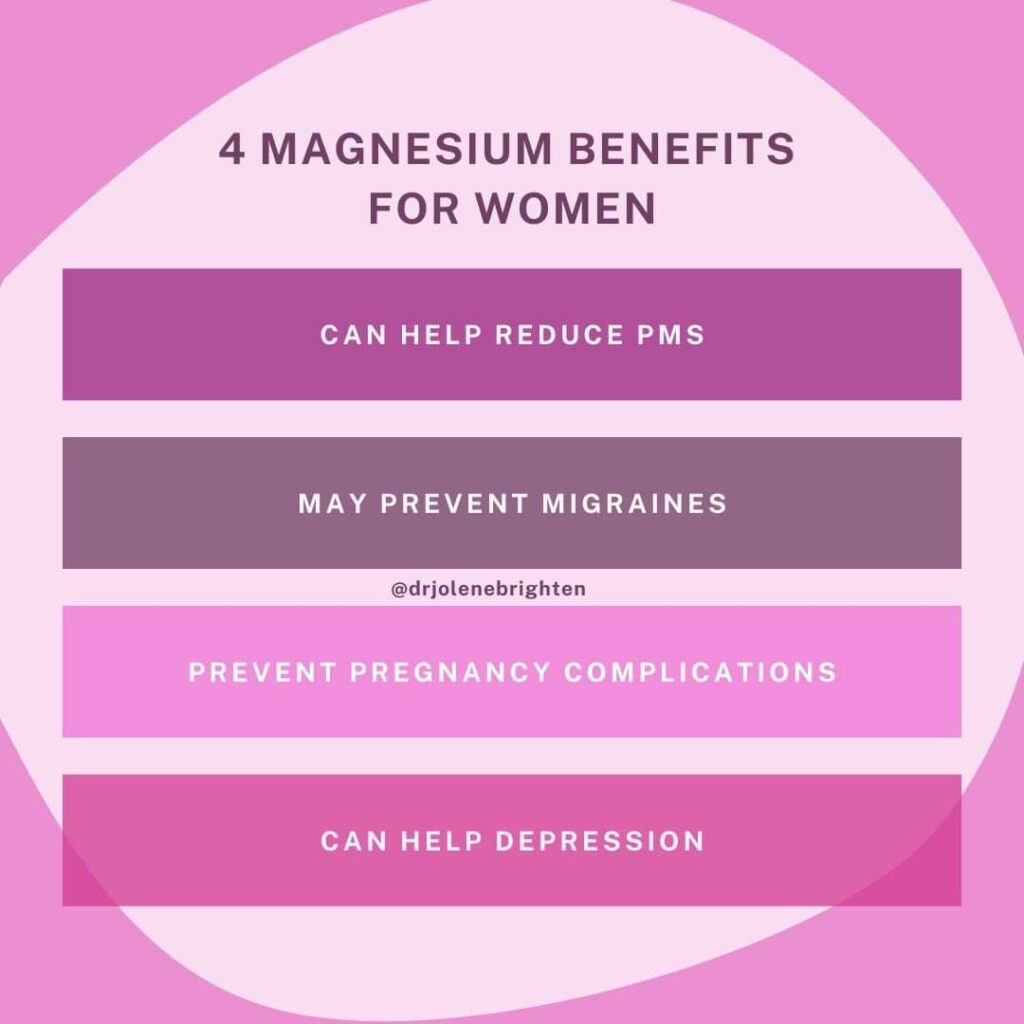
2. Magnesium Improves PMS Symptoms

In one study, participants were able to reduce premenstrual syndrome (PMS) symptoms using magnesium supplementation. Studies suggest that it’s even more effective as a PMS remedy when combined with vitamin B6, which is why we include the two in our Balance Women’s Hormone Support supplement

Studies have also shown that magnesium may reduce fluid retention — one of the most common PMS problems.

Also — magnesium helps your liver process estrogen more efficiently, which is crucial for eliminating those PMS symptoms like:

  • Breast tenderness
  • Weight gain
  • Bloating 
  • Insomnia

3. Magnesium May Lessen Menstrual Cramps

Magnesium could also help with cramps since it plays a role in regulating muscle contraction. 

Prostaglandins are hormone-like chemicals that are responsible for the contraction of the uterus (cramps). When compared to placebo, magnesium has been shown to be more effective in reducing period cramps and lowering prostaglandins.

Because it is highly absorbable and doesn’t cause digestive upset like other forms of magnesium, we use Magnesium Bisglycinate in my clinical. A typical starting dose is 300 mg nightly. Some people benefit from increasing their dose the week leading up to their period.

4. Magnesium Supports Thyroid Health  

Magnesium and thyroid health are intimately connected – it helps your thyroid gland produce proper levels of thyroid hormones. When magnesium levels are too low, your thyroid gland might enlarge, also known as goiter. Studies suggest that magnesium levels in those with hyperthyroidism are decreased and increased in those with hypothyroidism

5. Magnesium Helps Improve Sleep

A study of an elderly population suggests that magnesium supplementation could help relieve insomnia because of its calming effects. Many women also find that taking it regularly at bedtime may help improve the quality of their sleep. 

The reverse is also true — insomnia or restless sleep could be a key indicator of magnesium deficiency. 

magnesium for pms

6. Magnesium May Prevent Migraine Headaches

Menstrual migraine is a common phenomenon for women that’s not often discussed. Due to the fluctuating hormone levels just before period time, some women get hit with a migraine headache, in addition to other PMS symptoms.

Studies suggest that low levels of magnesium might play a role in the development of these headaches. And magnesium supplementation could help alleviate them. In my practice, I recommend 600 mg of magnesium to my patients at the onset of a headache for the best results. This is the one I  use with my patients. 

Keep in mind that by the time I’m prescribing a medication or suggesting supplements for my patients, I’ve already done exams, run labs, and reviewed their complete medical history. When you’re starting something new, always run your plans by your doctor.

7. Magnesium in Pregnancy is Important

Magnesium is essential for fetal development and the growth of new tissues, including bone and teeth. It is also necessary for nerve function and muscle contraction. 

Sometimes pregnant women develop issues with their blood pressure, referred to as preeclampsia. When the condition worsens, it can lead to eclampsia, which means the mother develops seizures. 

Magnesium could be useful in improving these conditions. One study showed that supplementation with magnesium cut the risk of eclampsia in half. 

Preeclampsia and eclampsia are extremely serious. Follow your doctor’s guidance the whole way through, and ask your doctor if you want to incorporate magnesium.

8. Magnesium Relieves Constipation

Specific forms of magnesium are considered laxatives due to their effect on the muscles within the digestive tract. Magnesium also pulls water into the bowels, helping things to get moving easier.

Magnesium oxide is one form of magnesium that has a noticeable laxative effect. You don’t absorb much magnesium oxide, so if you’re looking to elevate your magnesium stores, another form might be better. Magnesium citrate also gets things moving and can be gentler than other stimulant-type laxatives.

9. Magnesium Helps With Indigestion

Again, because of its effect on muscular function, magnesium may help calm spasms in the esophagus, which is one possible cause of indigestion and reflux. It also encourages stomach acid production. Low stomach acid could also be a cause of indigestion. There are other possible causes, too, so it’s best to get your indigestion evaluated. 

Pharmaceutical companies often include magnesium in over-the-counter acid reflux medications known as proton pump inhibitors. Antacids usually also include magnesium hydroxide or magnesium carbonate.

10. Magnesium Improves Menopause Symptoms

Women who are menopausal experience an array of symptoms, including depression, anxiety, and they might start to experience bone loss.

Magnesium could be effective in addressing these conditions, as we’ll discuss in more detail. Because it’s intimately linked to bone health, magnesium is critical for post-menopausal women or anyone looking to keep ahead of osteoporosis. Also, the calming effect magnesium has on the HPA axis means it reduces anxiety levels. Research has also shown that magnesium may also help alleviate certain kinds of depression. In one study, participants noticed an improvement in as little as two weeks.

11. Magnesium For Osteoporosis

Magnesium is one of the key components of bone. While we typically associate calcium with bone, magnesium is equally as important to bone health.

In a large 2014 study, researchers linked lowered magnesium intake to reduced bone mineral density, a test used to evaluate osteoporosis risk. 

And in a long-term study of men, those with the highest magnesium levels were 44 times less likely to experience a bone fracture. What’s more, none of the men with high magnesium levels broke a bone in the 20-year study period.

12. Magnesium May Lower Inflammation

Inflammation is one of those things that we all want to keep in check because it influences disease, obesity, and overall poor health.

Lower levels of magnesium are considered a predictive factor for chronic inflammatory stress that could lead to disease. And magnesium supplementation was shown to reduce markers of inflammation in study participants with prediabetes and overweight individuals.

13. Magnesium Helps Depression in Some Cases

As I briefly mentioned earlier, magnesium has shown great promise in the approach to depression, especially when the source of depression is magnesium deficiency. Since magnesium is considered safe to take, is inexpensive, and results may manifest in as little as two weeks, there’s plenty of reason to ask your doctor about magnesium as part of a depression regimen.

Magnesium deficiencies point to lowered levels of serotonin (the happy neurotransmitter). And one study of 402 students found an inverse relationship between magnesium intake and depressive symptoms, even after researchers accounted for other variables. 

14. Magnesium Increases Insulin Sensitivity

Researchers have well-established magnesium’s effect on insulin resistance, and the relationship is clear. Magnesium supplementation may help reduce certain types of insulin resistance, like the kind we see with type 2 diabetes. 

Some studies have even linked magnesium deficiencies with insulin resistance. By some counts, almost 50 percent of people with type 2 diabetes have low levels of magnesium. 

One large study found that participants who ingested the most magnesium were the least likely to develop diabetes.

15. Magnesium Lowers Blood Pressure

Another compelling benefit of magnesium is its effect on blood pressure. 

Because it can relax muscles, even vascular smooth muscles, especially in people who have high blood pressure, magnesium may lower both systolic and diastolic blood pressure

In one meta-analysis, researchers concluded that people who took magnesium lowered their blood pressure after just three months. 

How Much Magnesium Should I Get Every Day?

The recommended daily allowance for adults for magnesium is about 300-400mg.

More specifically, it depends on age and gender:

AgeFemaleMale
19-30310mg400mg
31 and up320mg420mg
Pregnancy350-400 mg

It’s important to note that many scientists consider the RDA for magnesium to be somewhat low, especially if you’re dealing with an existing deficiency. I usually suggest a daily maintenance supplement dose of 300 mg per day for my patients.

What Are The Best Whole Food Sources of Magnesium?

While I am a proponent of food first and supplements second, it’s important to note that according to the Linus Pauling Institute, “Magnesium is considered a shortfall nutrient in the diet, meaning that magnesium is underconsumed by eating the typical American diet.” This is why some people benefit from a supplement and all of us benefit from focusing on incorporating magnesium rich foods in our diet.

Magnesium is a critical nutrient in so many delicious foods. It makes it easy to get in those 300+mg per day! Leafy greens, nuts, and seeds are at the top of the list for many essential vitamins and minerals, and magnesium is no exception.

Some of my favorite, whole foods that contain magnesium include:

  • Pumpkin seeds
  • Almonds
  • Spinach
  • Broccoli
  • Cashews
  • Brown rice
  • Black beans
  • Potato, baked with skin
  • Banana
  • Salmon, Atlantic
  • Halibut, cooked
  • Avocado
  • Dark chocolate

Looking for an easy way to get your diet on the right track? I’ve got a complete guide that will help you out. It even has recipes done for you for an entire week. It’s got a lot of other great information in it too, and it’s completely free

How Can I Tell If I’m Deficient In Magnesium?

If you have subclinical levels of magnesium deficiency, you might not notice any symptoms at all. 

Some of the more common signs of low levels of magnesium include:

  • Fatigue
  • Eye twitch
  • Muscle cramps
  • Muscle weakness
  • Anxiety 
  • Depression
  • Vomiting
  • Nausea
  • Leg cramps
  • Neck and back pain
  • Heart disease
  • High blood pressure
  • PMS
  • Constipation
  • Pregnancy complications
  • Weight gain
  • Difficulty sleeping
  • Poor memory
  • Diabetes
  • Insulin resistance
  • Osteoporosis

Some women who experience PMS symptoms but are doing everything else right with their diet might find that a magnesium supplement helps their PMS disappear. 

Which Form Of Magnesium Is The Best?

There are so many possible types of magnesium to choose from, it can be confusing!

The first thing to consider is this: what problem are you trying to solve when considering magnesium?

If your concern is constipation, and you’re looking for a laxative effect, you may want to consider magnesium citrate.

For the rest of my patients, I recommend magnesium bis-glycinate, the primary ingredient in my Magnesium Plus. It will give you all the benefits of easily absorbed magnesium, without all diarrhea and digestive upset that you get when using other magnesium forms. 

Magnesium Glycinate vs Citrate

Magnesium bisglycinate or glycinate is much more well absorbed compared to citrate. This is why it is used in many of the scenarios discussed throughout this article. Citrate works best as a laxative and is less harsh than the sulfate form.

Different Types of Magnesium

  • Magnesium glycinate or bisglycinate – One of the most highly absorbable forms. Supports increase in memory, PMS and period relief, improved sleep, and reduced anxiety.
  • Magnesium citrate – Provides constipation relief by pulling water into the bowel.
  • Magnesium malate – Often recommended for those with chronic fatigue or fibromyalgia due to its support of energy production.
  • Magnesium L-threonate – May improve memory and reduce age related memory loss.
  • Magnesium chloride – This form is applied topically for quick absorption to help improve sleep and promote a sense of calm.
  • Magnesium oxide – Poorly absorbed, but may help with heartburn relief.
  • Magnesium sulfide – The most potent laxative, but more commonly used for Epsom salt baths.

Who Should Not Supplement With Magnesium?

Magnesium is generally considered safe. If you have diabetes, heart disease, or kidney disease, consult with your doctor before taking extra magnesium.

Also, if you’re taking any of the following medications, magnesium could interfere with them:

  • Antibiotics
  • High blood pressure medication
  • Muscle relaxers
  • Spironolactone or other potassium-sparing diuretics

Magnesium from food isn’t as likely to cause problems as supplemental magnesium, so it’s not advisable to avoid healthy foods because of their magnesium content. 

Magnesium For Optimal Health

Magnesium is vital for optimal health. Aim for a diet rich in magnesium and consider a supplement if you’re having difficulty meeting your needs with nutrition.

You can download our free meal plan or consider purchasing our Magnesium Plus as a way to increase your magnesium.

Citations

Jahnen-Dechent W, Ketteler M. Magnesium basics. Clin Kidney J. 2012;5(Suppl 1):i3–i14. doi:10.1093/ndtplus/sfr163

https://www.ncbi.nlm.nih.gov/pmc/articles/PMC4455825/

Razzaque MS. Magnesium: Are We Consuming Enough?. Nutrients. 2018 Dec 2;10(12). doi: 10.3390/nu10121863. PubMed PMID: 30513803; PubMed Central PMCID: PMC6316205.

https://www.ncbi.nlm.nih.gov/pubmed/30513803

Gröber U, Schmidt J, Kisters K. Magnesium in Prevention and Therapy. Nutrients. 2015;7(9):8199–8226. Published 2015 Sep 23. doi:10.3390/nu7095388

https://www.ncbi.nlm.nih.gov/pmc/articles/PMC4586582/

Fan MS, Zhao FJ, Fairweather-Tait SJ, Poulton PR, Dunham SJ, McGrath SP. Evidence of decreasing mineral density in wheat grain over the last 160 years. J Trace Elem Med Biol. 2008;22(4):315-24. doi: 10.1016/j.jtemb.2008.07.002. Epub 2008 Sep 17. PubMed PMID: 19013359.

https://www.ncbi.nlm.nih.gov/pubmed/19013359

Micronutrient Inadequacies in the US Population: an Overview. Oregon State University Micronutrient Information Center

https://lpi.oregonstate.edu/mic/micronutrient-inadequacies/overview.

Fang, X., Wang, K., Han, D. et al. Dietary magnesium intake and the risk of cardiovascular disease, type 2 diabetes, and all-cause mortality: a dose-response meta-analysis of prospective cohort studies. BMC Med 14, 210 (2016) doi:10.1186/s12916-016-0742-z

https://bmcmedicine.biomedcentral.com/articles/10.1186/s12916-016-0742-z#citeas

Boyle NB, Lawton C, Dye L. The Effects of Magnesium Supplementation on Subjective Anxiety and Stress-A Systematic Review. Nutrients. 2017;9(5):429. Published 2017 Apr 26. doi:10.3390/nu9050429

https://www.ncbi.nlm.nih.gov/pmc/articles/PMC5452159/

Cuciureanu MD, Vink R. Magnesium and stress. In: Vink R, Nechifor M, editors. Magnesium in the Central Nervous System [Internet]. Adelaide (AU): University of Adelaide Press; 2011.

https://www.ncbi.nlm.nih.gov/books/NBK507250/

Sartori SB, Whittle N, Hetzenauer A, Singewald N. Magnesium deficiency induces anxiety and HPA axis dysregulation: modulation by therapeutic drug treatment. Neuropharmacology. 2012;62(1):304–312. doi:10.1016/j.neuropharm.2011.07.027

https://www.ncbi.nlm.nih.gov/pmc/articles/PMC3198864/

Parazzini F, Di Martino M, Pellegrino P. Magnesium in the gynecological practice: a literature review. Magnes Res. 2017 Feb 1;30(1):1-7. doi: 10.1684/mrh.2017.0419. Review. PubMed PMID: 28392498.

https://www.ncbi.nlm.nih.gov/pubmed/28392498

Fathizadeh N, Ebrahimi E, Valiani M, Tavakoli N, Yar MH. Evaluating the effect of magnesium and magnesium plus vitamin B6 supplement on the severity of premenstrual syndrome. Iran J Nurs Midwifery Res. 2010;15(Suppl 1):401–405.

https://www.ncbi.nlm.nih.gov/pmc/articles/PMC3208934/

Seifert B, Wagler P, Dartsch S, Schmidt U, Nieder J. [Magnesium–a new therapeutic alternative in primary dysmenorrhea]. Zentralbl Gynakol. 1989;111(11):755-60. PubMed PMID: 2675496.

https://www.ncbi.nlm.nih.gov/pubmed/2675496

Walker AF, De Souza MC, Vickers MF, Abeyasekera S, Collins ML, Trinca LA. Magnesium supplementation alleviates premenstrual symptoms of fluid retention. J Womens Health. 1998 Nov;7(9):1157-65. doi: 10.1089/jwh.1998.7.1157. PubMed PMID: 9861593.

https://www.ncbi.nlm.nih.gov/pubmed/9861593

Hodges RE, Minich DM. Modulation of Metabolic Detoxification Pathways Using Foods and Food-Derived Components: A Scientific Review with Clinical Application. J Nutr Metab. 2015;2015:760689. doi:10.1155/2015/760689

https://www.ncbi.nlm.nih.gov/pmc/articles/PMC4488002/

Jones JE, Desper PC, Shane SR, Flink EB. Magnesium metabolism in hyperthyroidism and hypothyroidism. J Clin Invest. 1966;45(6):891–900. doi:10.1172/JCI105404

https://www.ncbi.nlm.nih.gov/pmc/articles/PMC292768/

Wang K, Wei H, Zhang W, et al. Severely low serum magnesium is associated with increased risks of positive anti-thyroglobulin antibody and hypothyroidism: A cross-sectional study. Sci Rep. 2018;8(1):9904. Published 2018 Jul 2. doi:10.1038/s41598-018-28362-5

https://www.ncbi.nlm.nih.gov/pmc/articles/PMC6028657/

Hsu JM, Root AW, Duckett GE, Smith JC Jr, Yunice AA, Kepford G. The effect of magnesium depletion on thyroid function in rats. J Nutr. 1984 Aug;114(8):1510-7. doi: 10.1093/jn/114.8.1510. PubMed PMID: 6747732.

https://www.ncbi.nlm.nih.gov/pubmed/6747732

Abbasi B, Kimiagar M, Sadeghniiat K, Shirazi MM, Hedayati M, Rashidkhani B. The effect of magnesium supplementation on primary insomnia in elderly: A double-blind placebo-controlled clinical trial. J Res Med Sci. 2012 Dec;17(12):1161-9. PubMed PMID: 23853635; PubMed Central PMCID: PMC3703169.

https://www.ncbi.nlm.nih.gov/pubmed/23853635

Mauskop A, Altura BT, Altura BM. Serum ionized magnesium levels and serum ionized calcium/ionized magnesium ratios in women with menstrual migraine. Headache. 2002 Apr;42(4):242-8. doi: 10.1046/j.1526-4610.2002.02075.x. PubMed PMID: 12010379.

https://www.ncbi.nlm.nih.gov/pubmed/12010379

Mauskop A, Altura BT, Cracco RQ, Altura BM. Intravenous magnesium sulfate relieves cluster headaches in patients with low serum ionized magnesium levels. Headache. 1995 Nov-Dec;35(10):597-600. doi: 10.1111/j.1526-4610.1995.hed3510597.x. PubMed PMID: 8550360.

https://www.ncbi.nlm.nih.gov/pubmed/8550360

Peikert A, Wilimzig C, Köhne-Volland R. Prophylaxis of migraine with oral magnesium: results from a prospective, multi-center, placebo-controlled and double-blind randomized study. Cephalalgia. 1996 Jun;16(4):257-63. doi: 10.1046/j.1468-2982.1996.1604257.x. PubMed PMID: 8792038.

https://www.ncbi.nlm.nih.gov/pubmed/8792038

Duley L, Gülmezoglu AM, Henderson-Smart DJ, Chou D. Magnesium sulphate and other anticonvulsants for women with pre-eclampsia. Cochrane Database Syst Rev. 2010 Nov 10;(11):CD000025. doi: 10.1002/14651858.CD000025.pub2. Review. PubMed PMID: 21069663.

https://www.ncbi.nlm.nih.gov/pubmed/21069663

Witlin AG, Sibai BM. Magnesium sulfate therapy in preeclampsia and eclampsia. 1998. In: Database of Abstracts of Reviews of Effects (DARE): Quality-assessed Reviews [Internet]. York (UK): Centre for Reviews and Dissemination (UK); 1995-.

https://www.ncbi.nlm.nih.gov/books/NBK67169/

Hein J. Comparison of the efficacy and safety of pantoprazole magnesium and pantoprazole sodium in the treatment of gastro-oesophageal reflux disease: a randomized, double-blind, controlled, multicentre trial. Clin Drug Investig. 2011;31(9):655-64. doi: 10.2165/11590270-000000000-00000. PubMed PMID: 21819161.

https://www.ncbi.nlm.nih.gov/pubmed/21819161

Tarleton EK, Littenberg B, MacLean CD, Kennedy AG, Daley C. Role of magnesium supplementation in the treatment of depression: A randomized clinical trial. PLoS One. 2017;12(6):e0180067. Published 2017 Jun 27. doi:10.1371/journal.pone.0180067

https://www.ncbi.nlm.nih.gov/pmc/articles/PMC5487054/

Orchard TS, Larson JC, Alghothani N, et al. Magnesium intake, bone mineral density, and fractures: results from the Women’s Health Initiative Observational Study. Am J Clin Nutr. 2014;99(4):926–933. doi:10.3945/ajcn.113.067488

https://www.ncbi.nlm.nih.gov/pmc/articles/PMC3953885/

Castiglioni S, Cazzaniga A, Albisetti W, Maier JA. Magnesium and osteoporosis: current state of knowledge and future research directions. Nutrients. 2013;5(8):3022–3033. Published 2013 Jul 31. doi:10.3390/nu5083022

https://www.ncbi.nlm.nih.gov/pmc/articles/PMC3775240/

Kunutsor, S.K., Whitehouse, M.R., Blom, A.W. et al. Eur J Epidemiol (2017) 32: 593. https://doi.org/10.1007/s10654-017-0242-2

https://link.springer.com/article/10.1007/s10654-017-0242-2

Nielsen FH. Effects of magnesium depletion on inflammation in chronic disease. Curr Opin Clin Nutr Metab Care. 2014 Nov;17(6):525-30. doi: 10.1097/MCO.0000000000000093. Review. PubMed PMID: 25023192.

https://www.ncbi.nlm.nih.gov/pubmed/25023192

Simental-Mendía LE, Rodríguez-Morán M, Guerrero-Romero F. Oral magnesium supplementation decreases C-reactive protein levels in subjects with prediabetes and hypomagnesemia: a clinical randomized double-blind placebo-controlled trial. Arch Med Res. 2014 May;45(4):325-30. doi: 10.1016/j.arcmed.2014.04.006. Epub 2014 May 9. PubMed PMID: 24814039.

https://www.ncbi.nlm.nih.gov/pubmed/24814039

Chacko SA, Sul J, Song Y, Li X, LeBlanc J, You Y, Butch A, Liu S. Magnesium supplementation, metabolic and inflammatory markers, and global genomic and proteomic profiling: a randomized, double-blind, controlled, crossover trial in overweight individuals. Am J Clin Nutr. 2011 Feb;93(2):463-73. doi: 10.3945/ajcn.110.002949. Epub 2010 Dec 15. PubMed PMID: 21159786; PubMed Central PMCID: PMC3021435.

https://www.ncbi.nlm.nih.gov/pubmed/21159786

Nielsen FH. Magnesium, inflammation, and obesity in chronic disease. Nutr Rev. 2010 Jun;68(6):333-40. doi: 10.1111/j.1753-4887.2010.00293.x. Review. PubMed PMID: 20536778.

https://www.ncbi.nlm.nih.gov/pubmed/20536778

Nielsen FH, Johnson LK, Zeng H. Magnesium supplementation improves indicators of low magnesium status and inflammatory stress in adults older than 51 years with poor quality sleep. Magnes Res. 2010 Dec;23(4):158-68. doi: 10.1684/mrh.2010.0220. Epub 2011 Jan 4. PubMed PMID: 21199787.

https://www.ncbi.nlm.nih.gov/pubmed/21199787

Yary T, Aazami S, Soleimannejad K. Dietary intake of magnesium may modulate depression. Biol Trace Elem Res. 2013 Mar;151(3):324-9. doi: 10.1007/s12011-012-9568-5. Epub 2012 Dec 14. PubMed PMID: 23238611.

https://www.ncbi.nlm.nih.gov/pubmed/23238611

Eby GA, Eby KL, Murk H. Magnesium and major depression. In: Vink R, Nechifor M, editors. Magnesium in the Central Nervous System [Internet]. Adelaide (AU): University of Adelaide Press; 2011.

https://www.ncbi.nlm.nih.gov/books/NBK507265/

Morais JBS, Severo JS, de Alencar GRR, de Oliveira ARS, Cruz KJC, Marreiro DDN, Freitas BJESA, de Carvalho CMR, Martins MDCCE, Frota KMG. Effect of magnesium supplementation on insulin resistance in humans: A systematic review. Nutrition. 2017 Jun;38:54-60. doi: 10.1016/j.nut.2017.01.009. Epub 2017 Feb 2. Review. PubMed PMID: 28526383.

https://www.ncbi.nlm.nih.gov/pubmed/28526383

Wang J, Persuitte G, Olendzki BC, et al. Dietary magnesium intake improves insulin resistance among non-diabetic individuals with metabolic syndrome participating in a dietary trial. Nutrients. 2013;5(10):3910–3919. Published 2013 Sep 27. doi:10.3390/nu5103910

https://www.ncbi.nlm.nih.gov/pmc/articles/PMC3820051/

Huerta M, Roemmich J, Kington M, et al. Magnesium Deficiency Is Associated With Insulin Resistance in Obese Children. Diabetes Care May 2005, 28 (5) 1175-1181; DOI: 10.2337/diacare.28.5.1175

https://care.diabetesjournals.org/content/28/5/1175

Rodríguez-Morán M, Guerrero-Romero F Oral Magnesium Supplementation Improves Insulin Sensitivity and Metabolic Control in Type 2 Diabetic Subjects Diabetes Care Apr 2003, 26 (4) 1147-1152; DOI: 10.2337/diacare.26.4.1147

https://care.diabetesjournals.org/content/26/4/1147

Barbagallo M, Dominguez LJ. Magnesium and type 2 diabetes. World J Diabetes. 2015 Aug 25;6(10):1152-7. doi: 10.4239/wjd.v6.i10.1152. Review. PubMed PMID: 26322160; PubMed Central PMCID: PMC4549665.

https://www.ncbi.nlm.nih.gov/pubmed/26322160

Kim DJ, Xun P, Liu K, Loria C, Yokota K, Jacobs DR Jr, He K. Magnesium intake in relation to systemic inflammation, insulin resistance, and the incidence of diabetes. Diabetes Care. 2010 Dec;33(12):2604-10. doi: 10.2337/dc10-0994. Epub 2010 Aug 31. PubMed PMID: 20807870; PubMed Central PMCID: PMC2992198.

https://www.ncbi.nlm.nih.gov/pubmed/20807870

Rodríguez-Morán M, Guerrero-Romero F. Oral magnesium supplementation improves insulin sensitivity and metabolic control in type 2 diabetic subjects: a randomized double-blind controlled trial. Diabetes Care. 2003 Apr;26(4):1147-52. doi: 10.2337/diacare.26.4.1147. PubMed PMID: 12663588.

https://www.ncbi.nlm.nih.gov/pubmed/12663588

Guerrero-Romero F, Rodríguez-Morán M. The effect of lowering blood pressure by magnesium supplementation in diabetic hypertensive adults with low serum magnesium levels: a randomized, double-blind, placebo-controlled clinical trial. J Hum Hypertens. 2009 Apr;23(4):245-51. doi: 10.1038/jhh.2008.129. Epub 2008 Nov 20. PubMed PMID: 19020533.

https://www.ncbi.nlm.nih.gov/pubmed/19020533

Hatzistavri LS, Sarafidis PA, Georgianos PI, Tziolas IM, Aroditis CP, Zebekakis PE, Pikilidou MI, Lasaridis AN. Oral magnesium supplementation reduces ambulatory blood pressure in patients with mild hypertension. Am J Hypertens. 2009 Oct;22(10):1070-5. doi: 10.1038/ajh.2009.126. Epub 2009 Jul 16. PubMed PMID: 19617879.

https://www.ncbi.nlm.nih.gov/pubmed/19617879

Kawano Y, Matsuoka H, Takishita S, Omae T. Effects of magnesium supplementation in hypertensive patients: assessment by office, home, and ambulatory blood pressures. Hypertension. 1998 Aug;32(2):260-5. doi: 10.1161/01.hyp.32.2.260. PubMed PMID: 9719052.

https://www.ncbi.nlm.nih.gov/pubmed/9719052

Zhang X, Li Y, Del Gobbo L, Rosanoff A, Wang J, Zhang W, and Song Y. Effects of Magnesium Supplementation on Blood Pressure: A Meta-Analysis of Randomized Double-Blind Placebo-Controlled Trials. Hypertension. 2016;68:324–333 doi.org/10.1161/HYPERTENSIONAHA.116.07664

https://www.ahajournals.org/doi/full/10.1161/HYPERTENSIONAHA.116.07664

Gröber U, Schmidt J, Kisters K. Magnesium in Prevention and Therapy. Nutrients. 2015;7(9):8199-8226. Published 2015 Sep 23. doi:10.3390/nu7095388

https://www.ncbi.nlm.nih.gov/pmc/articles/PMC4586582/

Office of Dietary Supplements – Magnesium. (n.d.). Retrieved September 24, 2020, from https://ods.od.nih.gov/factsheets/Magnesium-HealthProfessional/