
Period

##Maecenas sed diam eget risus varius blandit sit amet non magna. Vivamus sagittis lacus vel augue laoreet rutrum faucibus dolor auctor. Donec id elit non mi porta gravida at eget metus. Etiam porta sem malesuada magna mollis euismod. Vivamus sagittis lacus vel augue laoreet rutrum faucibus dolor auctor. Cras mattis consectetur purus sit amet fermentum. Duis mollis, est non commodo luctus, nisi erat porttitor ligula, eget lacinia odio sem nec elit. Curabitur blandit tempus porttitor. Donec ullamcorper nulla non metus auctor fringilla. Nullam quis risus eget urna mollis ornare vel eu leo. Maecenas faucibus mollis interdum. Cras justo odio, dapibus ac facilisis in, egestas eget quam. Maecenas sed diam eget risus varius blandit sit amet non magna. Curabitur blandit tempus porttitor. Donec ullamcorper nulla non metus auctor fringilla. Nullam quis risus eget urna mollis ornare vel eu leo. Maecenas faucibus mollis interdum. Cras justo odio, dapibus ac facilisis in, egestas eget quam. Maecenas sed diam eget risus varius blandit sit amet non magna.

Most Popular

A top question coming in from our readers and patients is, “does stress affect your...

There are many reasons for a missing period, and you shouldn’t ignore any of them. Left untreated, the hormone imbalances associated with missing periods can wreak havoc on your cardiovascular, neurological, and bone health. 

In this article, I will explain common reasons that can cause your period to stop or never start in the first place, plus what you can do about it.

Reasons For A Missing Period

Amenorrhea is the medical term for the absence of menstruation. There are two types of amenorrhea — primary and secondary amenorrhea. It can be temporary, intermittent, or permanent due to dysfunction of the hypothalamus, pituitary gland, ovaries, or uterus.

Primary Amenorrhea

Primary amenorrhea is when menarche (your first-ever menstrual period) does not occur by 14 years of age if you lack other signs of puberty, and 16 years of age whether you’ve hit puberty or not. 

If you have breasts and pubic hair but haven’t had a period by age 16, you should call your doctor for a complete evaluation. You should also have a conversation with your doctor if you don’t have a period or any other signs of puberty by age 14. Both scenarios can indicate serious issues that should be investigated.

The most common reasons for primary amenorrhea include:

  • Anatomical defects
  • Too much follicle-stimulating hormone (FSH) 
  • Too much prolactin 
  • Problems with the hypothalamus
  • Polycystic ovary syndrome (PCOS)

Secondary Amenorrhea

Secondary amenorrhea is when you’ve previously had a period (regular or irregular), and it has gone missing for a specific time period, depending on your cycle’s patterns. 

If your period was regular then the diagnosis of amenorrhea is made after three months of more loss. If your period was lighter or infrequent, then the diagnosis is made after nine months or more of a missing period.

Some examples of what can cause secondary amenorrhea include too much prolactin, hypergonadotropic hypogonadism (reproductive glands are too small), primary ovarian insufficiency, eating disorders, or chronic conditions.

What Causes A Missing Period

Losing a previously established period can result from high stress. When you’re stressed, the body interprets the environment as unsafe and puts reproduction on hold. Stress can be in the form of mental or emotional factors, infections, over-expenditure of energy (over-exercising) or low caloric intake. Stress of any kind can make your period go missing.

We’ll explore some of these stressors, as well as other conditions that contribute to a missing period.

Nutrition And Lifestyle Factors

Undereating or eating disorders can lead to a missing period. In addition, overexercising or not eating to meet your exercise expenditure can also lead to a loss of menstruation. Feeling super-stressed and not sleeping enough? Definitely contributing factors for missing periods and may lead to a diagnosis of functional hypothalamic amenorrhea (FHA).

Functional Hypothalamic Amenorrhea

Functional hypothalamic amenorrhea (FHA) is a diagnosis of exclusion. That means that your medical provider investigates all of the possibilities, and when your condition doesn’t meet criteria for another condition, your diagnosis is FHA. 

FHA is often the result of overexercising, low body weight, and stress. It is associated with eating disorders like anorexia nervosa and bulimia. 

It is important to investigate and address the cause of FHA. While your provider may be quick to offer you the pill to restore your period there are two things that you should know before going that route. The first is that the bleed on the pill isn’t your actual period. This is important because unless this is explained to you, you may be left with a false impression that you’ve regained your period only to find it is still gone when you stop taking it. 

Secondly, The Endocrine Society guidelines does not recommend the use of the pill as a treatment for hypothalamic amenorrhea in order to induce a bleed or to address bone mass. This is because the pill suppresses ovarian function and would make it impossible to evaluate if the period is restored using other therapies. In addition, they recommend that medical providers educate their patients that using the pill may mask underlying issues that can lead to a missing period.

Thyroid Disease

Thyroid disorders can lead to menstrual cycle irregularities. Although thyroid disease is well-recognized as a cause of amenorrhea, it isn’t always an area that doctors test or address right away. 

If you’ve lost your period, having a thorough evaluation of your thyroid is essential. 

Polycystic Ovary Syndrome

Polycystic ovarian syndrome (PCOS) is a common cause of anovulatory cycles (lack of ovulation) and amenorrhea. PCOS is a condition that is common and often overlooked, leading to a delayed diagnosis. 

Experts estimate that 1 in 10 women have PCOS. If your period is missing and you have other symptoms like unexplained weight gain, acne, hair loss, hair growth on your chin or chest, and blood sugar issues then it is important that you bring up treating your PCOS with your doctor.

Post-Pill Amenorrhea

After discontinuing birth control, you may find your period comes back right away, or it is delayed in returning. With the pill, we can see a loss of menstruation for four to six months after discontinuing. This is called post-pill amenorrhea and affects an estimated 3 to 6% of women.  

With the Depo-Provera injection, a return to a normal cycle may be delayed by a year or more.

It’s essential to recognize that many doctors prescribe the pill for irregular or missing periods, and while it can cause your endometrial lining to shed, it does nothing to address the underlying issue. If you stop the pill, then we’d expect your regularly scheduled medication-induced bleeds to stop too. This may be the reason for higher post-pill amenorrhea statistics. This is also why we should know why your period is missing before prescribing the pill.

If you’ve come off birth control and lost your period, don’t assume it is post-pill amenorrhea. Work with a provider to help you get the right lab testing and understand the cause of your amenorrhea.

Perimenopause

Perimenopause marks the time where our fertility begins to decline as we transition into menopause. During this part of your life you may find that your periods become irregular, sometimes even skipping a month. 

Just because your period may go missing does not mean that you can’t still get pregnant. In fact, this is a good warning for anyone with a missing period because ovulation precedes menstruation, which means you could ovulate spontaneously without even knowing it. 

If you suspect this is you, please read more about perimenopause symptoms and management.

Breastfeeding

Sometimes mother nature gives us a break for an extended period postpartum. If you’re currently breastfeeding, then you may not have a period, and that is normal. For those who exclusively breastfeed, they may not see their period return for the entire duration of breastfeeding. Sometimes it comes back with night weaning and other times, despite breastfeeding, it starts up within a few months of birth. 

A missing period while breastfeeding doesn’t mean you’re completely protected from pregnancy though — remember that ovulation comes before menstruation. 

How Long After You Miss Your Period Should You Worry?

If you’re sexually active and miss your period then it’s a good idea to take a pregnancy test. In general, once you rule out pregnancy, we are not concerned about a missing period until it has been several months.

If your period has been regular and does not return within three months then it is a good time to see your doctor. If your period is typically irregular then we become much more concerned after 6-9 months of its absence. In any case, if you’re concerned and feel something more may be going on, talk with your medical provider. All of your health concerns are valid – no exceptions –  and your doctor should treat them as such. 

What To Do To Get Your Missing Period Back 

Partnering with a clinician is essential for helping you investigate why your period is missing. It’s also important to know that there are things you can do right now to restore your period and optimize your hormones.

1. Get The Right Tests

Talk with your health care practitioner about ordering the following tests:

  • Pregnancy test
  • Follicle-stimulating hormone
  • Luteinizing Hormone
  • Estradiol 
  • Prolactin
  • Thyroid panel
  • Total and free testosterone
  • Adrenals

Pregnancy Test 

This might seem obvious, but the first step for a missing period in a sexually active woman is a pregnancy test. A lot of women will take a home test when their periods are late, but your doctor will want to confirm your pregnancy status ASAP.

Follicle-stimulating Hormone, Luteinizing Hormone, and Estradiol 

Follicle-stimulating hormone (FSH) and luteinizing hormone (LH) are brain hormones that guide your ovaries. Take a look at this article to understand your menstrual cycle and the roles of each hormone. 

Estradiol is a form of estrogen that can help you understand how and if your ovaries respond to their signals. In addition, very low estradiol levels are associated with bone loss and other unfavorable changes, so it can be helpful to evaluate.

Prolactin 

Prolactin is a hormone that helps with milk production in a breastfeeding woman. It blocks you from having your period by inhibiting the secretion of FSH. The mechanisms that cause thyroid-stimulating hormones (TSH) to rise can also lead to an elevation of prolactin, which is why both are important to test. 

A condition called prolactinoma, a benign brain tumor, can lead to elevations in prolactin, which is why a missing period needs to be taken seriously.

Thyroid Panel 

Your thyroid could be to blame for your missing period since the thyroid and menstrual cycle are intimately connected. Evaluated TSH, free T4, free T3, TPO and thyroglobulin antibodies are important to measure in anyone who is having irregular or absent periods.

Total And Free Testosterone 

Total and free testosterone will often be elevated in PCOS. Elevations of androgens can cause your period to become irregular and even disappear. 

Adrenals 

Your adrenal glands, stress, and periods are all connected. If they are not functioning properly we can certainly see issues with menstruation. In addition, a rare autoimmune condition known as Addison’s disease can be a cause of early menopause or primary ovarian insufficiency.

Your provider may order a morning adrenocorticotropic hormone and cortisol test via blood or 4-point urinary cortisol and cortisone with DHEA-S.

2. Build A Nutrient-dense Diet

It’s not simply a matter of calories, but also nutrients that your body needs to menstruate and ovulate regularly. Creating a whole foods diet focused on high-quality fats and proteins like wild-caught fish, nuts, legumes, and grass-fed meat can help deliver what your body needs. 

Including plenty of fiber and antioxidant-rich vegetables as the foundation of your diet is also important to help balance your hormones. You can grab a free meal plan and recipe guide to get you started.

You may also want to consider including an iron-free multivitamin in your routine. Unless you know you need iron, it’s best to skip it because iron can cause problems in a woman who isn’t menstruating and isn’t deficient.

Myth: Losing your period because of your diet is a sign of a healthy diet.

Just no. I’ve seen this one too many times on social media where someone tells people that their period is unnatural, a sign of a hemorrhage, or makes some other outlandish claim that isn’t rooted in science by any means. Your period is a natural process and losing it during your fertile years is not. If you’re on such a strict diet that it changes your hormones’ ability to operate normally, then it’s time for a change.

3. Keep Track Of Your Data

Track your symptoms — mood, energy, sleep, stress, digestion, skin, and anything that might be a sign of your period. Keeping track of what you’re experiencing not only motivates you to keep up the positive change, it can also provide you clues as to what is and isn’t helping your health. 

4. Re-Evaluate Your Exercise Routine

If you’re feeling completely wiped out from your exercise, struggling to recover days later, or feeling like you might throw up during it, odds are the intensity is dialed way too high for your body. 

Low exercise tolerance coupled with a missing period means it’s time to re-evaluate your routine. 

In addition, you need to be sure you’re meeting your caloric needs for this level of energy expenditure. Remember, your body needs to feel safe to ovulate and menstruate. Feeling like it’s always running for its life or in the midst of a famine will not achieve that.

Myth: Losing your period is a normal part of a good fitness routine.

It’s not. And I’ve had many patients personal trainers or coaches tell them it is and then recommend they just get on the pill if they are concerned. First and foremost, trainers and coaches aren’t qualified to comment on your hormones or a medication you should be on. Second, this is not normal for a female body and is a sign of dysfunction of your endocrine system.

5. Tend To Your Sleep

Our circadian rhythm is intimately tied to our menstrual rhythm. Lack of sleep or low quality sleep is a stressor to your body and it is important to tend to when you’re trying to recover your missing period. 

Sleep in a completely dark room and avoid all light-emitting electronics (TV, computer, cellphone) for two hours before bed. Take steps to wind down before bed, and consider giving your system extra support if you’re struggling to get the quality sleep you need.

7. Stress Management

When stress goes high, whether emotional or physical, your body is all hands on deck in the name of survival. That means shifting hormone activity into cortisol production and away from reproductive goals (ie, ovulation). 

This is why high stress can cause your period to go missing, and sometimes you feel its effects a month later. Try a variety of practices like meditation, deep breathing, prayer, walks, float tanks, journaling, acupuncture, massage, and even getting a mani-pedi to find what works best for you in managing your stress.

8. Get Proper Nutrients

Your nutrition is vital to recovering your period. Not just calories, but nutrients as well, signal to your body that the environment is safe — safe enough for baby-making. 

Whether or not you want a baby, the body needs to know the environment is conducive to having one so that you ovulate. What to eat can feel confusing, so I’ve simplified it in this free hormone balancing meal plan and recipe guide. These recipes are also gluten and dairy-free, so if you can’t tolerate those, I’ve got you covered. 

Optimal vitamins, minerals, and other nutrients help you better manage conditions like absent periods, PMS, PCOS, and PBCS symptoms. Your hormones depend on many nutrients to perform at their best. 

For example, vitamin D has been shown to play an essential role in having regular periods. In one study it was found that 13% of women with low vitamin D (<30 ng/mL) reported having amenorrhea. 

If you have a history of using the birth control pill, it’s important to note that nutrient deficiencies can develop if you’re not tending to your diet and using a quality multivitamin or prenatal. Key nutrients depleted by the pill include:

  • Vitamins B2, B6, B12, and folate
  • Antioxidants
  • Magnesium
  • Zinc
  • Selenium
  • CoQ10

You need these nutrients for more than just your ovaries. They are also crucial to support your adrenals, your thyroid, and they help enable your pituitary (the master gland) to do its job. 

How To Get Your Period Back

Taking the steps listed above can help you make progress towards recovering your period. But it’s important to note that with conditions like PCOS, PBCS, hypothyroidism, and the loss of your period can be a lot to navigate on your own. I recommend working with a naturopathic physician or functional medicine practitioner to help you understand the specific needs of your body and help you create an individualized plan for healing.


By educating your daughter about how her menstrual cycle works, her period, and how her hormones change throughout the month, you can help make her adolescent years less confusing. In this article we’re going to review how to prepare your daughter for her first period so you’re both well equipped.

For many parents, discussing periods with their children can be as awkward as discussing sex, although it really shouldn’t be because this is a normal part of being a human. Remember, a little awkwardness is better than going into puberty without knowing what to expect. And if you’re feeling this way, odds are it’s because no one prepared you at this age. You now have an opportunity to do things differently for your child. 

By having open, honest conversations with young women (and young men) about what periods are, what they mean, and how they work, you will remove the stigma attached to periods. You will also teach your daughter that there is nothing shameful happening when she bleeds each month. 

1. Answer All Her Period Questions

If you are a mother, you have undoubtedly had several periods. Try to remember what a strange and confusing time it was for you, and then assure your daughter that no question is silly or off-limits. If you are a father, educate yourself first, and be ready to answer your daughter’s questions. If you feel that it would be helpful, call in a female friend or relative that your daughter trusts – with her permission, of course. 

Yes, this may be uncomfortable. But it will be hugely beneficial to your daughter, who will learn invaluable information about her menstrual phases and her body. Additionally, by answering her questions and addressing her concerns yourself, you are ensuring that she is not getting all her information online and from friends, both of which can be inaccurate.

Of course, you’re welcome to share this article or any of the others you find on my website. Just don’t leave her with the burden of understanding it all. 

The book Celebrate Your Body (and Its Changes, Too!) by Sonya Renee Taylor is a body-positive resource that can help guide your conversations about growing up, and your daughter can refer to it whenever she’s feeling curious about what periods and puberty are all about. Many of our readers have recommended this book.

2. Listen To Her Experience

Her periods may not be like other people her age. Her periods may be nothing like yours. Listen to her about what her experience is like and believe her. Period problems are common, but they are not normal. 

Unfortunately, many of us have been conditioned to think they should be extremely painful, PMS should be debilitating or that we should suffer through them. None of this is accurate and it’s up to us to change this for the future generation.

If she has symptoms that are abnormal then help her advocate for herself with her medical provider.

3. Clearly Explain PMS And What To Expect

PMS (premenstrual syndrome) affects about 75% of women. PMS has often been dismissed as a normal part of the menstrual cycle. However, PMS can be caused by hormonal imbalance, like estrogen excess or low progesterone. 

Symptoms of PMS include:

  • Headaches
  • Bloating
  • Problems sleeping
  • Mood swings
  • Cramps in the lower belly
  • Pimples
  • Tender breasts
  • Fatigue

Once again, it’s important to let your daughter know that she might experience all these symptoms, none of them, or different ones altogether. She may also experience them for a few days before her period starting, or up to a week before.

Severe PMS symptoms that come on a week or more before your period can be a sign of PMDD. PMDD is not the same as PMS and should not be ignored. 

4. Have A Conversation About Period Symptoms

The standout feature of periods is bleeding. For the first few cycles, your daughter may bleed very little, and she might see more of a rust-colored blood rather than true red. 

Have a conversation with her about the different colors of blood she might see during her period (red, brown, pink, etc.), and explain what is normal, and what she should be concerned about. 

During her period, she may experience severe cramping in her lower abdomen. Many women experience period cramps, and the go-to for cramps is often NSAIDs (nonsteroidal anti-inflammatory drugs)

NSAIDs work by blocking prostaglandins (which cause the uterus to cramp). However, there are natural ways to help mitigate the effects of prostaglandins to help alleviate period pain.Of course, I do not want your daughter struggling with debilitating pain, so if she needs relief fast, NSAIDs can offer that. However, you can soothe pain with nutrients like magnesium, topical heat (like a heating pad or a warm bath), and dietary shifts. 

5. Reassure Her About Period Mood Swings

For many women, mood swings come every month. From bursts of anger to uncontrollable crying — period mood swings can be stressful. Let your daughter know that she is not alone and that the mood swings will pass. If the mood swings persist or feel unmanageable for her, seek help.    

6. Teach Her How To Use Tampons And Pads

Figuring out the best period products for your daughter depends on what she will be comfortable with. Tampons and pads are most commonly used, but menstrual cups and period underwear are also available. 

Tampons

Tampons are inserted into the vagina (either with the aid of an applicator or with the fingers). Once inside, they absorb period blood. Tampons should be changed regularly, in order to reduce the risk of Toxic Shock Syndrome (TSS). TSS is rare, but your daughter should be aware of it so that she knows how important it is to change her tampon regularly. 

Changing a tampon every 4-8 hours is best practice.

@drjolenebrighten

Tampons + TSS = bacteria making toxins #drjolenebrighten #learnontiktok #tiktokpartner #tampon #tamponchallenge

♬ Dirty Harry – Gorillaz

Pads

Pads are attached to the underwear, and absorb blood as it leaves the vagina. Both disposable and reusable pads are available. All types of pads should be changed regularly. Pads are often the easiest feminine product to start with.

Period Underwear

They are exactly what they sound like, underwear you wear on your period to catch menstrual blood. Often, they are best for lighter days. You may need to bring multiple pairs with you during the day and have a bag to place the used ones in. 

Menstrual Cups

Menstrual cups are silicone cups inserted into the vagina with the fingers. They are inserted in such a way as to create a seal. In this way, they catch period blood without leaks. Menstrual cups can be worn for about 12 hours, after which they need to be emptied, washed thoroughly, and placed back in the vagina. 

There’s nothing wrong with using a menstrual cup from the get-go, but pads and tampons may be easier for a beginner to handle. 

7. Teach Her How To Track Periods

By teaching your daughter how to track her menstrual cycles, you are giving her an invaluable tool. Tracking your menstrual cycle is a great way for women to become attuned to their body’s natural hormonal changes throughout the month. 

Day one of the menstrual cycle is the first day your daughter sees blood. The length of the menstrual cycle is the number of days between each first sighting of blood. 

To track her period, have your daughter make a note of:

  • The date she first sees blood each month (this will help her keep track of how long her cycle is)
  • How long she bleeds for
  • Whether she is in any pain (and how bad the pain is)
  • What other symptoms (such as acne or tender breasts) appear
  • The color of the blood (e.g., red or dark brown)
  • How heavy her flow is
  • Whether there are blood clots larger than a quarter (which may indicate the need for a doctor’s visit)

This is also a good time to introduce the principles of Fertility Awareness Methods (FAMs). Now, I can just see parents’ eyebrows hitting the ceiling because FAMs are typically used as a means of preventing pregnancy without hormonal contraception. 

FAM is actually a wonderful way for your daughter to work with her natural menstrual cycle, so she knows what is normal and healthy for her. 

By teaching your daughter to be aware of where she is in her cycle, you are also teaching her what ovulation is, what it means, and what these signs are. 

This is also a good time to explain that once periods begin, most women are entering their fertile years, which means pregnancy becomes a consideration. 

8. Emphasize How Normal Periods Are

I cannot stress this enough. Periods have a stigma attached to them. You can see this in everyday life, in the women trying to hide the tampons in their shopping carts, powering through debilitating period pain at work with a strained smile, and the level of secrecy that still surrounds periods. 

Let your daughter know that half the population has a period. It is a completely natural process, and is nothing to be ashamed about. It’s also a good idea to educate your sons about this, too, so they are sensitive to what their sisters and peers are going through on a monthly basis. 

9. Reassure Her About Levels Of Period Pain And Flow

Period pains can be scary, especially for young women who may have never experienced a similar kind of pain before. 

Let your daughter know that many women experience period pains, and that some level of discomfort is common for the large majority of women. However, emphasise that you should be alerted to debilitating pains, because this can be a symptom of endometriosis

Likewise, explain to your daughter that she will likely bleed the most during the first two days of her period. Explain that a heavy flow does not equal bleeding through tampons or pads in just a couple of hours, or regularly bleeding onto her clothes. Abnormally heavy periods can also be a sign of endometriosis. Read more about what causes heavy periods and what to do about them here.

10. Share Some Hacks For Coping With Periods

Women have periods for a huge portion of their lives. Every woman has their own tricks for managing their time of the month, and passing these hacks onto young women can help them better navigate their periods. 

Here are some hacks I would share:

  • Have a heating pad or heated bean bag handy for period pain
  • Always carry spare pads or tampons when you leave the house
  • Nutrients such as magnesium and omega-3 fatty acids can reduce the severity of period pain
  • While we might crave processed sugar and refined carbs during our periods, these can make our periods more unpleasant. Try to eat loads of veggies, protein, and healthy fats instead. But no, chocolate isn’t optional for most of us (or is that just me?) and giving in to a craving isn’t the worst thing you could do. 
  • Practice good stress management (e.g., meditation)

11. Plan What To Do If Her First Period Happens Away From Home

If you suspect that your daughter is close to getting her first period, and think it might happen away from home (e.g., at school, while she is out with friends, etc.), come up with a plan to reduce the stress involved should this happen. 

It might be a good idea for your daughter to carry a spare set of underwear to school, as well as pantyliners and pads (she might not know how to use a tampon, and will not have you to guide her if she is not home). 

If you’re a parent, leave us a comment and let us know what you’ve found helpful in preparing your daughter for her first period.

Puberty can be a confusing time for young women. Bodies are changing rapidly — breasts are starting to develop, body hair is beginning to grow, the shape of your body is changing, and the anticipation of the first period is looming. 

The onset of your first period can be scary if you are not prepared for it

In this article, I’ll share my tips on what you should know about your first period. 

When Will I Get My First Period?

In developed countries, the average age young women have their first period (menarche) is 12 to 13 years old. Note that this is just the average age, and many young women start their periods younger or older than this. This is usually not cause for concern. 

However, if you have not started cycling by 15 years old (or if you aren’t cycling three years after your breasts began to develop), there may be something going on, and it might be a good idea to ask your parents to talk to your doctor about it.  

On the flip side, if you start menstruating before age eight, consult your doctor as well. 

It’s also important to note that when you first start cycling, your brain and ovaries are just starting to “talk,” and miscommunication can happen. This might look like irregular periods or mood swings. It can take a couple of years for the communication between the ovaries and the brain to mature. 

What Causes Your First Period (Menarche)?

“Menarche” refers to the first period a young woman experiences. The changes in hormones that prepare the body for reproduction also result in menstruation. 

Prior to you ever getting your period, the hormone estrogen will rise to thicken the uterine lining. Following this, ovulation will occur, which is when an egg is released. If the egg is not fertilized then the result will be your period. You can learn more about the details of how the menstrual cycle works here.

When Will I Get My First Period?

While there is no hard and fast rule for determining when you will have your first period, there are often physical signs that periods are coming in the near future. 

These signs include:

  • Changes to the nipples and breasts
  • Growth of pubic hair (and other body hair)
  • Changes to body shape (e.g., the hips might begin to get rounder)
  • Vaginal discharge

For some, symptoms of PMS like bloating, breast tenderness, acne, food cravings, and mood swings will show up several days before your first period. For others, that first period seemingly comes out of nowhere with no warning. 

How Long Should My First Period Last?

A typical period will last 3-7 days. There may be several cycles where it is very light, lasting only a couple of days. If this persists, speak with your doctor.

If your period is longer than 7 days or is very heavy then this is also a reason to see a doctor.

@drjolenebrighten

Teen periods. What’s normal? #periodproblems #drjolenebrighten #tiktokpartner #learnontiktok

♬ Banana (feat. Shaggy) [DJ FLe – Minisiren Remix] – Conkarah

Can A First Period Last Two Weeks?

While periods can be unpredictable for the initial menstrual cycles, a two-week-long period is not normal and warrants a trip to the doctor. Usually, periods range in length from three days to seven days. The very first period may not be more than spotting daily. 

How Long Is A Normal Menstrual Cycle?

It can take some time for the body to settle into a pattern in terms of menstrual cycles. A cycle may be anywhere between 21 and 45 days long for the first few years. Cycle length may change month to month for a while.

Your menstrual cycle is counted from day one of your period until the next. 

For young women who are about two years past menarche, a cycle less than 21 days or more than 45 days should be discussed with your provider. The average length of the menstrual cycle is 28 days, but many women experience slightly longer or shorter cycles, which is perfectly normal and healthy.  

What’s An Abnormal Menstrual Cycle Length For A Teenager?

If you’re experiencing cycles shorter than 21 days, longer than 45 days, or cycles that follow no pattern whatsoever, this may be a sign that something is going on with your hormones that needs attention.

But keep in mind that when we are first starting our periods, a lot is going on hormonally that never happened before in the body. So there is no “normal” cycle length that is set in stone for young women still going through adolescence. 

And our bodies are all different, which is why saying every woman’s cycle is 28 days long is inaccurate and misleading. 

Understanding Teenage Hormones

All parents were teenagers once, but not all parents remember what being a teen was like. For some youth, adolescence is a time of turmoil and confusion, which can feel isolating. If parents better understand their children’s hormones as they enter their teen years, they can help support them. 

How Can I Balance My Teenage Hormones Naturally?

Erratic periods and PMS symptoms may indicate hormone imbalance in adults, but that may not be the case for adolescents. Unpredictable cycles are completely normal for the first several months of menstruation, while your brain and ovaries establish a line of communication. Your body usually needs to go through several months of cycles before things settle into a regular rhythm and even then, it may take some a bit longer. 

Parents: if your teen has been having periods for a year or two and her cycles haven’t stabilized, it may be time to look into an underlying condition like PCOS or hypothyroidism

She can safely try some of the same methods for optimizing hormones as adults do, like seed cycling, a nutrient-dense diet, and sleep hygiene. Poor sleep is incredibly problematic for anyone’s hormones and during our early menstrual years it is no exception.. 

Can A Teenager Have A Hormone Imbalance?

Unfortunately, yes, teenagers can have a hormonal imbalance. And because hormones are already in flux during the teenage years, deciding what’s normal and what’s a hormonal imbalance can be much more difficult. 

However, there are a few signs of a potential hormonal imbalance, such as:

  • Periods that last longer than a week
  • Cycles longer than 45 days or shorter than 21 days (however, irregular periods are expected during the first few years once a young woman starts her cycle)
  • Bleeding that is so heavy, it requires a pad or tampon change every couple of hours
  • Severe cramping 
  • Unexplained weight gain
  • Hair growth on the chin or abdomen
  • Hair loss (on the head)
  • Extreme fatigue
  • Acne
  • Extreme mood swings

These symptoms can be signs of estrogen excess, endometriosis, thyroid dysfunction, cortisol imbalance, and PCOS (Polycystic Ovarian Syndrome). 

How Do Hormones Affect Teenage Behavior?

Puberty brings about a surge of hormones, and these hormones can affect a person’s behavior as they transition from childhood to adolescence. In girls, this hormone surge begins between the ages of nine and ten years old. 

During adolescence, increased testosterone levels have been associated with increased reactivity to reward. Interestingly, research has shown that testosterone levels are lower in girls who are bullied than in their peers who are not bullying victims. This indicates that one’s social environment also plays a role in hormones and by extension, behavior. 

Researchers have also found a link between increased estrogen levels and higher risk-taking behavior in teenage girls. 

Hormones can impact everyone’s behavior — no, it’s not just teenagers. But knowing their hormones can affect you can help you have a little more understanding and also tune into getting support when needed.

Ever notice that your appetite seems to increase in the days leading up to your period? If so, you’re not alone. During our weekly Ask Dr. Brighten Q&A on social media I am often asked, “why am I so hungry on my period (or before),” especially for sugary snacks. It’s a common question among my patients too. So if you’ve ever experienced this, know that you’re not alone.

This article will explain what can cause an increased appetite around period time and what to do if those cravings hit. 

Why Am I So Hungry During My Period?

Estrogen and progesterone are cyclical, meaning they change and fluctuate throughout the month. They have an impact on our appetite and metabolism that can lead to an increase in feelings of hunger. Experiencing changes in our appetite throughout the menstrual cycle is normal.

Check out my article about the menstrual cycle phases if you need a refresher on how our cycles work. 

What many women experience in the first few days of their cycle is linked to the hormonal changes that happen just before menstruation. It is most common to experience cravings before and the first few days of your period.

Why Am I So Hungry Before My Period?

During the luteal phase (which begins following ovulation), your body releases progesterone to prepare the body for pregnancy. 

Progesterone is usually highest around the middle of the luteal phase and is associated with an increase in cravings and hunger. Estrogen, on the other hand, typically has a suppressive effect on our appetite and begins to decline just before menstruation in response to the egg not being fertilized. Depending on the levels of these hormones, you may feel more hungry before your period. The hormonal fluctuations in this phase are one reason women experience symptoms of PMS and cravings or compulsive eating may be part of your PMS symptoms. 

What Is Compulsive Eating?

Individuals who experience compulsive eating have a strong, uncontrollable urge to eat large amounts of food, eat very quickly, or eat when not hungry. This is often referred to as binge eating. In individuals who engage in this behavior twice weekly for 6 months or more, it is considered binge eating disorder (BED).

BED is a diagnosis that needs to be made by a healthcare professional. If you find you’re eating in secret, feeling ashamed after a binge, frequently eating large amounts of food uncontrollably, or eating when you’re not hungry, please meet with your healthcare provider.

Why Does Compulsive Eating Happen Before My Period?

Compulsive eating may feel especially problematic prior to menses due to the rise in progesterone. Research has shown that progesterone can be problematic for people struggling with this issue, which is why the impulses may be highest the days leading up to menstruation.

If this is something your struggle with, meet with your healthcare provider. There are lots of ways to support you including cognitive behavioral therapy, nutritional therapy, and more.

Why Do I Crave Sugary Foods and Carbs Before My Period?

On top of increased appetite, many women crave foods high in sugar and carbs. There are a couple of possible reasons for this. 

Firstly, sugary treats make us feel good. When we’re stressed, upset, or tired, something sweet can instantly boost our mood and energy. Research has shown that sugar releases serotonin, which modulates our mood. 

And many of us find carbs comforting – think pasta, bread, and rice. A study showed that women with higher levels of estradiol in the luteal phase craved more carb-rich foods.

Now, I am not here to shame you for indulging in high-sugar snacks when you crave them. But it is essential to know that sugar highs are always a temporary fix. Besides, sugar can affect our hormones.  

Serotonin and Carb Cravings

Your hormone shifts throughout your cycle also impact neurotransmitters like serotonin. Dips in serotonin prior to your period can have your body craving carbs. Carbohydrates can help increase levels of serotonin.

Serotonin is often thought of as the “happy neurotransmitter” because it is significant to mood health. But it can also be a culprit in mood swings and food cravings. If you’re craving carbs, plus feeling sad, irritable, or having headaches—serotonin may be to blame. 

So is it bad to eat carbs before during your period? Not at all. In fact, it may not only support your serotonin, but also your overall metabolism.

Insulin Sensitivity and Period Cravings

Leading up to your period your insulin sensitivity may decline meaning you’ll be taking blood sugar into your cells slightly less efficiently. Because of this, you may find you’re more hungry and have stronger cravings. 

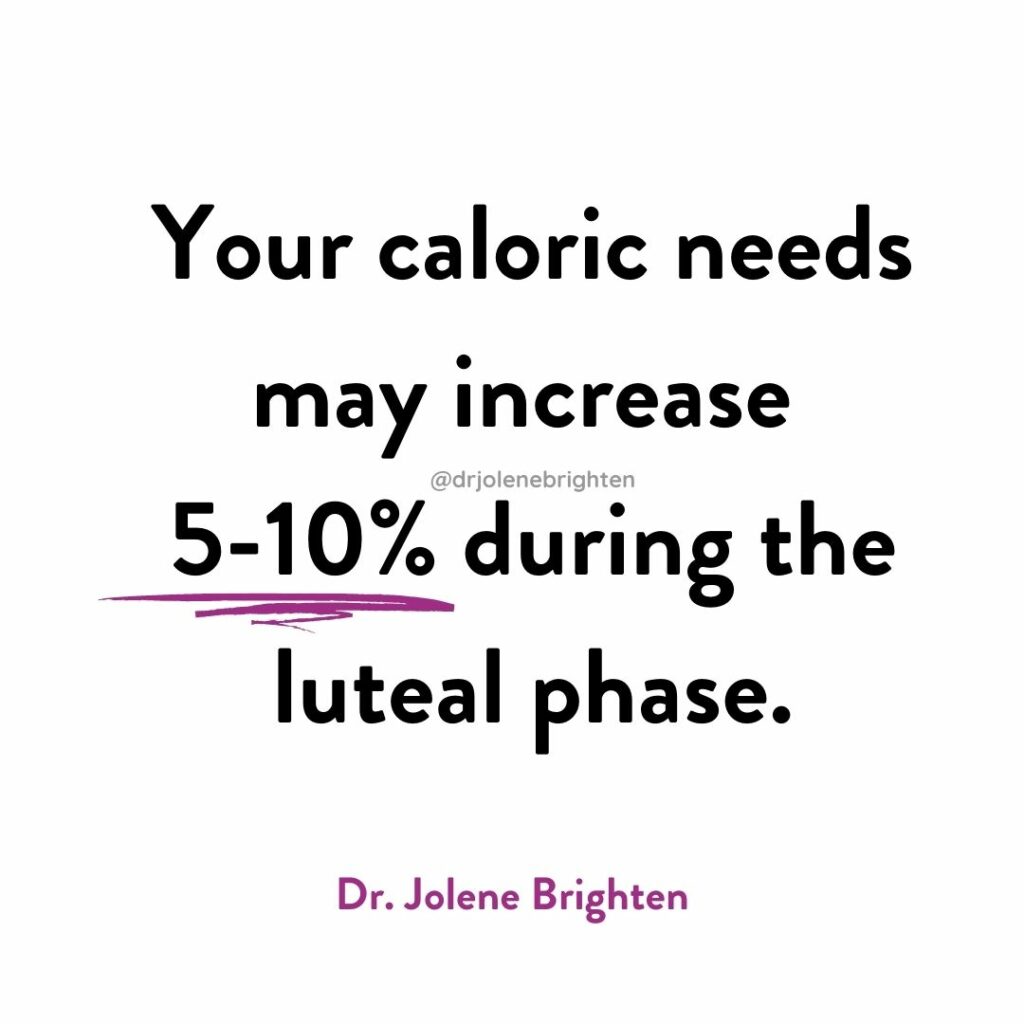
In addition, your caloric needs may increase 5-10% during the luteal phase, which also means you may naturally need more fuel.

You can read more about exercising with your cycle and the physiological changes that happen each month.

Iron Levels and Period Cravings

If you’ve been diagnosed with iron deficiency, or if you suspect that your iron could be low because of heavy periods, you might notice that you tend to have strong cravings. These cravings can last all month long, and you might find yourself particularly ravenous around the time of your period. 

This is your body telling you that it’s missing important nutrients, and it’s signaling you to go find foods that contain them. 

Why would your period ramp up cravings related to iron deficiency? Especially when heavy periods are an issue, another round of blood loss means your iron levels drop further. 

The fix? Work with your doctor to get your iron levels back where they should be, and you might find that your cravings calm down. I don’t recommend supplementing without guidance – you can go overboard with iron supplements, and your body absorbs some better than others. 

Women with severe iron deficiency might find themselves craving non-food items, like ice cubes, dirt, or napkins. That’s a condition called pica, which needs immediate medical attention. 

How to Control Period Cravings with Food

One of the best ways to feel fuller after meals and get a handle on sugar cravings is to incorporate more protein, fat, and healthy carbs in your diet. 

By filling your plate with wholesome, nutritious proteins and vegetables (which contain nutrient dense carbohydrates), you will be better able to stabilize your blood sugar, reducing the chances of sudden, extreme hunger and cravings. 

It’s also important to start the day off right. And no, I don’t mean a sugar-packed breakfast cereal that will inevitably cause an insulin spike and then sugar crash. During your luteal phase, make breakfast with complex carbohydrates, protein, and healthy fats so your body feels full and satisfied. You can grab a free meal plan with recipes to support you in doing just this here. . This will give you the energy to take on your day.  

You can check out what to eat on your period for tips on foods to support your body during this phase.

Also, try to keep simple, healthy snacks on hand so that if a craving does hit, you have options ready. Nuts, seeds, or veggies with dip are great ideas to keep you satisfied and away from less healthful snacks. 

Lastly: Stay hydrated! Thirst is often mistaken for hunger. My advice? Carry around a bottle of water, so you have easy access to your water. You may notice your hunger levels decrease. 

Download my FREE Hormone Balancing Starter Kit with 7-Day Hormone Balancing Meal Plan and Hormone Balancing Recipe Guide.

How to Control Hunger Before Period with Lifestyle

Stress, lack of sleep, and too little daily movement can all contribute to more severe PMS symptoms, which, in turn, can lead you to be hungry before your period. 

I am not saying that reducing stress, sleeping more, and working out will take away those pre-period hunger pangs. I am saying that these lifestyle factors play a huge role in hormone balance, so optimizing them may help reduce the imbalances that cause hunger in the first place. 

Stress management

Our modern lives are very stressful. For many of us, stress management falls to the wayside — we have too many other things to do! But when we don’t manage our stress, our adrenals can start to feel the strain, which can lead to imbalanced hormones and a weakened immune system. 

Stress management does not need to mean a 30-minute long meditation. (But, if you want to try that, go for it!) It can take the form of a five-minute breathwork session, a short walk in nature, or simply being present in the moment. 

Sleep for happy hormones

Another lifestyle intervention that can help you is sleep. Adults need seven or more hours of sleep per night, but many do not get enough Zs. Not sleeping enough can lead to inflammation, so we must get sufficient, restful sleep to start getting our hormones back on track. 

Move every day

Another critical part of a healthy lifestyle is movement and exercise. Modern life can be sedentary, especially if your job confines you to a desk. So, it’s essential to make a conscious choice to move more. 

Try to do exercises that you love (like yoga, weight training, cardio, brisk walks, etc.) regularly. Exercise makes us feel good, keeps our bowels working (regular bowel movements are vital for eliminating excess estrogen), and helps us achieve better hormone balance.  

Hunger Before Your Period: You Can Take Action 

Many of my patients struggle with intense hunger around their periods, and while each case is different, I often see hormonal imbalance as a common thread. 

Know that in most cases, increasing your intake of quality proteins, fats, fruits  and vegetables, working on stress management, prioritizing sleep, and moving daily, you can manage your appetite and say goodbye to cravings before your period.

Reasons For A Missing Period

There are many reasons for a missing period, and you shouldn’t ignore any of them. Left untreated, the hormone imbalances associated with missing periods can

Read More »

Does Stress Affect Your Period?

A top question coming in from our readers and patients is, “does stress affect your period?” Right now, the entire world is experiencing an unprecedented

Read More »