
Sleep

##Maecenas sed diam eget risus varius blandit sit amet non magna. Vivamus sagittis lacus vel augue laoreet rutrum faucibus dolor auctor. Donec id elit non mi porta gravida at eget metus. Etiam porta sem malesuada magna mollis euismod. Vivamus sagittis lacus vel augue laoreet rutrum faucibus dolor auctor. Cras mattis consectetur purus sit amet fermentum. Duis mollis, est non commodo luctus, nisi erat porttitor ligula, eget lacinia odio sem nec elit. Curabitur blandit tempus porttitor. Donec ullamcorper nulla non metus auctor fringilla. Nullam quis risus eget urna mollis ornare vel eu leo. Maecenas faucibus mollis interdum. Cras justo odio, dapibus ac facilisis in, egestas eget quam. Maecenas sed diam eget risus varius blandit sit amet non magna. Curabitur blandit tempus porttitor. Donec ullamcorper nulla non metus auctor fringilla. Nullam quis risus eget urna mollis ornare vel eu leo. Maecenas faucibus mollis interdum. Cras justo odio, dapibus ac facilisis in, egestas eget quam. Maecenas sed diam eget risus varius blandit sit amet non magna.

Most Popular

Do you feel like the holidays might get the best of you and your energy?...

Most people know melatonin as a supplement to help you sleep with bonus anti-oxidant benefits. It has a reputation for being safe and effective. But should you really be taking it every night? 

We take a look at naturally occuring melatonin, the safety of melatonin supplements, and alternative non-drug sleep enhancing options. 

What Is Melatonin?

Melatonin is a naturally occurring hormone produced by the pineal gland in the brain. It plays various roles in the human body, but is primarily known for regulating the circadian rhythm, or the sleep-wake cycle in humans.

But, it’s not only the sleep wake cycle that it controls. Melatonin is also useful in regulating hormonal cycles linked to menstruation and fertility.

Furthermore, melatonin has been shown to be a powerful antioxidant. It fights free radicals and helps reduce inflammation.

How Does Melatonin Work In The Body?

Melatonin is released as darkness sets in, peaks overnight, and slows its production as the body senses light. As you can imagine, late night screen use and bright electric lights can mess with melatonin release and in turn, our sleep-wake cycles. If our melatonin release is interrupted, it’s not just our sleep that can suffer, but our reproductive hormones and inflammation too.

If It Occurs Naturally, Why Do I Need A Supplement? 

Melatonin levels can get out of sync because of things like working night shift, using light-emitting electronic devices close to bed time (ahem…scrolling before bed!), and jetlag. 

Melatonin has also been shown to settle  pre-surgery anxiety without the side effects of other pre-surgical calming medications. It has also been trialled in kids autism and attention deficit hyperactivity disorder (ADHD) because these conditions can cause issues with sleep. 

Furthermore, natural melatonin production decreases with age. So older adults who have difficulty sleeping may find melatonin supplementation useful.

How Does A Melatonin Supplement Work? 

As with most supplements, when the body doesn’t produce enough of something, taking a supplement is a way to increase that substance in the body. 

So, for sleep difficulties, taking a melatonin supplement one to two hours before bedtime may boost your melatonin levels and help you to fall asleep.

Beware, Not All Melatonin Supplements Are The Same

Currently, melatonin is regulated by the Food and Drug Administration (FDA) as a dietary supplement. This means that what you buy over the counter is not regulated as tightly as prescription medications.

A study published in the Journal of Clinical Sleep Medicine found that the majority of over-the-counter supplements did not contain the amount of melatonin that the label indicated. It also found that over a quarter of all supplements contained serotonin. 

Serotonin is known as the happy hormone. Although it sounds like a nice idea to get a bonus hit of happy, when serotonin is taken unknowingly it can be harmful. Especially for people already taking medications that alter serotonin levels such as some anti-depressants.

Which Melatonin Supplements Are The Safest?

The safest way to supplement with melatonin is to do so under the guidance of a health professional with specialised knowledge in supplements and their safety. 

When choosing a supplement, look for “USP Verified” on the label. This means it has been approved by the United States Pharmacopeia, a non-profit organization that helps ensure quality in dietary supplements.

Is Melatonin Safe If I Take A High-Quality Supplement? 

It depends. In the short term, a melatonin supplement is relatively safe for most people but may cause some mild side effects. Long term use is lacking in research, so it’s best to avoid taking melatonin long term unless directed by your healthcare professional.

Short Term 

If you’ve found a high-quality supplement through a reputable health professional. Short term use is typically considered safe. 

However, some people experience side effects when they take melatonin. If you start with a low dose you are less likely to experience these possible side effects. 

Side effects 

The most common side effects include:

  • Daytime sleepiness
  • Dizziness
  • Headaches
  • Nausea 

Some less common side effects can include:  

  • Agitation
  • Mood swings
  • Fatigue or drowsiness
  • Skin irritation
  • Nightmares
  • Palpitations 

The side effects typically settle on their own within a few days, or go away once you stop the supplement. It is important that you check in with your health professional about your side effects. 

Long Term

Melatonin influences our circadian rhythm. But it can also influence other rhythms and cycles of the body, including the female menstrual and reproductive hormone cycles. Currently melatonin’s impact on female reproductive cycles is under investigation. 

Melatonin supplementation hasn’t been studied for long enough to know what the long term impacts are on the body and the hormonal system. So it’s best to avoid long term in children, adolescence, and those who still wish to fall pregnant.  

For Some People, Melatonin is Not A Safe Supplement

Pregnancy or Breastfeeding 

If you are pregnant, breastfeeding, or pumping milk for your baby, avoid taking melatonin. It hasn’t been proven to be unsafe, but it hasn’t been proven to be safe either. So, it’s best to avoid it until further research is available.

Liver or Kidney Conditions

If you have any concerns with your liver or kidneys, don’t take melatonin unless you’ve consulted with your doctor and received the OK. Melatonin is metabolized (broken down) by the liver and excreted from the body via the kidneys. So,  if you have pre-existing conditions that effect either of these organs, your body may struggle to breakdown and remove melatonin from your body. 

Autoimmune Disorders

If you have an autoimmune condition, only take melatonin if advised to do so my your healthcare provider.  Melatonin can impact the immune system but exactly what impact it has in autoimmune conditions is not yet clear. Therefore, until further research conducted, it’s best to avoid it. 

Will A Melatonin Supplement Interact With Other Drugs Or Supplements? 

If you are taking any other medications or dietary supplements, it is best to check with your treating health professional or pharmacist about possible interactions. In particular, if you are taking other sedatives or anti-anxiety medications, you should take melatonin with caution because the combination might make you too sedated. 

Is A Melatonin Supplement Safer Than Other Sleeping Pills?

Melatonin can be just as effective at helping you fall asleep as prescription sleeping pills. But, you may wake feeling a little fresher. Prescription sleepers can cause people to feel groggy and slow their reaction times the next day. Melatonin typically doesn’t have this effect. 

Prescription sleeping pills can be addictive. Melatonin is showing the potential to help get patients off long-term prescription sleeping pills and offers a safer alternative. 

There is little evidence to suggest that you can develop a tolerance to melatonin. 

Will Melatonin Mess Up My Sleep Cycles If I Take It For Sleep? 

If you take too much melatonin it could lead to daytime sleepiness. But this typically only happens if you take above the recommended dosage. 

What If I Can’t Take Melatonin But Need Help Sleeping? 

Non-drug Therapies Are Generally The Safest Solution To Poor Sleep.

All drugs and supplements carry a small risk of allergic reaction or side effects. If you have a long term sleep disturbance, it’s best to look to non-drug alternatives to help you sleep. Some suggestions include:

  • Cognitive behavioural therapy
  • White noise
  • Aromatherapy 
  • Meditation
  • Light therapy

Good Sleep Hygiene Is Important For Good Sleep

Good sleep hygiene means having healthy routines around sleep. Here are a few suggestions.

  • Sleep in a dark room (no night lights)
  • Avoid screens an hour before bed
  • Put a blue light filter on your computer and phone to come on as the sun sets.
  • Avoid alcohol before bed
  • Go to bed at the same time each night and get up at the same time each morning
  • Exercise regularly
  • Avoid food too close to bed. 

So Overall, Is Melatonin Safe To Take Every Night?

Short term, melatonin1 can help recalibrate your sleep cycles after an interruption such as jetlag. It can also help short term such as when you are losing sleep before a big event, or struggling through a run of night shift. 

But, taking it long term is not advisable because we just don’t know what the long term effects will be. 

For long term sleep difficulties, try relying on non-drug therapies and good sleep hygiene where you can. 
  1. https://drbrighten.com/product/sweet-dreams/ ↩︎

Ever notice that your appetite seems to increase in the days leading up to your period? If so, you’re not alone. During our weekly Ask Dr. Brighten Q&A on social media I am often asked, “why am I so hungry on my period (or before),” especially for sugary snacks. It’s a common question among my patients too. So if you’ve ever experienced this, know that you’re not alone.

This article will explain what can cause an increased appetite around period time and what to do if those cravings hit. 

Why Am I So Hungry During My Period?

Estrogen and progesterone are cyclical, meaning they change and fluctuate throughout the month. They have an impact on our appetite and metabolism that can lead to an increase in feelings of hunger. Experiencing changes in our appetite throughout the menstrual cycle is normal.

Check out my article about the menstrual cycle phases if you need a refresher on how our cycles work. 

What many women experience in the first few days of their cycle is linked to the hormonal changes that happen just before menstruation. It is most common to experience cravings before and the first few days of your period.

Why Am I So Hungry Before My Period?

During the luteal phase (which begins following ovulation), your body releases progesterone to prepare the body for pregnancy. 

Progesterone is usually highest around the middle of the luteal phase and is associated with an increase in cravings and hunger. Estrogen, on the other hand, typically has a suppressive effect on our appetite and begins to decline just before menstruation in response to the egg not being fertilized. Depending on the levels of these hormones, you may feel more hungry before your period. The hormonal fluctuations in this phase are one reason women experience symptoms of PMS and cravings or compulsive eating may be part of your PMS symptoms. 

What Is Compulsive Eating?

Individuals who experience compulsive eating have a strong, uncontrollable urge to eat large amounts of food, eat very quickly, or eat when not hungry. This is often referred to as binge eating. In individuals who engage in this behavior twice weekly for 6 months or more, it is considered binge eating disorder (BED).

BED is a diagnosis that needs to be made by a healthcare professional. If you find you’re eating in secret, feeling ashamed after a binge, frequently eating large amounts of food uncontrollably, or eating when you’re not hungry, please meet with your healthcare provider.

Why Does Compulsive Eating Happen Before My Period?

Compulsive eating may feel especially problematic prior to menses due to the rise in progesterone. Research has shown that progesterone can be problematic for people struggling with this issue, which is why the impulses may be highest the days leading up to menstruation.

If this is something your struggle with, meet with your healthcare provider. There are lots of ways to support you including cognitive behavioral therapy, nutritional therapy, and more.

Why Do I Crave Sugary Foods and Carbs Before My Period?

On top of increased appetite, many women crave foods high in sugar and carbs. There are a couple of possible reasons for this. 

Firstly, sugary treats make us feel good. When we’re stressed, upset, or tired, something sweet can instantly boost our mood and energy. Research has shown that sugar releases serotonin, which modulates our mood. 

And many of us find carbs comforting – think pasta, bread, and rice. A study showed that women with higher levels of estradiol in the luteal phase craved more carb-rich foods.

Now, I am not here to shame you for indulging in high-sugar snacks when you crave them. But it is essential to know that sugar highs are always a temporary fix. Besides, sugar can affect our hormones.  

Serotonin and Carb Cravings

Your hormone shifts throughout your cycle also impact neurotransmitters like serotonin. Dips in serotonin prior to your period can have your body craving carbs. Carbohydrates can help increase levels of serotonin.

Serotonin is often thought of as the “happy neurotransmitter” because it is significant to mood health. But it can also be a culprit in mood swings and food cravings. If you’re craving carbs, plus feeling sad, irritable, or having headaches—serotonin may be to blame. 

So is it bad to eat carbs before during your period? Not at all. In fact, it may not only support your serotonin, but also your overall metabolism.

Insulin Sensitivity and Period Cravings

Leading up to your period your insulin sensitivity may decline meaning you’ll be taking blood sugar into your cells slightly less efficiently. Because of this, you may find you’re more hungry and have stronger cravings. 

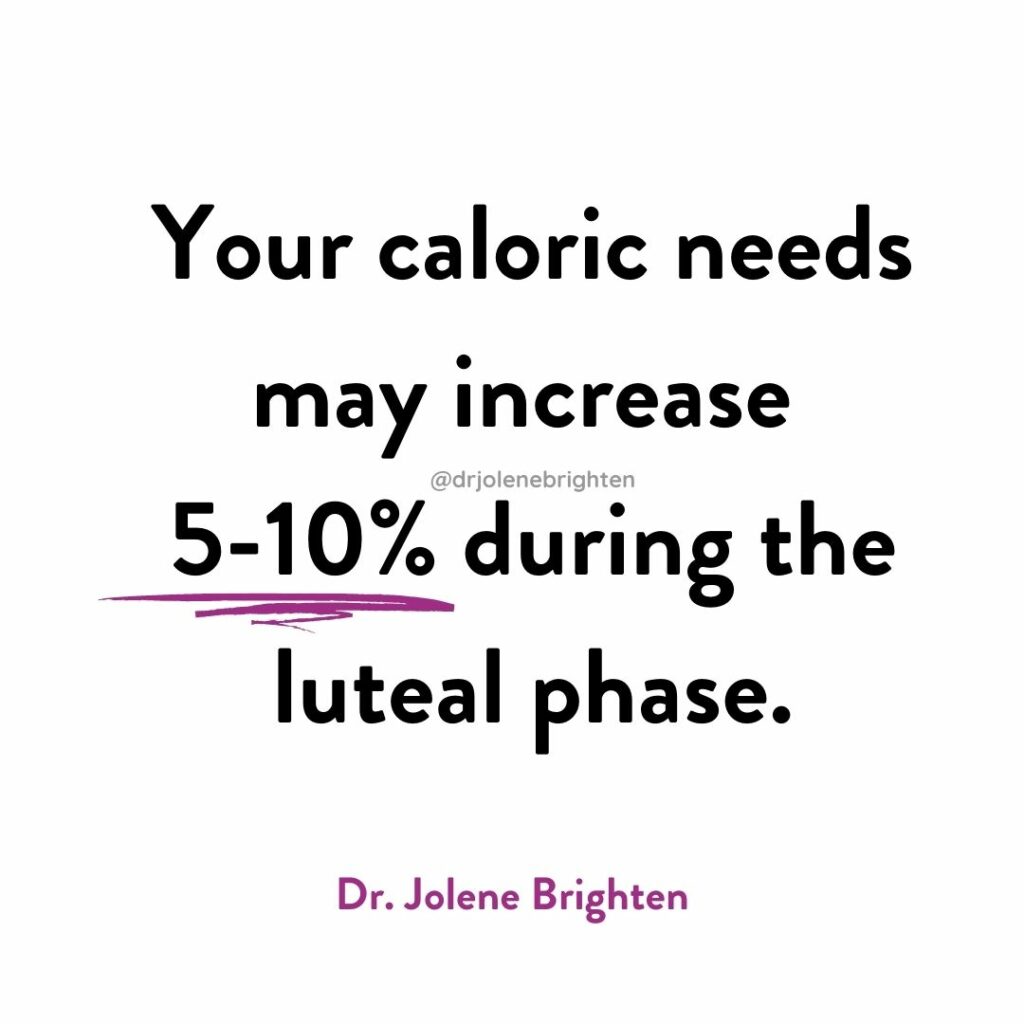
In addition, your caloric needs may increase 5-10% during the luteal phase, which also means you may naturally need more fuel.

You can read more about exercising with your cycle and the physiological changes that happen each month.

Iron Levels and Period Cravings

If you’ve been diagnosed with iron deficiency, or if you suspect that your iron could be low because of heavy periods, you might notice that you tend to have strong cravings. These cravings can last all month long, and you might find yourself particularly ravenous around the time of your period. 

This is your body telling you that it’s missing important nutrients, and it’s signaling you to go find foods that contain them. 

Why would your period ramp up cravings related to iron deficiency? Especially when heavy periods are an issue, another round of blood loss means your iron levels drop further. 

The fix? Work with your doctor to get your iron levels back where they should be, and you might find that your cravings calm down. I don’t recommend supplementing without guidance – you can go overboard with iron supplements, and your body absorbs some better than others. 

Women with severe iron deficiency might find themselves craving non-food items, like ice cubes, dirt, or napkins. That’s a condition called pica, which needs immediate medical attention. 

How to Control Period Cravings with Food

One of the best ways to feel fuller after meals and get a handle on sugar cravings is to incorporate more protein, fat, and healthy carbs in your diet. 

By filling your plate with wholesome, nutritious proteins and vegetables (which contain nutrient dense carbohydrates), you will be better able to stabilize your blood sugar, reducing the chances of sudden, extreme hunger and cravings. 

It’s also important to start the day off right. And no, I don’t mean a sugar-packed breakfast cereal that will inevitably cause an insulin spike and then sugar crash. During your luteal phase, make breakfast with complex carbohydrates, protein, and healthy fats so your body feels full and satisfied. You can grab a free meal plan with recipes to support you in doing just this here. . This will give you the energy to take on your day.  

You can check out what to eat on your period for tips on foods to support your body during this phase.

Also, try to keep simple, healthy snacks on hand so that if a craving does hit, you have options ready. Nuts, seeds, or veggies with dip are great ideas to keep you satisfied and away from less healthful snacks. 

Lastly: Stay hydrated! Thirst is often mistaken for hunger. My advice? Carry around a bottle of water, so you have easy access to your water. You may notice your hunger levels decrease. 

Download my FREE Hormone Balancing Starter Kit with 7-Day Hormone Balancing Meal Plan and Hormone Balancing Recipe Guide.

How to Control Hunger Before Period with Lifestyle

Stress, lack of sleep, and too little daily movement can all contribute to more severe PMS symptoms, which, in turn, can lead you to be hungry before your period. 

I am not saying that reducing stress, sleeping more, and working out will take away those pre-period hunger pangs. I am saying that these lifestyle factors play a huge role in hormone balance, so optimizing them may help reduce the imbalances that cause hunger in the first place. 

Stress management

Our modern lives are very stressful. For many of us, stress management falls to the wayside — we have too many other things to do! But when we don’t manage our stress, our adrenals can start to feel the strain, which can lead to imbalanced hormones and a weakened immune system. 

Stress management does not need to mean a 30-minute long meditation. (But, if you want to try that, go for it!) It can take the form of a five-minute breathwork session, a short walk in nature, or simply being present in the moment. 

Sleep for happy hormones

Another lifestyle intervention that can help you is sleep. Adults need seven or more hours of sleep per night, but many do not get enough Zs. Not sleeping enough can lead to inflammation, so we must get sufficient, restful sleep to start getting our hormones back on track. 

Move every day

Another critical part of a healthy lifestyle is movement and exercise. Modern life can be sedentary, especially if your job confines you to a desk. So, it’s essential to make a conscious choice to move more. 

Try to do exercises that you love (like yoga, weight training, cardio, brisk walks, etc.) regularly. Exercise makes us feel good, keeps our bowels working (regular bowel movements are vital for eliminating excess estrogen), and helps us achieve better hormone balance.  

Hunger Before Your Period: You Can Take Action 

Many of my patients struggle with intense hunger around their periods, and while each case is different, I often see hormonal imbalance as a common thread. 

Know that in most cases, increasing your intake of quality proteins, fats, fruits  and vegetables, working on stress management, prioritizing sleep, and moving daily, you can manage your appetite and say goodbye to cravings before your period.

Serotonin is a key hormone in promoting feelings of happiness and well-being. It plays a role in regulating your digestion, sleep, bones, inflammation, libido, and memory. If you’re dealing with depression, anxiety, mood disorders, or insomnia, you may want to ask your doctor about a possible serotonin deficiency.

You can support your body’s natural happiness hormone by understanding how serotonin works in the body. Discover how to increase serotonin naturally with simple lifestyle changes, and learn when your body might need support from supplements or medications.

Depression is a very real struggle, and support is easy to reach. If you’ve found this article because you are considering self-harm, call the National Suicide Prevention Lifeline at 1-800-273-8255 right now, or visit their website for free, 24/7 live chat support.

What Is Serotonin?

Serotonin (5-hydroxytryptamine) is a molecule that helps your nervous system communicate. You may know it as “the happy molecule” for its role in regulating happiness, anxiety, and mood. While most serotonin operates in the gut, scientists best understand the effects of serotonin in the brain, where it impacts our mood and sleep.

Is Serotonin a Hormone or a Neurotransmitter?

The short answer is, serotonin can work as a neurotransmitter or a hormone, depending on where you find it. Serotonin functions as a neurotransmitter in the central nervous system (your brain and spinal cord) and as a hormone in the peripheral nervous system (everywhere else). 

What Does Serotonin Regulate?

Serotonin plays several roles throughout the body, many of which we’re still working to understand. Did you know that 95% of your serotonin actually exists in your gut and not your brain? Still, we tend to associate serotonin with its effect on mood and happiness. 

Research shows that high serotonin in the brain general means happier moods, while low serotonin may be linked to an increased risk for depression. 

That said, it’s not entirely clear whether serotonin regulates our mood, or our mood affects our serotonin. Research shows that adequate serotonin in the brain is important in regulating our anxiety and fear responses.

Serotonin also supports healthy sleep. Our bodies use serotonin to produce melatonin, the hormone that regulates our inner clock and sleep cycles. Our digestive system also benefits from serotonin, as it plays a role in regulating sugar levels, reducing inflammation in the gut, and keeping food moving through your digestive tract

Signs You Need To Increase Serotonin Levels

A serotonin deficiency can occur when serotonin production is too low, or when there’s enough serotonin, but your brain isn’t using it properly. This can happen when your brain has too few serotonin receptors or when serotonin is being stored or broken down too quickly.

You can read all about serotonin deficiency and its symptoms here.

Because we can’t test directly for serotonin levels in the brain, your doctor may identify a serotonin deficiency through symptoms. The best-known signs of low serotonin include depression and anxiety, often accompanied by poor sleep. Less severe symptoms, such as general sadness (especially with a lack of sunshine), low self-esteem, brain fog, and anger can also point to low serotonin.

How To Increase Serotonin With Drugs

Many pharmaceutical treatments for depression and anxiety focus on boosting serotonin. SSRIs, or selective serotonin reuptake inhibitors, are a common group of prescription antidepressants. SSRIs don’t actually increase serotonin, but they do help your brain get the most mileage out of the serotonin already present. 

How do SSRIs work? 

Serotonin acts like a messenger in our brains’ synapses (the space between neurons). As long as serotonin is present in the synapse, it can continue sending messages. Eventually, active serotonin molecules get reabsorbed by a neuron. SSRIs can reduce symptoms of depression by preventing this reabsorption, allowing the serotonin to stay in the active synapse area. 

This means that even with low serotonin, your brain neurons can still receive the messages they need to fuel a positive mood. A similar family of drugs, SNRIs (serotonin and norepinephrine reuptake inhibitors), reduce the reabsorption of both serotonin and norepinephrine.

Common SSRIs include Prozac®, Celexa®, and Zoloft®.

Common SNRIs include Pristiq®, Cymbalta®, Savella®, Effexor®.

While SSRIs can be hugely beneficial in some cases, they have a downside: the long-term use of SSRIs can make serotonin deficiencies even worse. Additionally, while SSRIs can reduce depression symptoms by increasing serotonin availability, they don’t address the root cause of low serotonin levels.

If you are on an SSRI or SNRI and wish to stop, you must absolutely bring this up with your prescribing doctor and adhere to their guidance on dosage. The side effects of stopping SSRIs abruptly can be brutal and dangerous, and this isn’t something you can always power through. You can avoid a lot of suffering and side effects if your doctor is keeping a close eye on your dosage adjustments and symptoms. 

How To Increase Serotonin Naturally

Everyone is different. For some people, an exercise session and some time outside will create an immediate sense of relief. For others, these strategies may address symptoms gradually over time. Some cases are severe and require medical intervention. As always, it’s best to involve your doctor in any concerning health matter. 

Here are some things to try that could increase serotonin naturally, with simple lifestyle changes that may support your serotonin production.

Soak up some sun

Sunshine makes you happy, and science agrees: Exposure to sunlight helps increase serotonin production. This can help explain the seasonal depression that affects so many people in the darker winter months and shine some light on the benefits of getting outside. 

Exercise 

Several studies show that exercise may increase serotonin and tryptophan (the building block of serotonin) levels in the brain. More research links exercise to improved mood, making it a potentially low-risk, low-cost treatment for depression.

Massage

Here’s good news: among the many benefits of massage, research shows an increase in serotonin and decreased cortisol (the stress hormone) following massage. In this study on depression in pregnant women, mothers who received regular massages from their partners reported happier moods, lower anxiety, and healthier outcomes for their babies. 

Reduce stress

“Want to be happier? Stress less!” I know, I know, this sounds almost offensively unhelpful. Before you roll your eyes, let’s glance at the facts: Excess stress causes your body to produce cortisol, and rising cortisol levels deplete serotonin. Finding simple ways to reduce your daily stress, such as meditation, taking a walk, or dancing to your favorite song, can help save your serotonin.

Reduce alcohol intake

While there’s nothing wrong with an occasional toast, alcohol can wreak havoc on our hormones. Alcohol has depressant effects of its own, and excess consumption can reduce the serotonin levels in your brain.

Plus, alcohol isn’t great for hormones overall. You can read about how alcohol can affect your hormones and periods here.

Foods that increase serotonin

How many of us reach for the snacks when we feel blue? ‍♀️ It turns out that the sugary or high-carb snacks we use as comfort foods actually give us a quick hit of serotonin. But as you might guess, this isn’t the way to go. Sugar and refined carbohydrates can also spike cortisol and contribute to inflammation, two factors that will crash your mood just as quickly. 

You can read more about the Anxiety-Sugar Connection here.

Instead of reaching for sweets, try adding these serotonin-boosters to your diet.

Fatty fish

The beneficial omega-3 fatty acids found in cold-water fatty fish play a role in serotonin’s function in the brain. Research specifically shows that EPA and DHA from fish oil appear to regulate both the release of serotonin and serotonin receptors’ function. Low levels of essential omega-3 fatty acids may impair the serotonin receptor and result in lower levels of serotonin.

Click here to learn more about the benefit of omega-3 fatty acids.

Green Tea and Turmeric

Research shows that theanine, an active compound in green tea, and curcumin from turmeric, can both raise brain serotonin levels. Even more, these ingredients also reduce inflammation, making them beneficial additions to your pantry. 

Learn more about the benefits of turmeric here.

Tryptophan Supplements for Serotonin

Tryptophan is the amino acid our bodies use to create serotonin. It’s also a unique example of a time when a supplement might be more beneficial than a whole food. Here’s why: tryptophan is the building block for serotonin, but this essential amino acid is found in protein-rich foods such as milk, nuts, meats and cheeses. It turns out, a high protein meal actually decreases the amount of tryptophan that can enter the brain (and thus the serotonin the brain can produce). 

The workaround? Tryptophan supplements allow you to get tryptophan without having to consume protein alongside it. Research shows that tryptophan supplements, especially when used with other treatments, may be useful in boosting serotonin and reducing depression symptoms. 

Vitamin D

Especially in latitudes with less sunlight, vitamin D deficiency is very common. Vitamin D, which our bodies produce in response to sunlight, is a necessary factor in the brain’s production of serotonin. Your doctor can help you evaluate your vitamin D levels with a blood test, in order to understand if supplementation can benefit you.

You can learn more about the benefits of vitamin D here.

5-HTP Supplements for Serotonin:

Despite its common use, I do not recommend 5-HTP as a serotonin-boosting supplement to treat clinical depression without the supervision of your provider. 5-HTP is the precursor to serotonin, which your body also converts into melatonin, a molecule that aids in sleep. Unlike serotonin, 5-HTP is small enough to cross the blood brain barrier. 

These factors make it sound like an enticing supplement for those with both depression, but high dose 5-HTP has some serious side effects. 

With long-term use (consistently taking for years), as it actually depletes dopamine and norepinephrine, two other neurotransmitters critical to mood regulation. Even with sufficient serotonin, a deficiency in these neurotransmitters can also lead to depression. 

Further, researchers linked long-term 5-HTP use with pre-existing heart valve disease in rats. That may or may not hold true for humans – further research is needed. 

And if you’re on SSRIs, 5-HTP is a big no-no. Supplementing 5-HTP should never happen together with SSRIs or other antidepressants, a combination that can lead to dangerously high levels of serotonin, known as serotonin syndrome

Summary

If you suspect a serotonin deficiency is affecting your mood, start by talking to your doctor. These articles can serve as a guide to help your conversation and make sure you have the information you need.

Serotonin Deficiency, What’s the Risk?

Do you feel like the holidays might get the best of you and your energy? If preventing holiday fatigue is on your mind, I want to let you know you’re not alone. 

Many of my patients share that the holidays are the most stressful time of year for them! 

Travel, family, late nights, eating out… It’s easy to see why the happiest time of year might zap you of energy, challenge your mood and even push you into putting on a few extra pounds.

The truth is, the holidays mess with your hormones!

Cortisol is up and out of it’s normal rhythm. You feel stressed, on edge, anxious and maybe notice a bit more padding around your midsection.

The downstream effects is weight goes up, you start dragging through the day, you’re irritable with everyone…

Cortisol disruption makes it absolutely impossible for you to enjoy time with your family, let alone keep from losing your temper.

But with a bit of strategy, you can keep your mood, your energy and your cortisol in check. I am sharing with you the tips and strategies I give my patients to prevent holiday fatigue and lower stress.

[alert type=”warning”]Download your FREE Hormone Starter Kit and get your hormones back in balance![/alert]

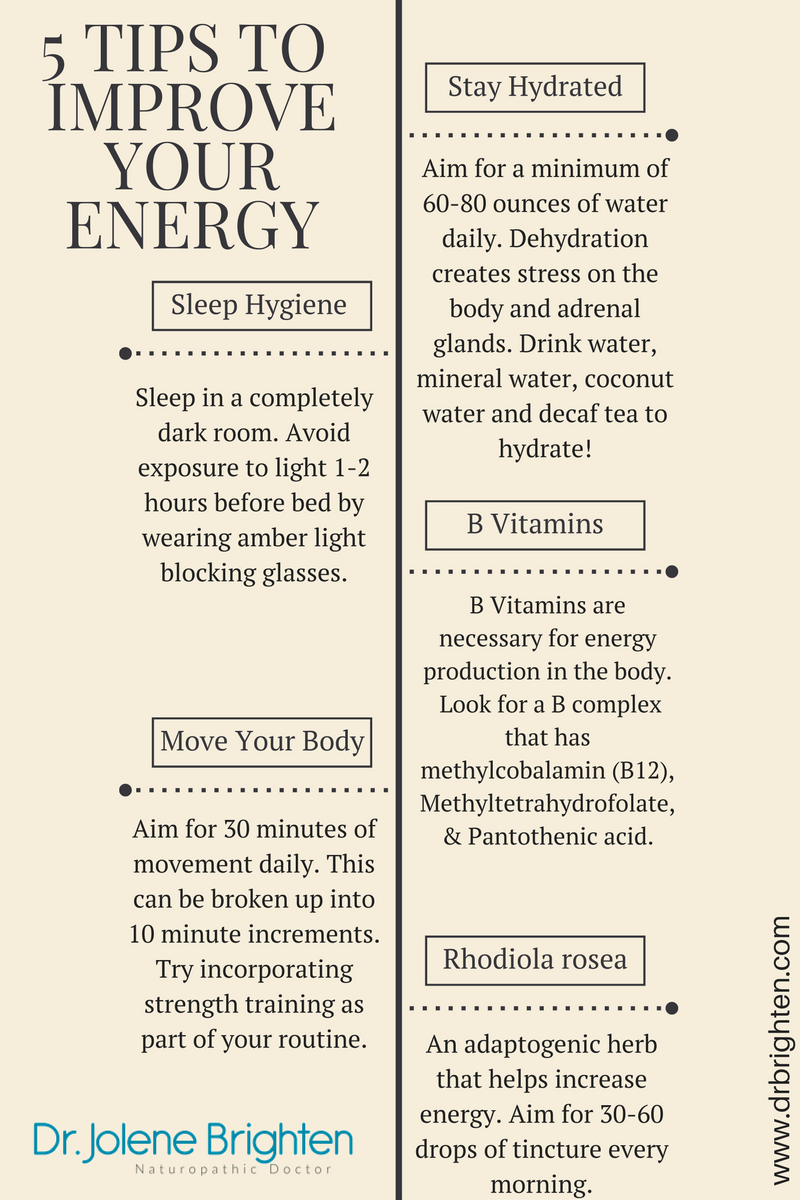
And be sure to scroll to the end and grab the 5 Tips to Improve Energy image to take with you as you travel.

8 Ways to Prevent Holiday Fatigue 

1. 8 Hours is Non-Negotiable

I LOVE chatting late into the night with my favorite people! Isn’t there something just so good about the conversations that get started somewhere between 10-11 pm?

I’ve been guilty of indulging epic conversations until the wee hours of the next morning so I get it!

But in truth, while this might be bumping my oxytocin (the cuddle hormone), this is also hard on my adrenal glands, melatonin and my progesterone levels.

Does this mean you can’t ever have a late night?

No, but it does mean you’re going to have to take a bit more care with regards your sleep if this is you.

A week before traveling to see friends or family I recommend sleeping 8 hours nightly and being in bed by 10 pm.

If you’re going to stay up late one night, make sure you have some time to sleep in the next day or take a nap. Getting 8 hours is a non-negotiable for someone with adrenal dysfunction.

Remember, anytime you dip below 7 hours you are messing with your hormones!

Here’s what happens when you get too little sleep:

  • Sugar cravings go up
  • Your body stores more calories as fat
  • Blood sugar levels climb
  • Inflammation rises
  • Risk for stroke and heart disease rise

And that is just the tip of the iceberg!

But regarding how much sleep you need… really, the best answer is, however much you need.

If you’ve got some time off of work, I recommend trying to go to bed when you feel tired and sleep until you feel replenished.

Not waking feeling rested despite 10+ hours of sleep could be a sign of of something bigger like a thyroid condition or mononucleosis. It’s best to meet with a doctor to discuss your energy if you find yourself feeling this way.

Can’t sleep?

Difficulty falling asleep and staying asleep are common symptoms of hormone imbalance. The Free Digital Hormone Balancing Starter Kit, which is my gift to you, will help you bring your hormones back into balance so you can get more restful sleep!

If your body is tired, but your mind won’t stop racing, you may benefit from a
cortisol reducing supplement. Taking 1-2 before bed can help lower cortisol levels, allowing you to fall asleep and stay asleep.

Best adrenal supplements2. Start the Optimal Adrenal Kit

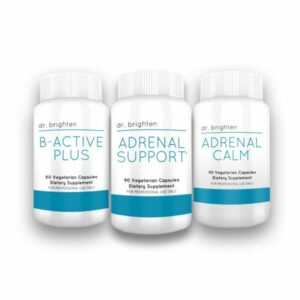
Adaptogenic herbs, like Rhodiola, can help bring cortisol into balance. For my patients, I recommend the Optimal Adrenal Kit from December through February to show their body some serious love & prevent burnout.

The kit contains Adrenal Support, which has adaptogenic herbs to help you have sustained energy throughout the day. The Adrenal Calm is there to help you chill at night & skip that wired & tired business. I also love it for changing time zones & getting in rhythm with the new place. Adrenal Calm helps naturally lower cortisol so it’s an evening formula.

And it has B-Active Plus, which if you saw my post on PMS the other day, all of us need some extra B vitamins through the holidays. Plus, it helps with liver detox (cough -cocktails).

Check out the Optimal Adrenal Kit here.

3. Make That Body Move.

It is soooo tempting to skip your workout. So. Tempting.

I feel you. In the past, whenever the holiday activities roll in I’d find myself scheduling exercise right out of my calendar. And inevitably I’d be tired, cranky and feeling off.

Now we make it a point to make movement part of our holiday celebration.

Whether you’re bringing your family into the mix or just getting some quality time with yourself, getting your exercise is important.

And it only takes about 10-15 minutes to get your metabolism up and get the stress out!

Try a tabata, strength routine or just get your heart rate up with some aerobic activities like running, swimming, biking, hiking or a HIIT routine.

4. Judge Less, Love More

Friend, this goes for yourself too!

Being critical about your friends, family, or yourself does nobody any good. Not even a bit.

It’s easy to judge. It’s easy to criticize. But taking the time to build up, to practice kindness, and to love takes effort… but an it’s an effort with endless rewards.

And self kindness lowers inflammation!

Yes, if you’re spending your days hating on yourself then your adrenals are taking a hit.

Controlling inflammation is one of the major roles your adrenal glands has in the body. When inflammation rises, your adrenal glands secrete cortisol to help reduce the damage that inflammation causes.

For some people, the holiday season can trigger some pretty intense negative self talk or taking an overly critical eye to your life. Self compassion lowers inflammation, brings cortisol into balance and helps you enjoy all the benefits of progesterone — chill mood, loving life, easy periods and blissful sleep.

In one study, it was found that those who practiced self love had lower levels of inflammation.

4. Yes to the Turkey. No to the Stuffing.

Protein is going to make your adrenals, your hormones, your mood and your body oh so happy!

On the other hand, if you want to hate on your adrenal glands, then by all means grab all the low fiber, high sugar foods you can.

Only kidding. I know you want to love your adrenals and hormones like nobody’s business.

Eating protein (and fat) with your meals will keep you full and make for some even blood sugar control, which your adrenals need.

When blood sugar spikes and dips it takes a real toll on your adrenals. They are responsible for helping the liver share some of its sugar stores with the rest of the body. When your blood sugar dips, your body produces cortisol in response.

Overtime, these spikes and dips can create a disruption in how your brain and adrenal glands talk. In addition, your cells can eventually become resistant to insulin, which can lead to diabetes.

Learn more about how diet affects your hormones.

5. One & Done!

Ever find yourself navigating the social event just fine only to have that one relative tell you how disappointed they will be if you don’t eat their dessert?

Firstly, if said dessert will make you ill or you have a known food sensitivity, then you’ll need to give them the “thank you, no thank you” conversation.

But if it is a situation where you don’t want to eat too much sugar or whatever it is, you can do the one and done!

Basically, one bite is all it takes (along with a big fat compliment) to make that relative and your brain happy. The second bite doesn’t make you feel as good.

So if you feel like you can practice the one and done, then take that bite, sing the praise and walk away knowing you made someone’s day.

6. Eat Your Greens.

Take half that plate and fill it with greens. No hesitation. No eyeing those creamy mashed potatoes. None of it!

The first thing you do when you get to the dinner table (aside from thanking the host) is fill half your plate with greens. Salad, Brussel sprouts, green beans, sautéed collards… you get the idea.

Those greens are going to fuel your body, keep your blood sugar regulated and fill you up with nutrient dense goodness, opposed to the empty calorie foods that fill most people’s tables.

Now I’m not saying don’t eat the mashed potatoes. But what I am saying is that focusing on getting your greens and moderating the intake of blood sugar and adrenal sabotaging foods.

These foods will have less of a disruptive effect when you start with a belly full of greens.

7. A Daily B Complex

Those adrenal glands love their B vitamins and as you can imagine, when stress goes up, so does their demand.

Eating whole foods is always the preferable way to get your vitamins, but during the holidays, you’ll likely need a bit more support.

Taking a daily B vitamin every morning can help boost your energy, balance your estrogen and progesterone and lower your body’s perception of stress.

8. Serve an Adrenal Supporting Tea

I have family who fancy themselves an espresso after dinner. I instead opt for a decaf tea that will give my adrenals some support.

I’ve also found that sipping an adrenal tea gives my patients a lot more energy throughout the day and prevents them from being susceptible to every cold that comes by.

Yes! Loving your adrenals will help you ward off colds and flus.

This Alterative Tea is one of my favorites for supporting hormone balance, increasing energy and it has the benefit of improving the health and appearance of your skin.

Need to take the edge off or get some better sleep?

Opt for a Nervine Tea before bed. These herbs nourish the “rest and digest” part of your nervous system.

It won’t knock you out, so feel free to drink throughout the day. The Passionflower in this tea is especially helpful in promoting GABA, the neurotransmitter that helps us feel calm.

One tablespoon of tea, one cup of hot water and 5 minutes later you have a nutritive cup of tea! Feel free to enjoy it as is or add a little honey.

Do you crave coffee, but it aint your friend? Like causing jittery, anxious, sweaty, and other less favorable symptoms then opt for some mushroom tea instead.Four Sigmatic is a delicious medicinal mushroom blends (no not that kind), the kind that helps your adrenals, naturally boosts energy and can supports optimal brain health.

Remember preventing holiday fatigue is far easier that treating it. But if you do feel your energy slipping and stress rising, try any of the above tips to bring your health and life back into balance.

Wishing you an abundance of health this holiday season!

Dr. Jolene Brighten

P.S. These teas also make awesome gifts, especially with a cool tea pot like this one. Can’t go wrong giving the gift of better health! 😉

Get your Hormone Starter Kit today and prevent holiday fatigue with blissful hormones!!!

Viewing this on mobile? Grab a screen shot of 5 Tips to Improve Your Energy below and keep it with you while you travel.

adrenal-fatigue-functional-naturopath-medicine